Chemicals · Vol. IV|Iron and steel|c. 1200 BCE (iron); 1856 (Bessemer steel)
Iron and steel
c. 1200 BCE (iron); 1856 (Bessemer steel)
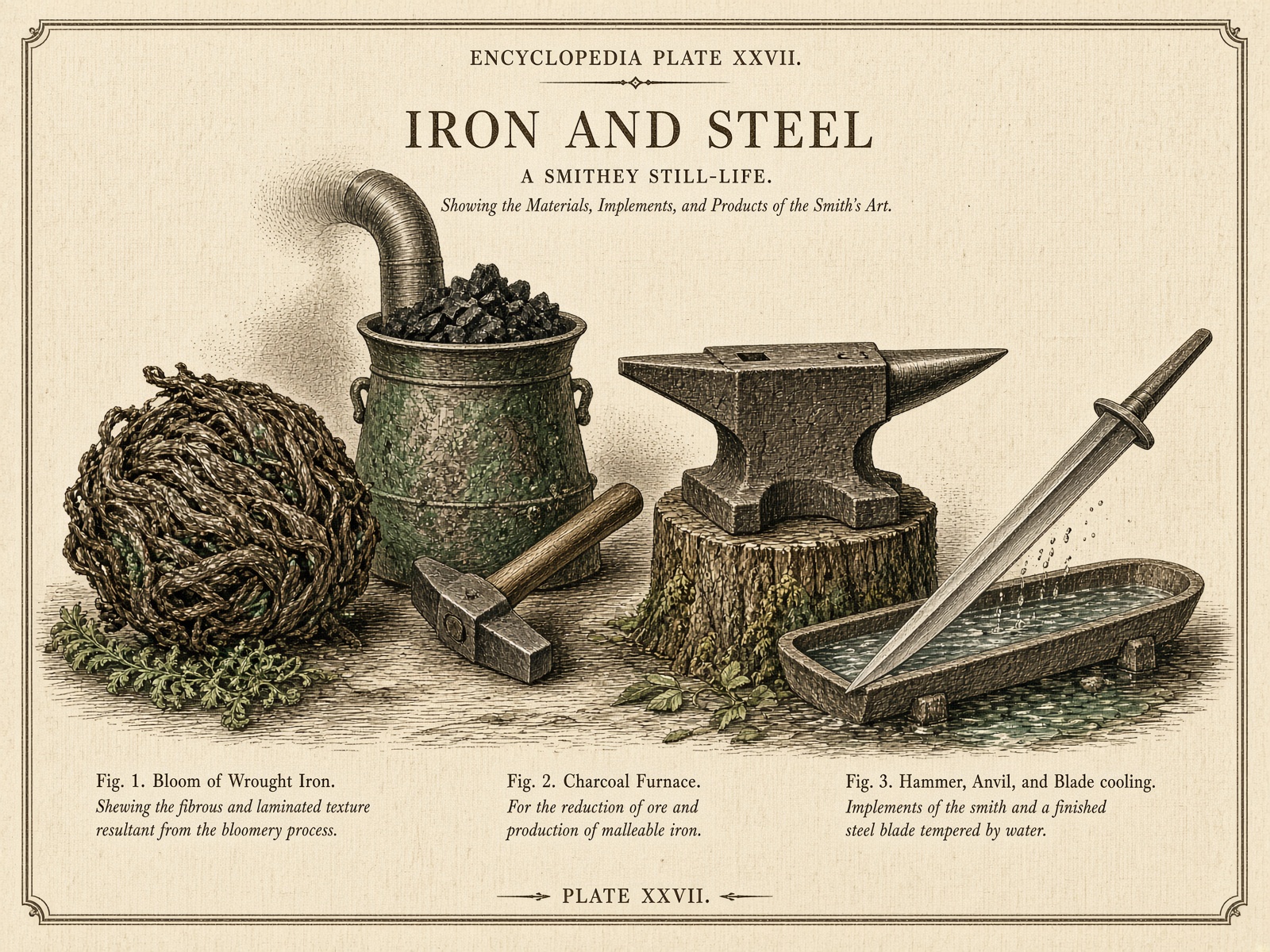
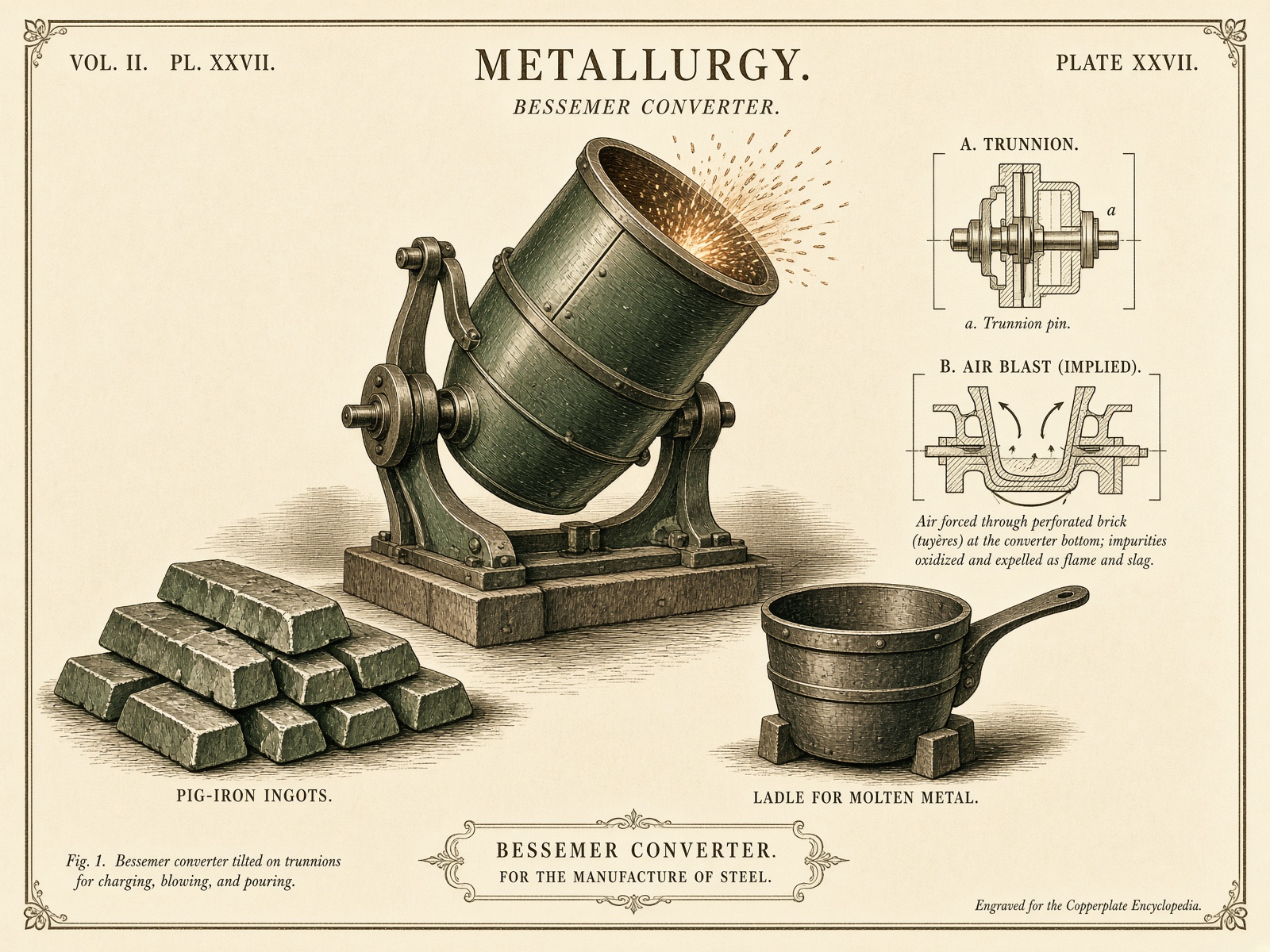
Iron ore is common; useful iron is not. Early bloomery furnaces made a spongy bloom that had to be hammered into wrought iron. Steel is iron with a little carbon in the right places. For most of history it was precious. In 1856 Bessemer’s converter blasted air through molten iron and made bulk steel cheap. Rails, ships, and skeletons of cities followed.
Many traditions; Henry Bessemer (bulk steel) · Anatolia and beyond; later industrial Britain
How it works
- Reduce iron ore with charcoal (or coke) at high heat; work the bloom or melt the metal.
- Control carbon: too little is soft, too much is brittle.
- In the Bessemer process, blow air through molten pig iron to burn off excess carbon, then recarburize to steel.
Why it mattered
- Iron tools and weapons became available far beyond elite bronze.
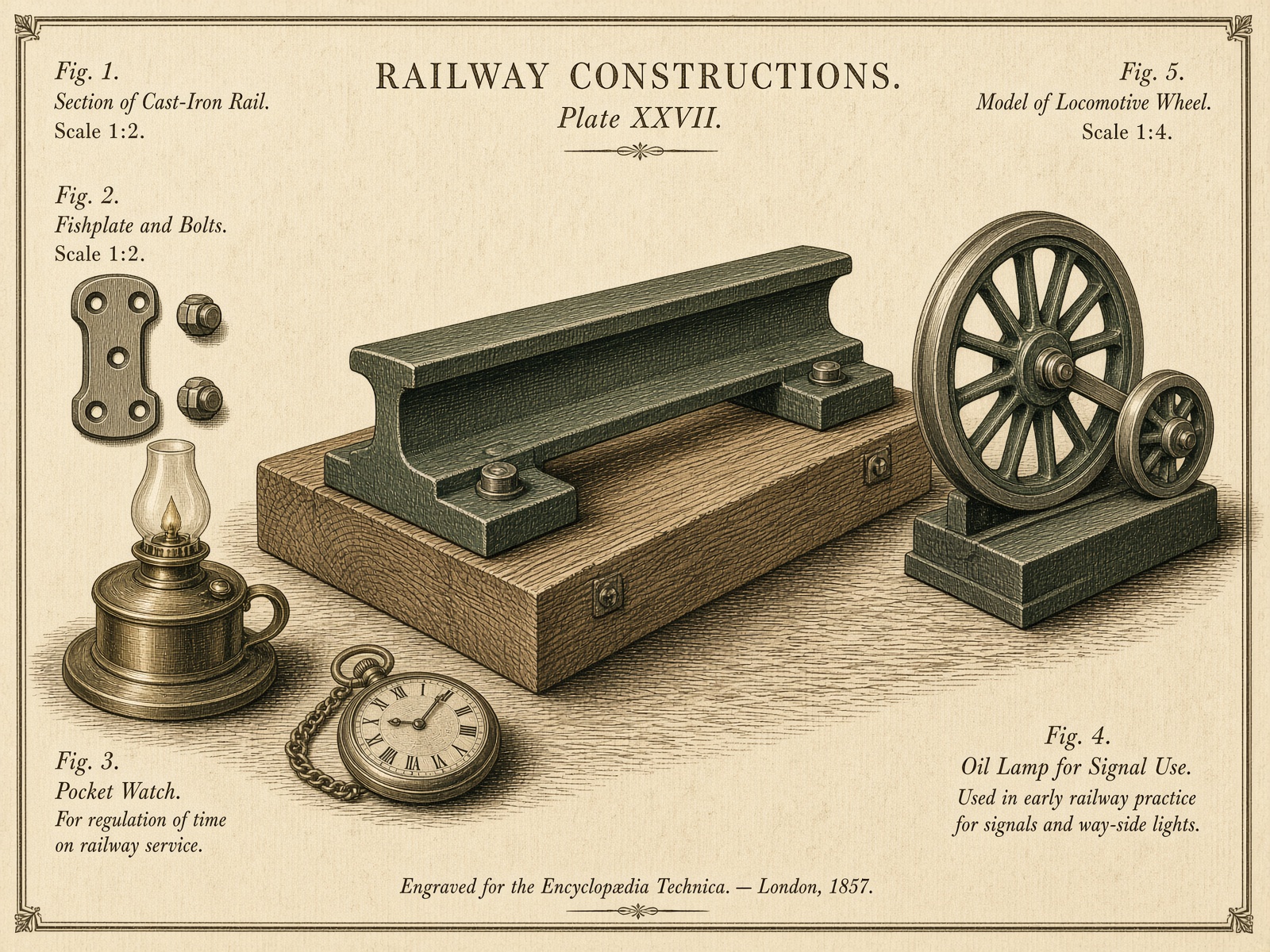
- Cheap steel made railways and skyscrapers structural, not ornamental.
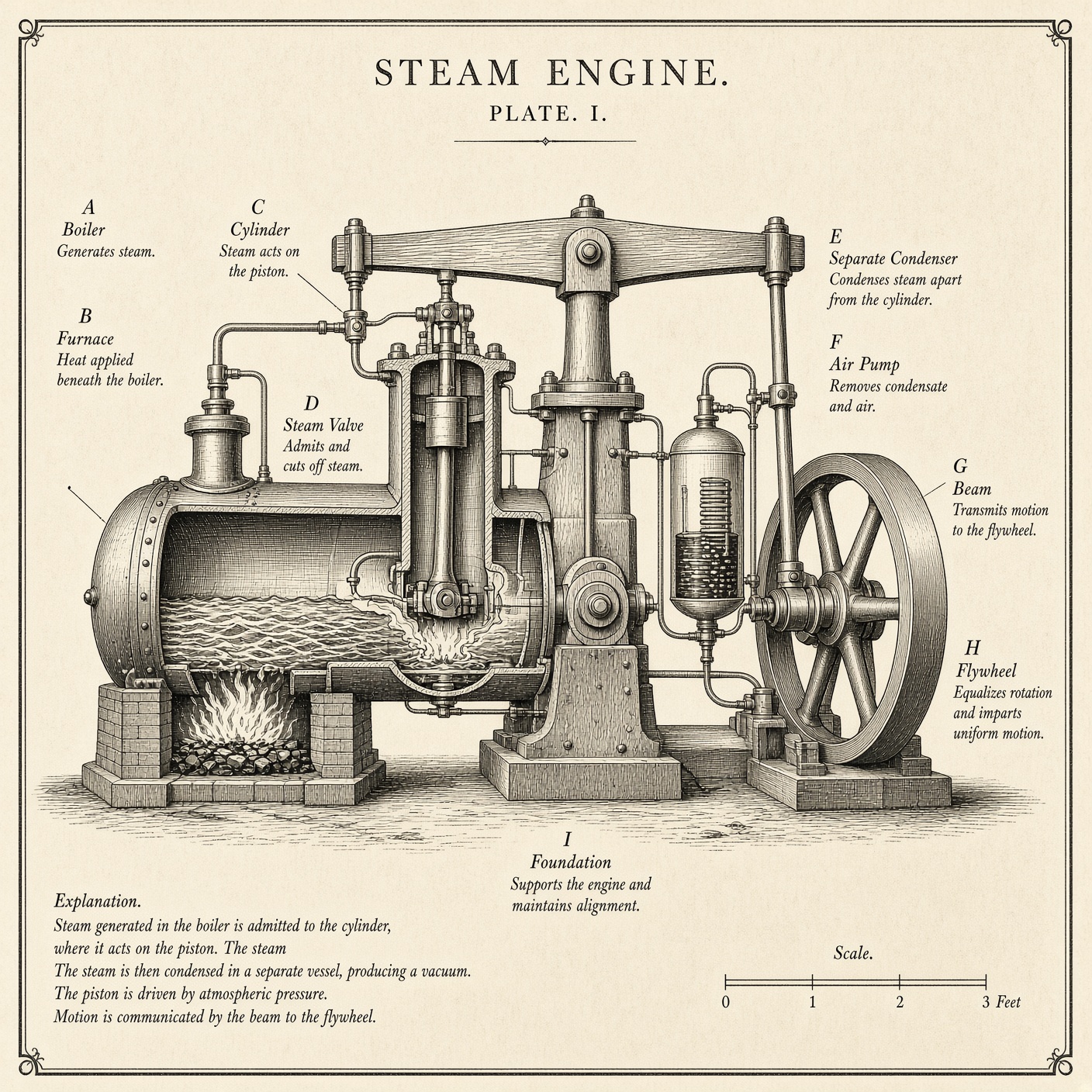
- Set the material baseline for engines, ships, and machine tools.
What it unlocked
For further study
- Science Museum, London. Bessemer converter.
- Tylecote, A History of Metallurgy. Bloomery to converter.
Check
What does carbon do in steel, in one sentence?