Transportation · Vol. VII|Sail and hull|by 3000 BCE
Sail and hull
by 3000 BCE
A hull displaces water; a sail catches wind. Together they turn a weather system into a engine that does not eat grain. Egyptian river craft, later Mediterranean round ships and dhows, and Chinese junks each solved the same problem in local wood and cloth. Maritime trade is older than most empires, and it is why ideas, alloys, and religions moved faster than armies.
Nile, Mediterranean, Indian Ocean, China seas
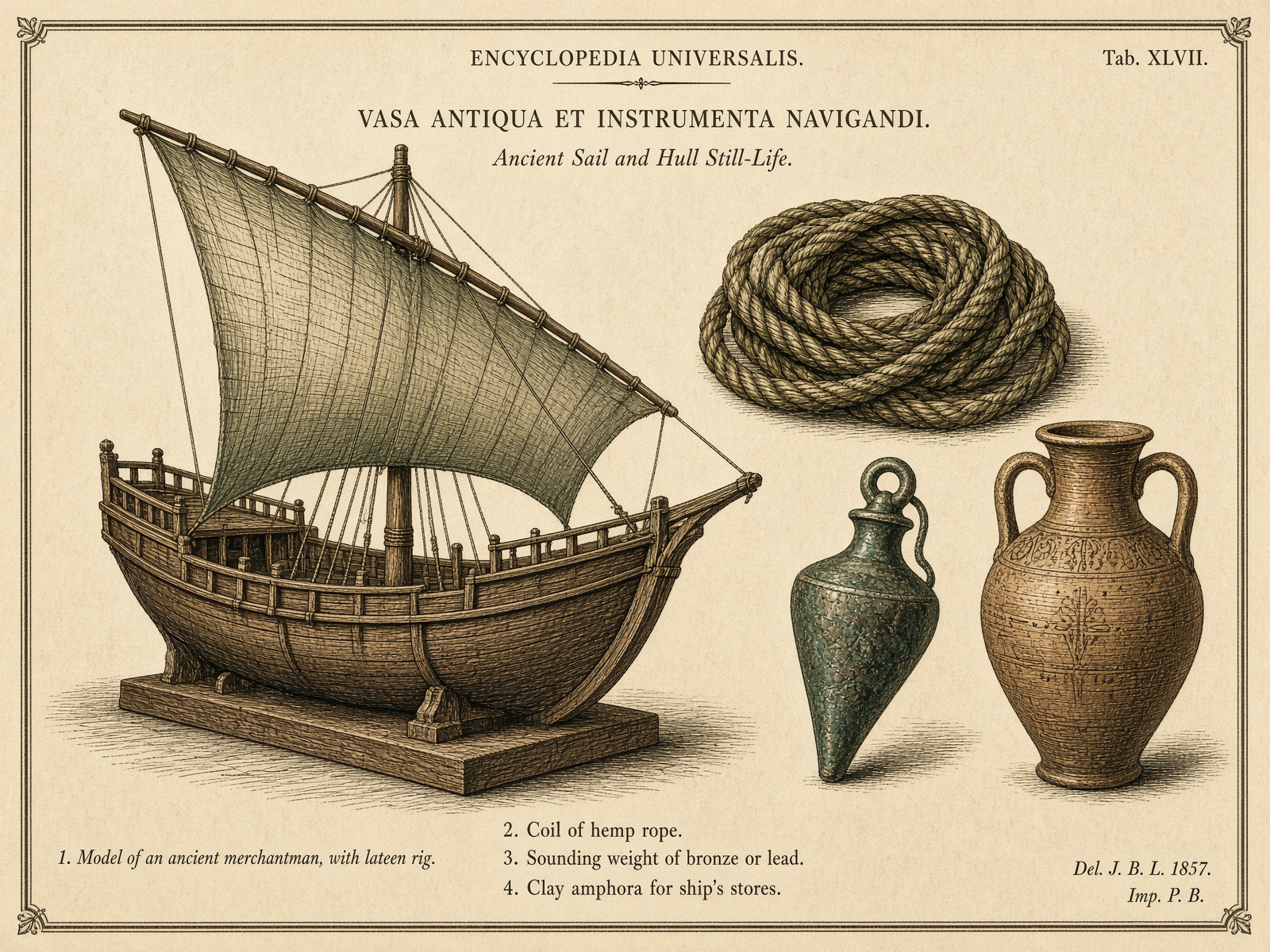
How the mechanism is arranged
How it works
- Shape a watertight body that floats by displacing its own weight in water.
- Raise cloth on a mast so wind produces a force; use a keel or steering oar to keep a course.
- Tack or wait: you cannot sail directly into the wind, but you can work up to it.
Why it mattered
- Moved bulk cargo cheaper than any land animal could.
- Linked river valleys and coasts into one economic weather.
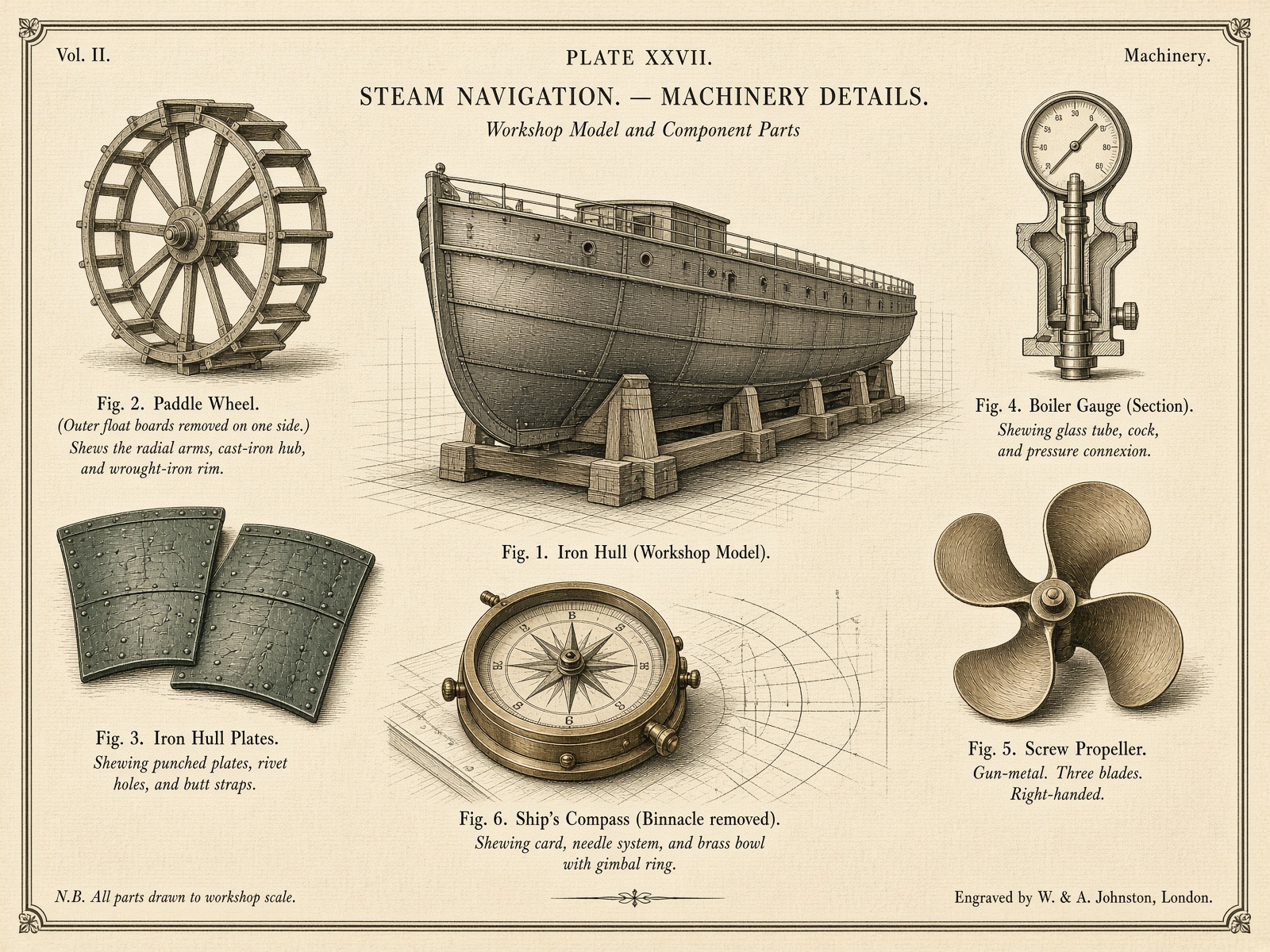
- Set the stage for later steam and container ships.
What it unlocked
For further study
- Casson, Ships and Seamanship in the Ancient World. Mediterranean craft.
- Needham volumes on nautics. Chinese shipbuilding.
Check
Why can a sailing ship carry more tons per crew than a pack caravan?