Mechanics · Vol. I|Lever, pulley, and screw|c. 260 BCE (described)
Lever, pulley, and screw
c. 260 BCE (described)
A lever trades distance for force. A pulley redirects it. A screw turns rotation into a slow, huge push. These ideas are older than any one name, but Archimedes stated the law of the lever with a clarity that later engineers could reuse. Simple machines are not gadgets. They are the grammar of mechanics.
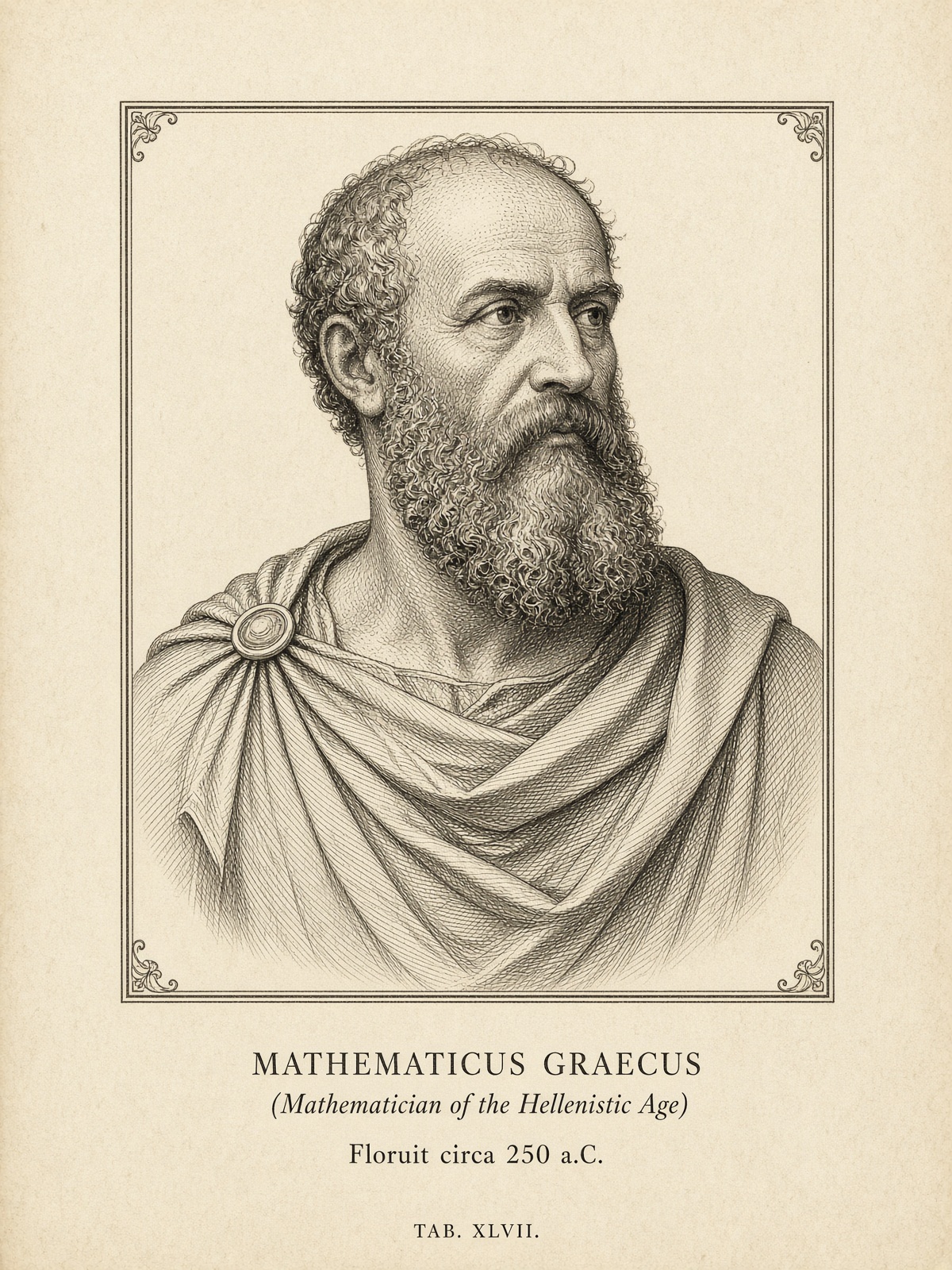
Archimedes of Syracuse (description) · Mediterranean
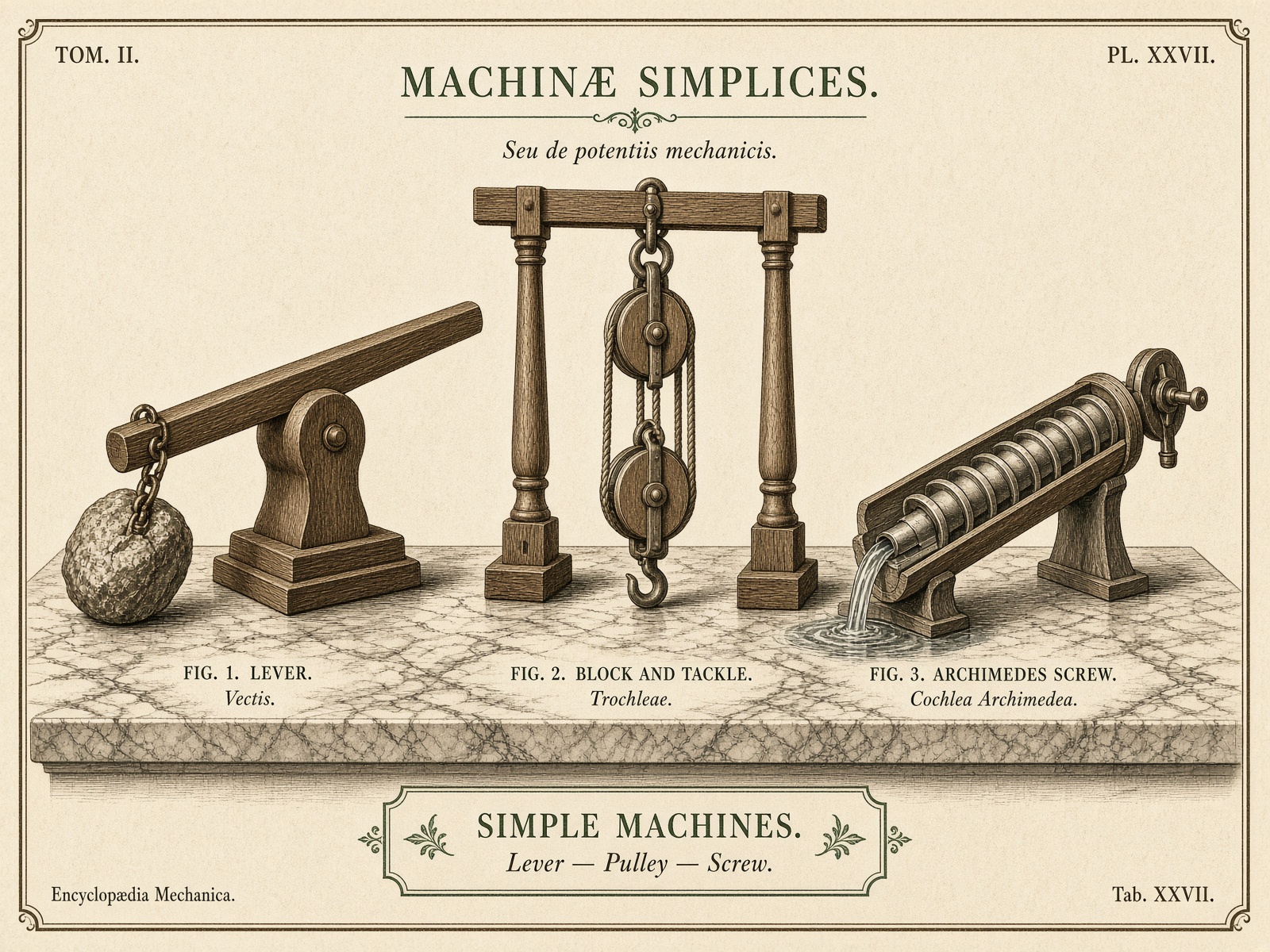
How the mechanism is arranged
How it works
- Place a rigid bar on a fulcrum; a small force far from the fulcrum balances a large force near it.
- Run a rope over a wheel (pulley) to change direction, or combine wheels to multiply force.
- Wrap an inclined plane around a cylinder (screw) to convert turning into linear motion.
Why it mattered
- Let people lift loads heavier than themselves.
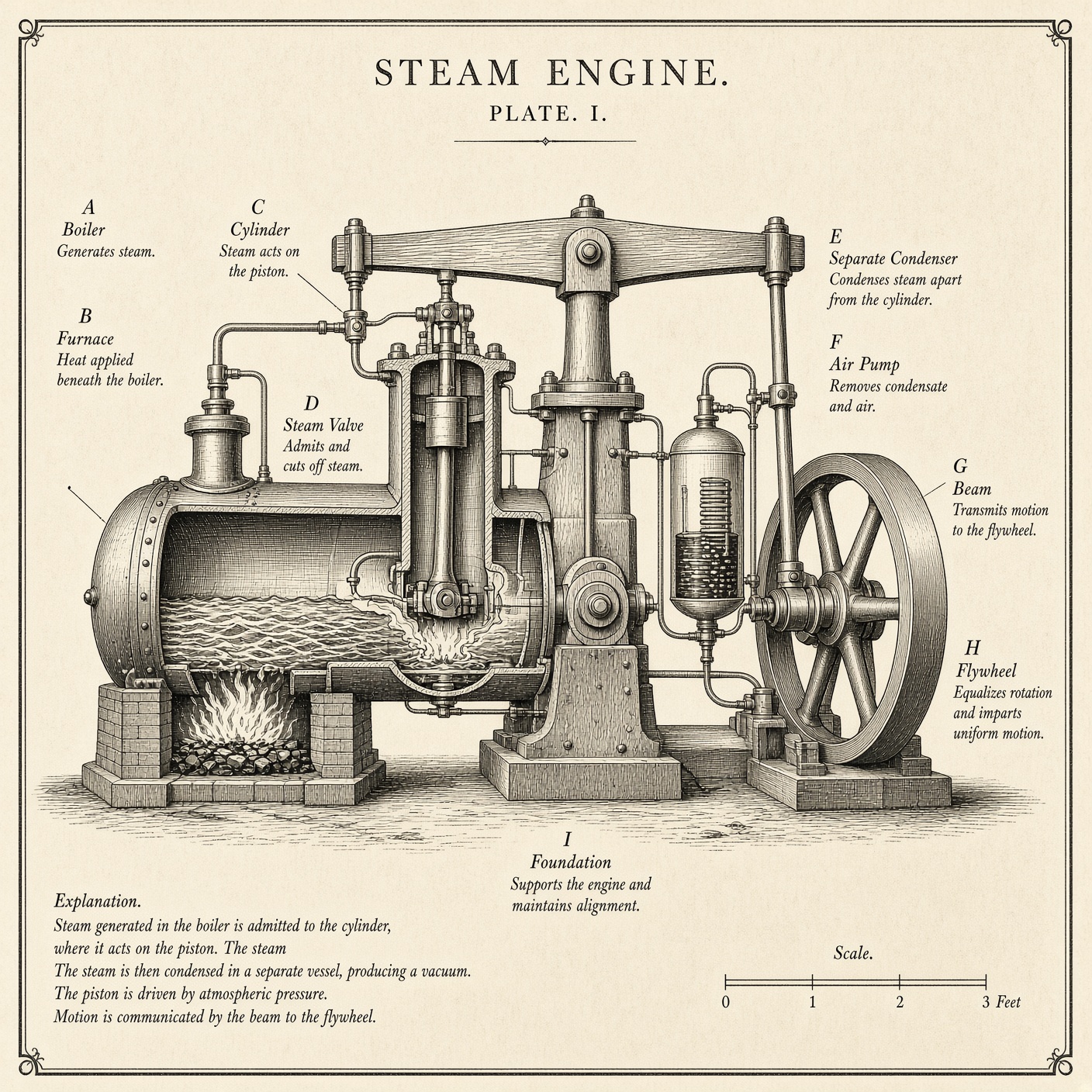
- Made cranes, presses, and pumps possible.
- Gave later physics a set of worked examples.
Who turned the wheel
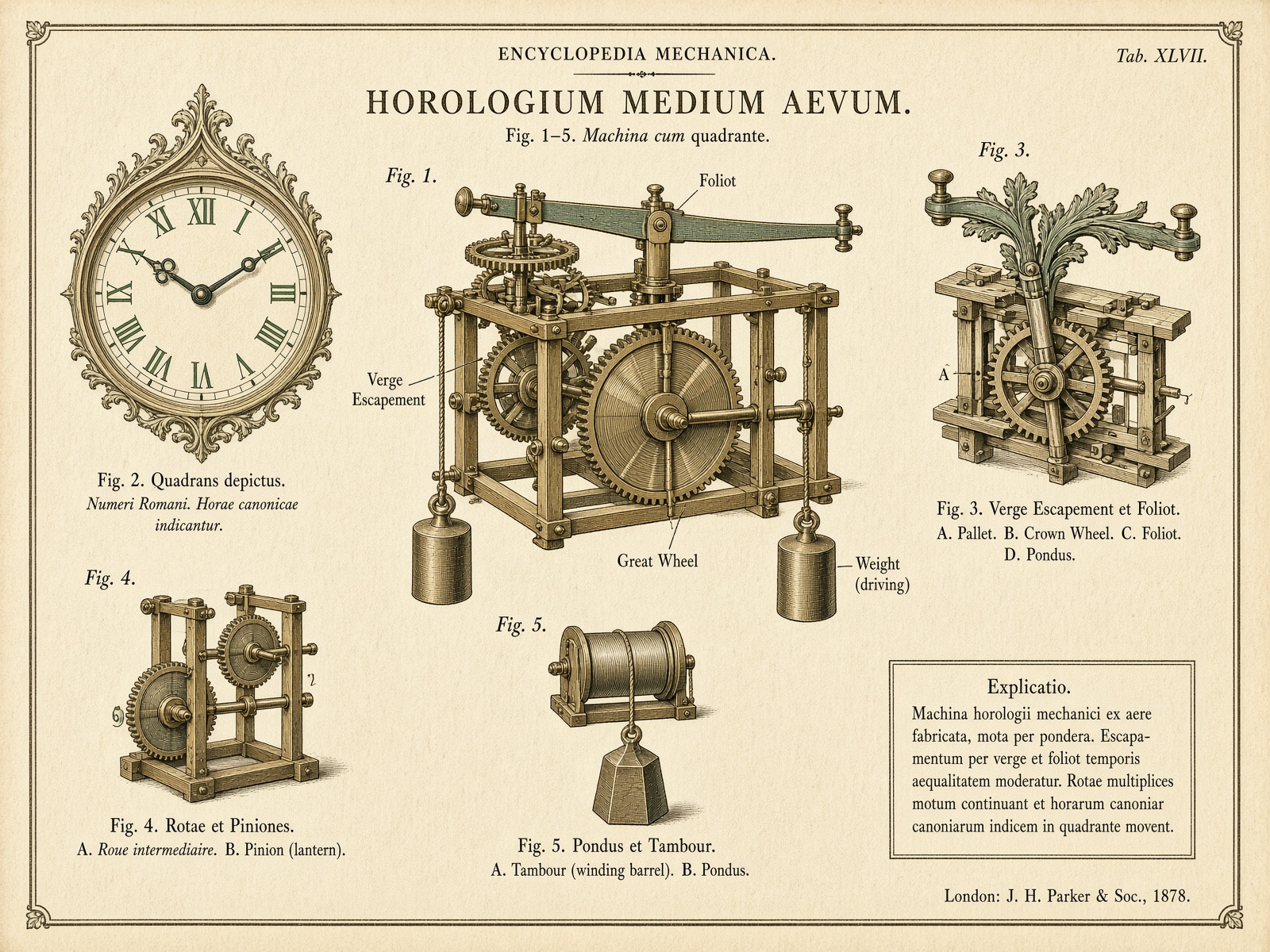
What it unlocked
For further study
- Archimedes, On the Equilibrium of Planes. Law of the lever.
- Smithsonian. Simple machines in teaching collections.
Check
If you want more force from a lever, what must you give up?