Chemicals · Vol. IV|Bronze smelting|c. 3300 BCE
Bronze smelting
c. 3300 BCE
Copper melts. Mix it with tin (or arsenic) and you get bronze: harder, more castable, better for blades and fittings. Smelting is chemistry at furnace temperature — ore to metal, rock to tool. Bronze traveled with trade because tin is rare. The alloy is a map of long-distance exchange as much as a recipe.
Near East and independently in other hearths
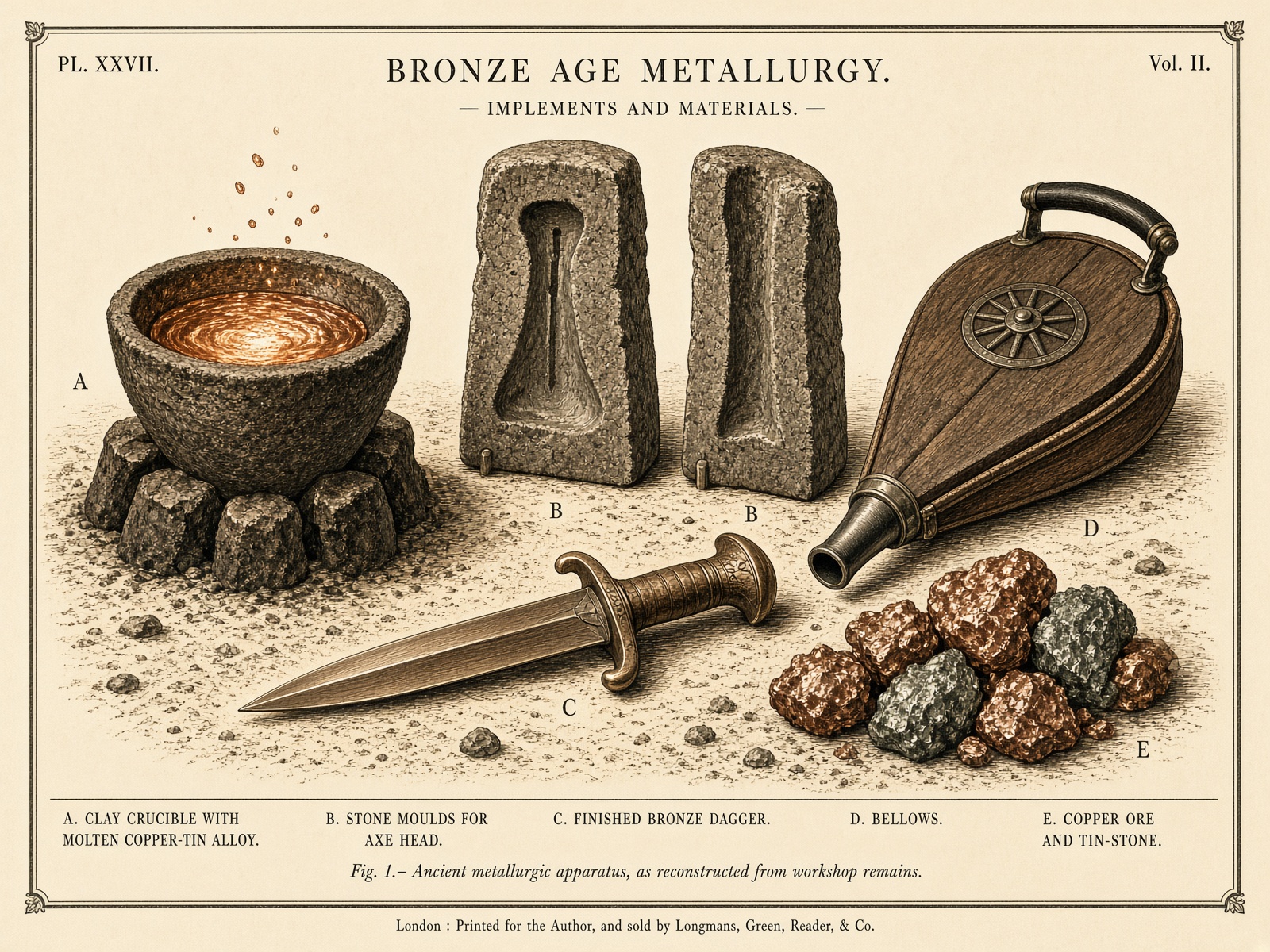
How the mechanism is arranged
How it works
- Roast and reduce copper ore in a charcoal fire hot enough to melt the metal.
- Add tin (or arsenic) in a controlled fraction.
- Pour the alloy into a mold; hammer and anneal to shape the edge.
Why it mattered
- Gave cities weapons, fittings, and prestige objects that stone could not match.
- Tied technology to trade networks for scarce tin.
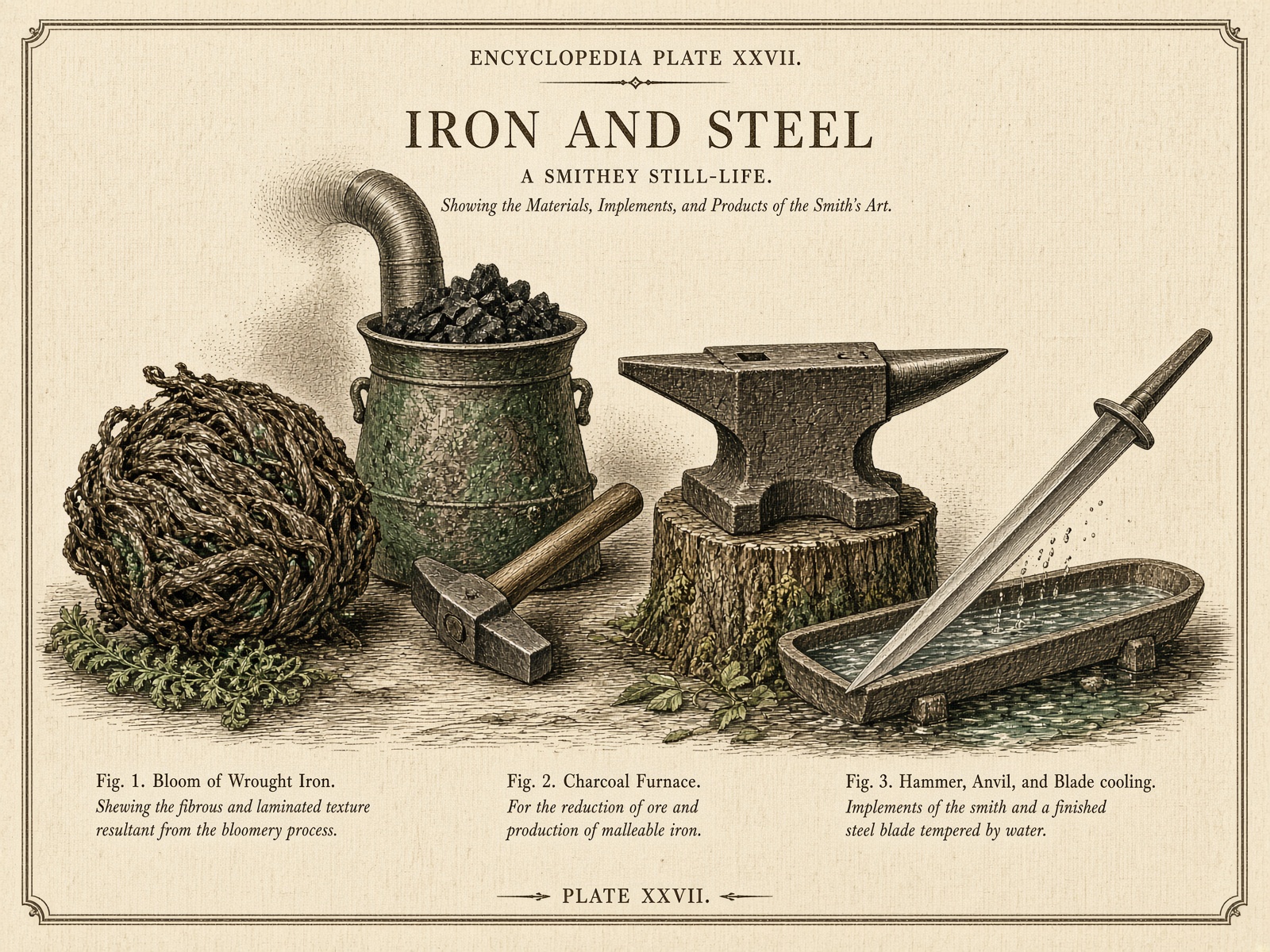
- Taught the logic of alloys — a foundation for later steels.
What it unlocked
For further study
- Metropolitan Museum. Bronze Age metallurgy essays.
- Tylecote, A History of Metallurgy. Smelting sequences.
Check
Why did bronze depend on trade more than copper alone did?