Mechanics · Vol. I|Steam engine|1765 (Watt’s separate condenser)
Steam engine
1765 (Watt’s separate condenser)
Newcomen’s atmospheric engine (1712) already pumped mines by letting steam condense inside a cylinder so the atmosphere pushed a piston down. Watt’s 1765 insight was to condense the steam in a separate vessel, so the working cylinder stayed hot. Fuel use dropped sharply. A heat engine that could be sited anywhere coal could go unhooked factories from rivers.
Thomas Newcomen; James Watt · Britain
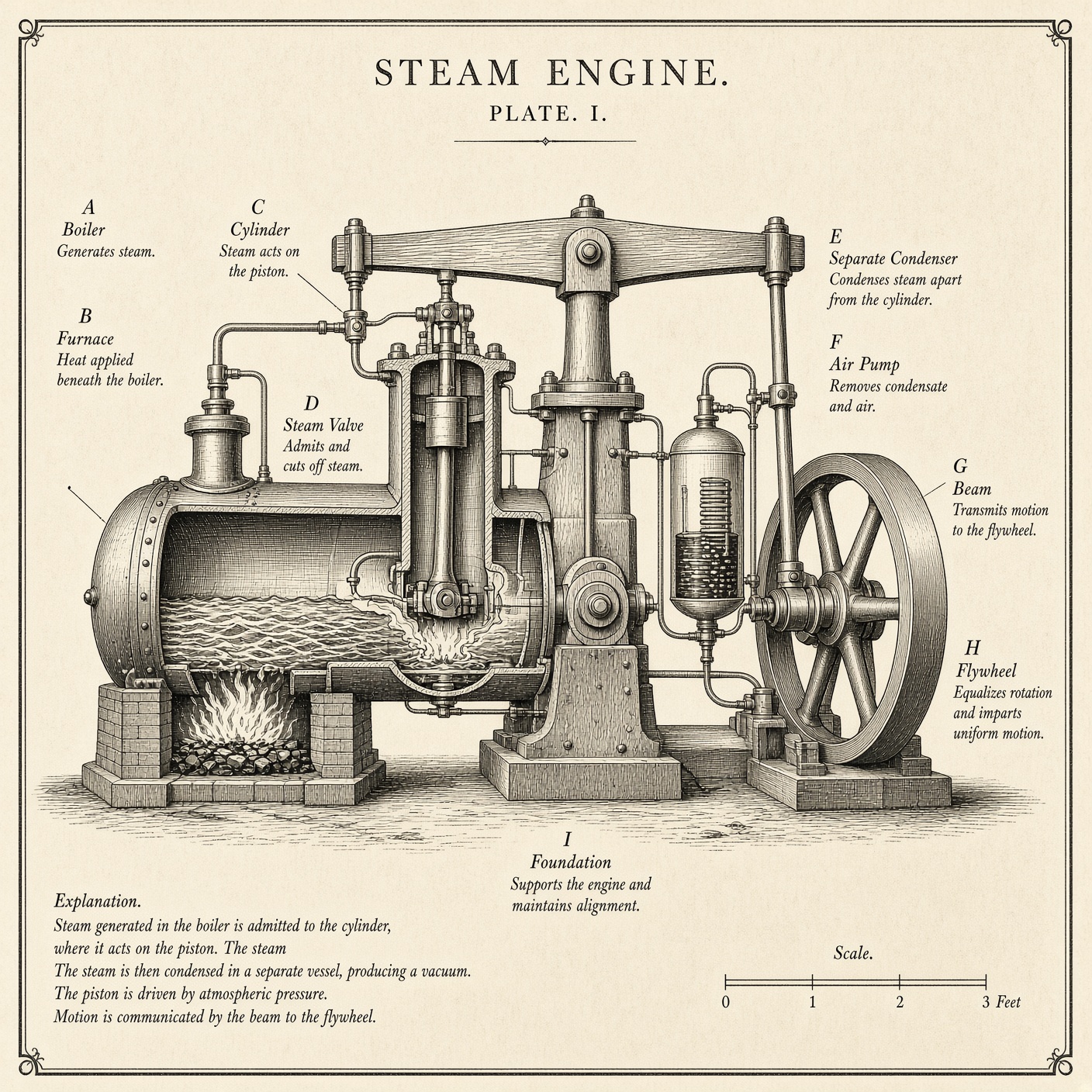
How the mechanism is arranged
How it works
- Boil water; admit steam to a cylinder to move a piston (or, in Newcomen, to fill it).
- Condense the steam — Watt does this in a separate condenser — creating a pressure difference.
- Link the piston to a beam, pump, or rotating shaft; repeat.
Why it mattered
- Watt’s condenser cut coal use dramatically versus Newcomen.
- Power became portable to any mill, mine, or later locomotive.
- Made the industrial factory a thermal system, not only a water one.
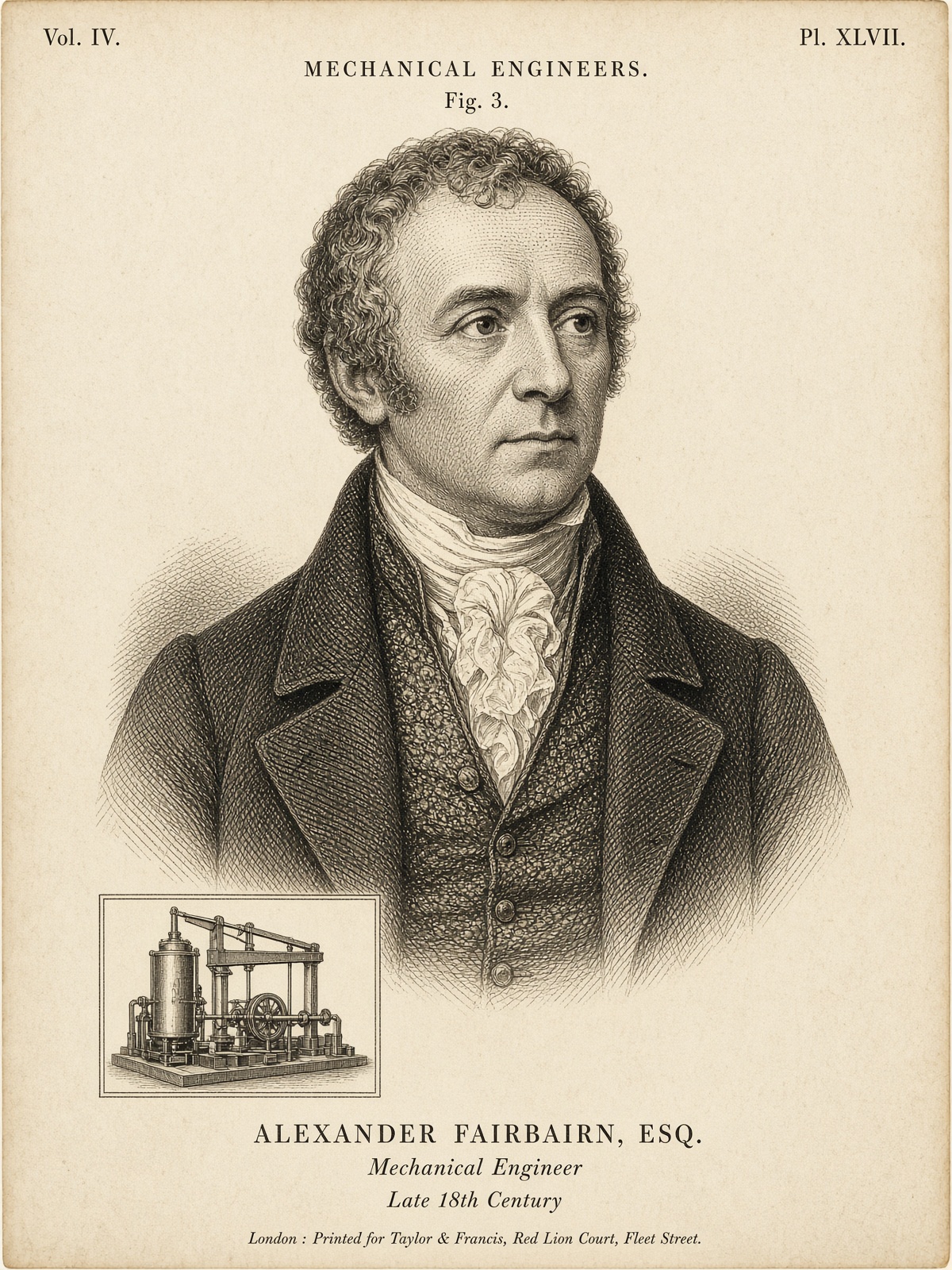
Who turned the wheel
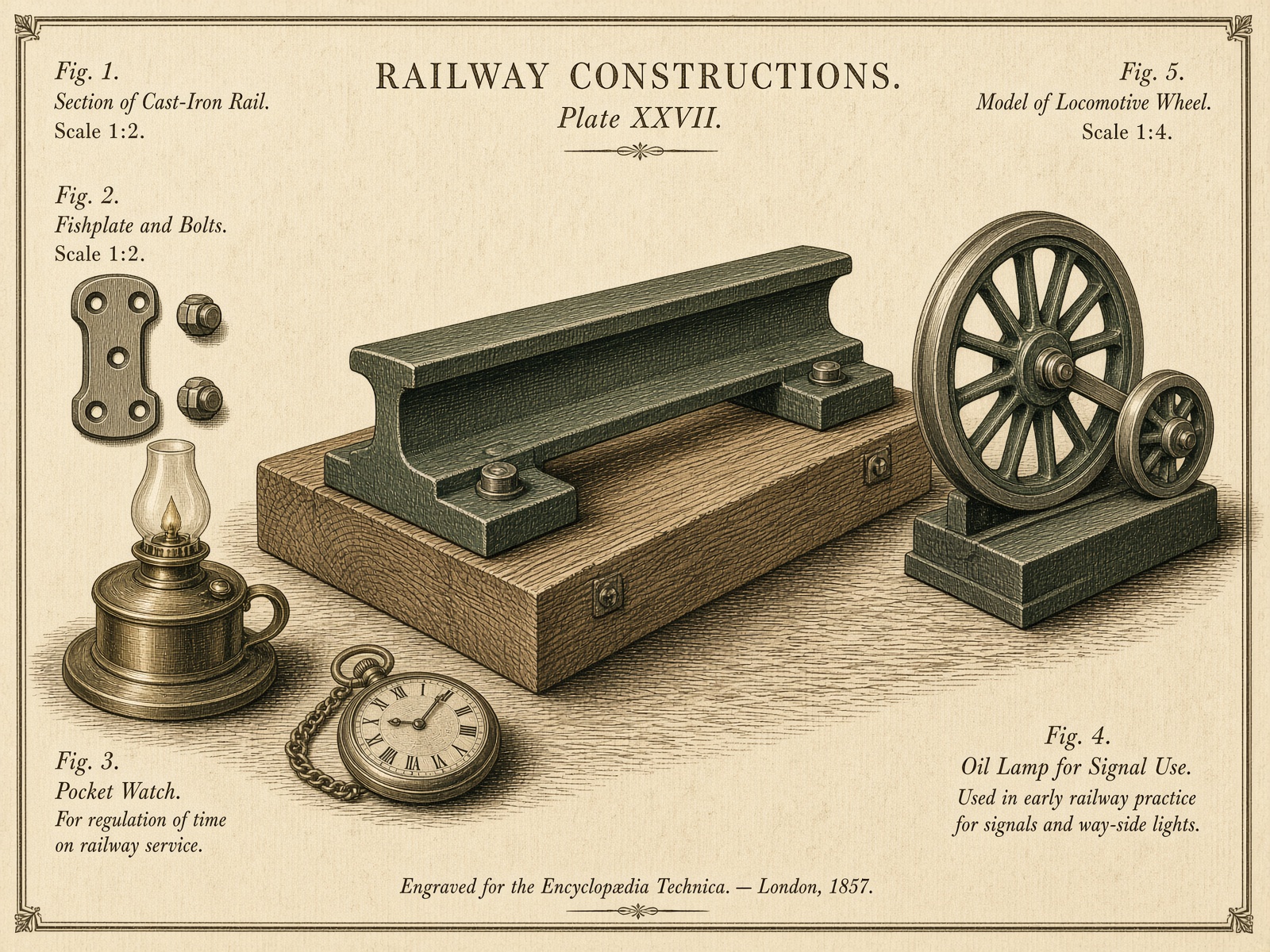
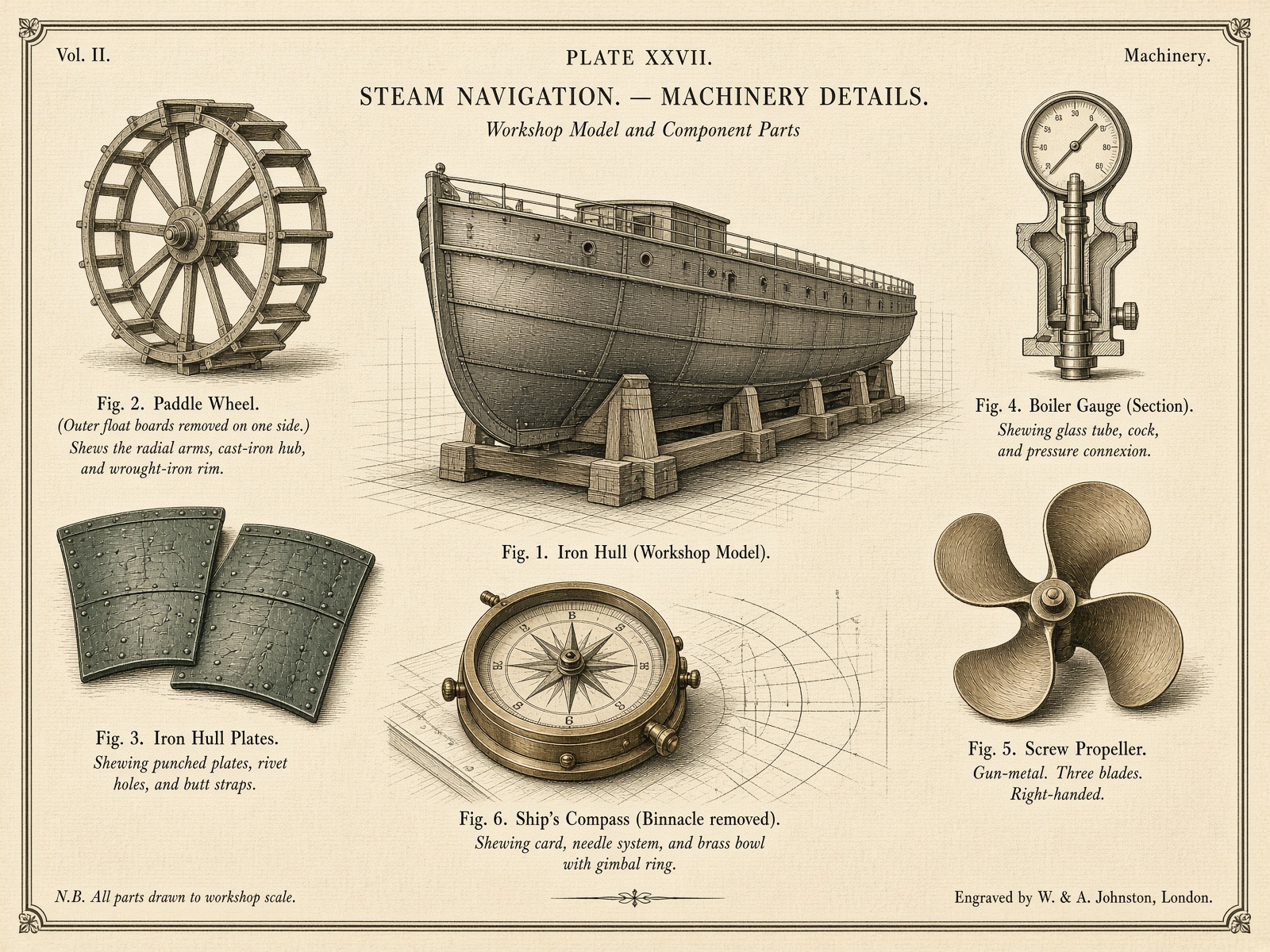
What it unlocked
For further study
- Science Museum, Watt workshop. Original engines and condenser.
- Hills, Power from Steam. Engine evolution.
Check
Why does keeping the cylinder hot save coal?