Chemicals · Vol. IV|Bessemer converter|1856
Bessemer converter
1856
Before Bessemer, steel was made in small crucibles. His converter was a tilting pear of iron that blew cold air through a molten charge. The carbon burned out in minutes with a spectacular flame. Output jumped from kilograms to tons. The industrial city is, among other things, a steel-making machine.
Henry Bessemer; independently William Kelly · England
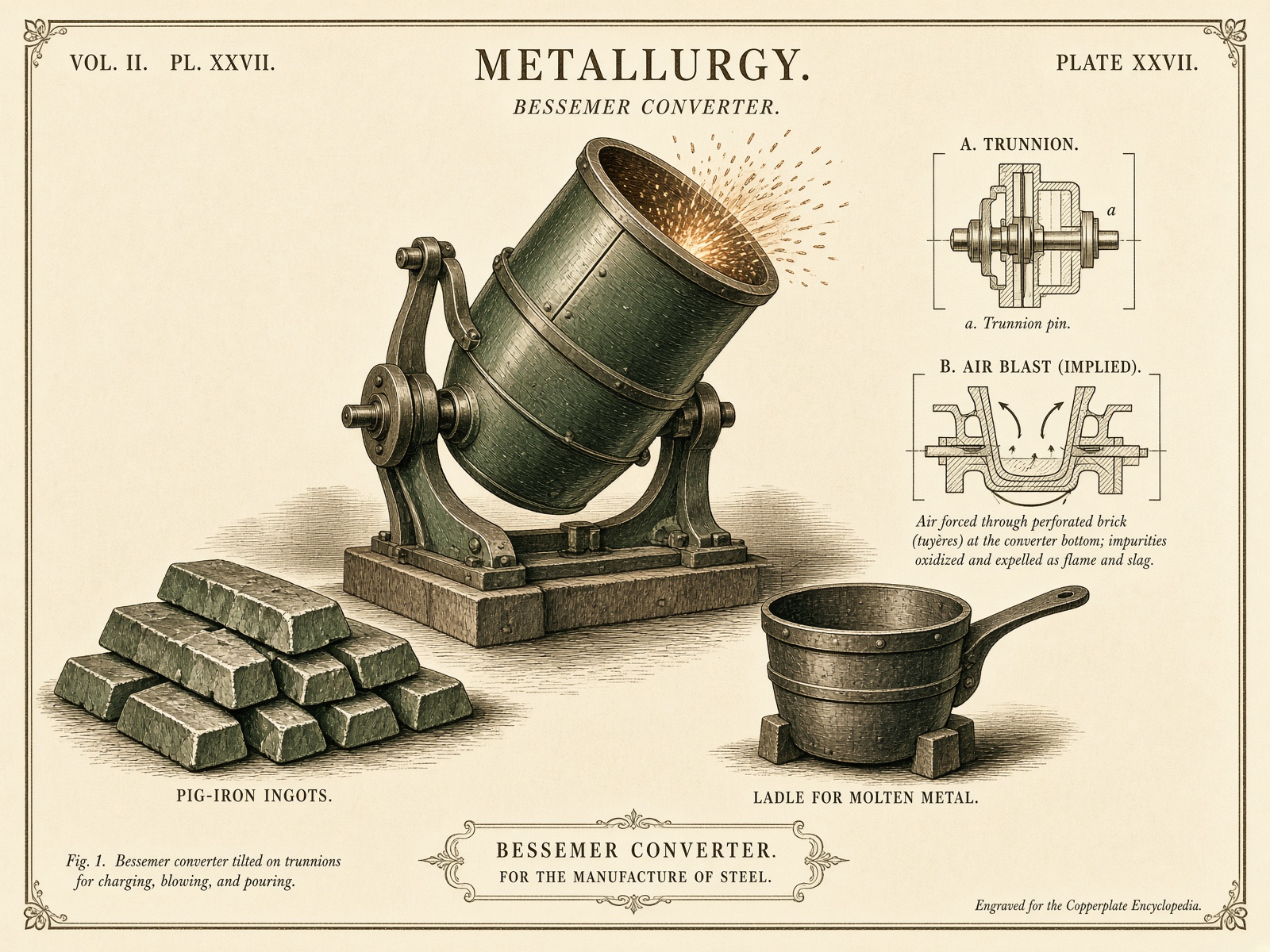
How the mechanism is arranged
How it works
- Charge molten pig iron into a vessel lined with refractory.
- Blow air (later oxygen) through the melt; impurities oxidize.
- Stop at the right carbon content and pour into ingot molds.
Why it mattered
- Collapsed the price of structural steel.
- Made long-span bridges and high buildings ordinary.
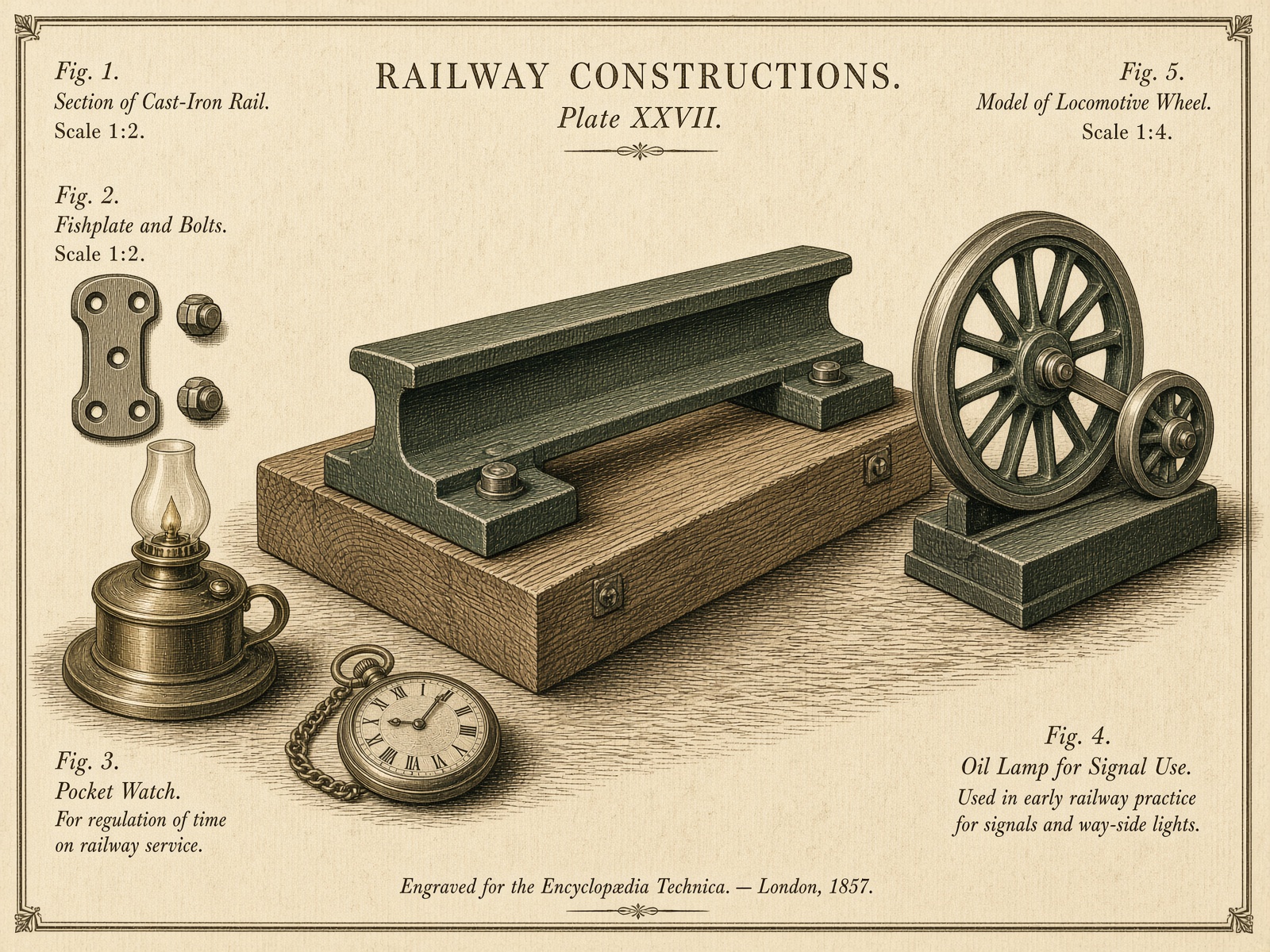
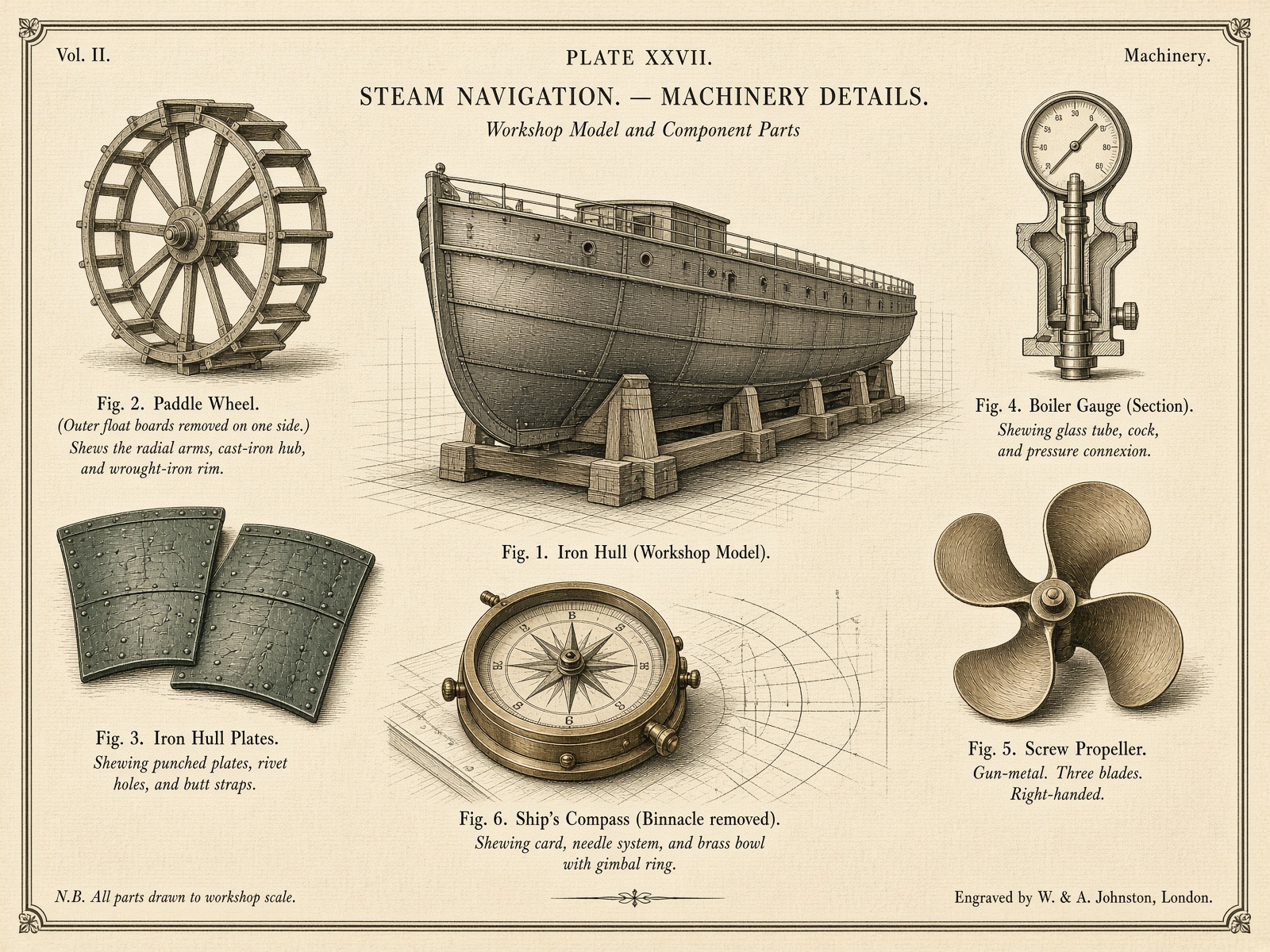
- Fed the appetite of railways and shipyards.
What it unlocked
For further study
- Bessemer, Sir Henry Bessemer, F.R.S. An Autobiography. Inventor’s account.
- Science Museum Group. Converter objects.
Check
Why did blowing air through iron remove carbon?