Chemicals · Vol. IV|Distillation|c. 8th–9th century (mature stills)
Distillation
c. 8th–9th century (mature stills)
Heat a mixture, catch the vapor, cool it back to liquid. Different substances boil at different temperatures, so a still is a sieve made of heat. Medieval chemists in the Islamic world refined alembics for alcohols, acids, and perfumes. Distillation is how you get a concentrated essence from a messy mash — the ancestor of oil refining as well as of spirits.
Scholars in the Islamic world (Jabir tradition and later) · West Asia and the Mediterranean
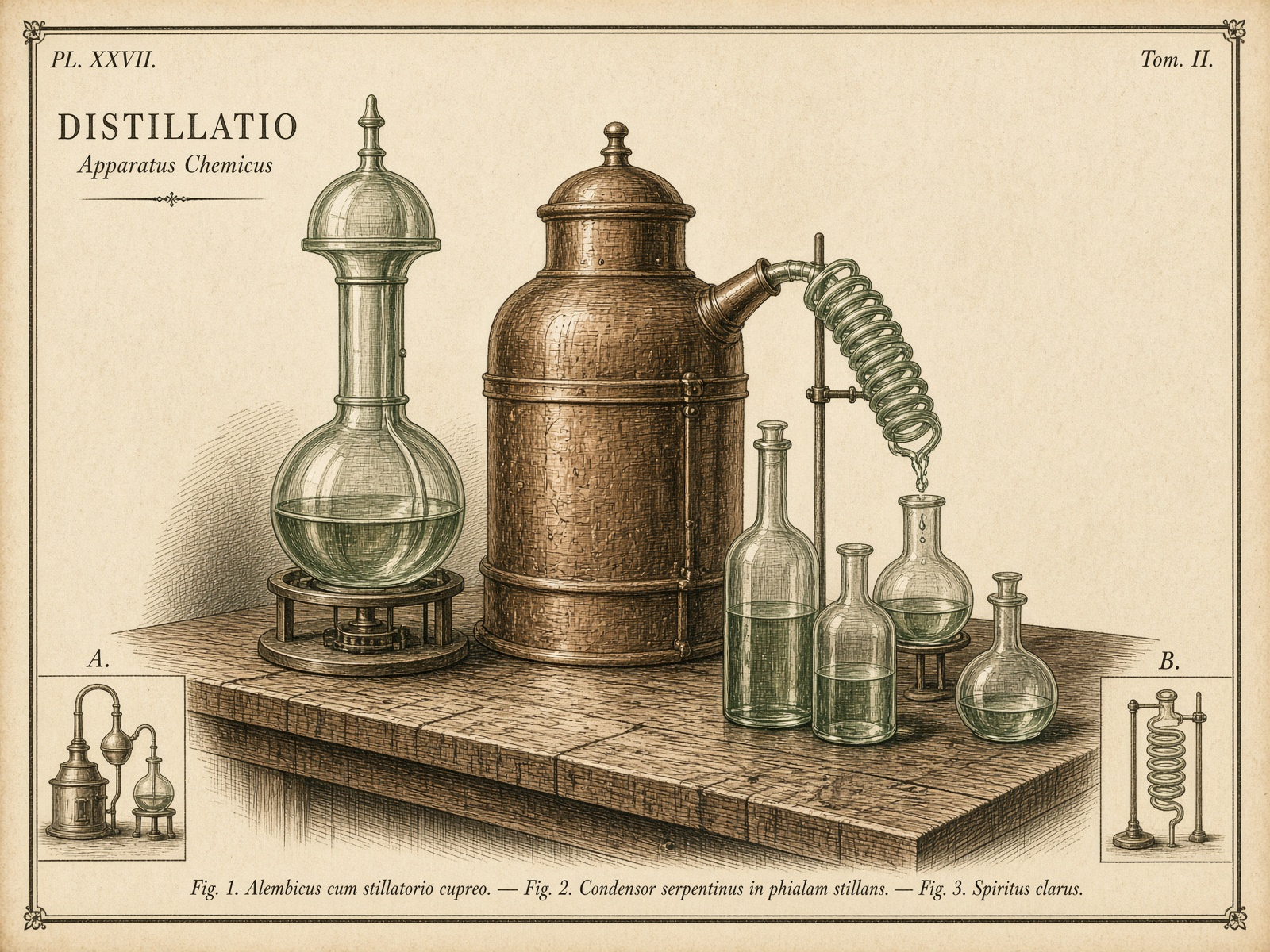
How the mechanism is arranged
How it works
- Boil the mixture in a vessel.
- Lead vapor through a cooled neck or coil so it condenses.
- Collect fractions; repeat if you need higher purity.
Why it mattered
- Produced strong acids used in later chemistry and metallurgy.
- Gave a general method for separating liquids.
- Scaled, much later, into petroleum refining.
What it unlocked
For further study
- al-Hassan and Hill, Islamic Technology. Stills and laboratory apparatus.
- Forbes, A Short History of the Art of Distillation. Long survey.
Check
Why can a still separate alcohol from water?