Electronics · Vol. II|Vacuum tube|1904 (Fleming valve); 1906 (De Forest triode)
Vacuum tube
1904 (Fleming valve); 1906 (De Forest triode)
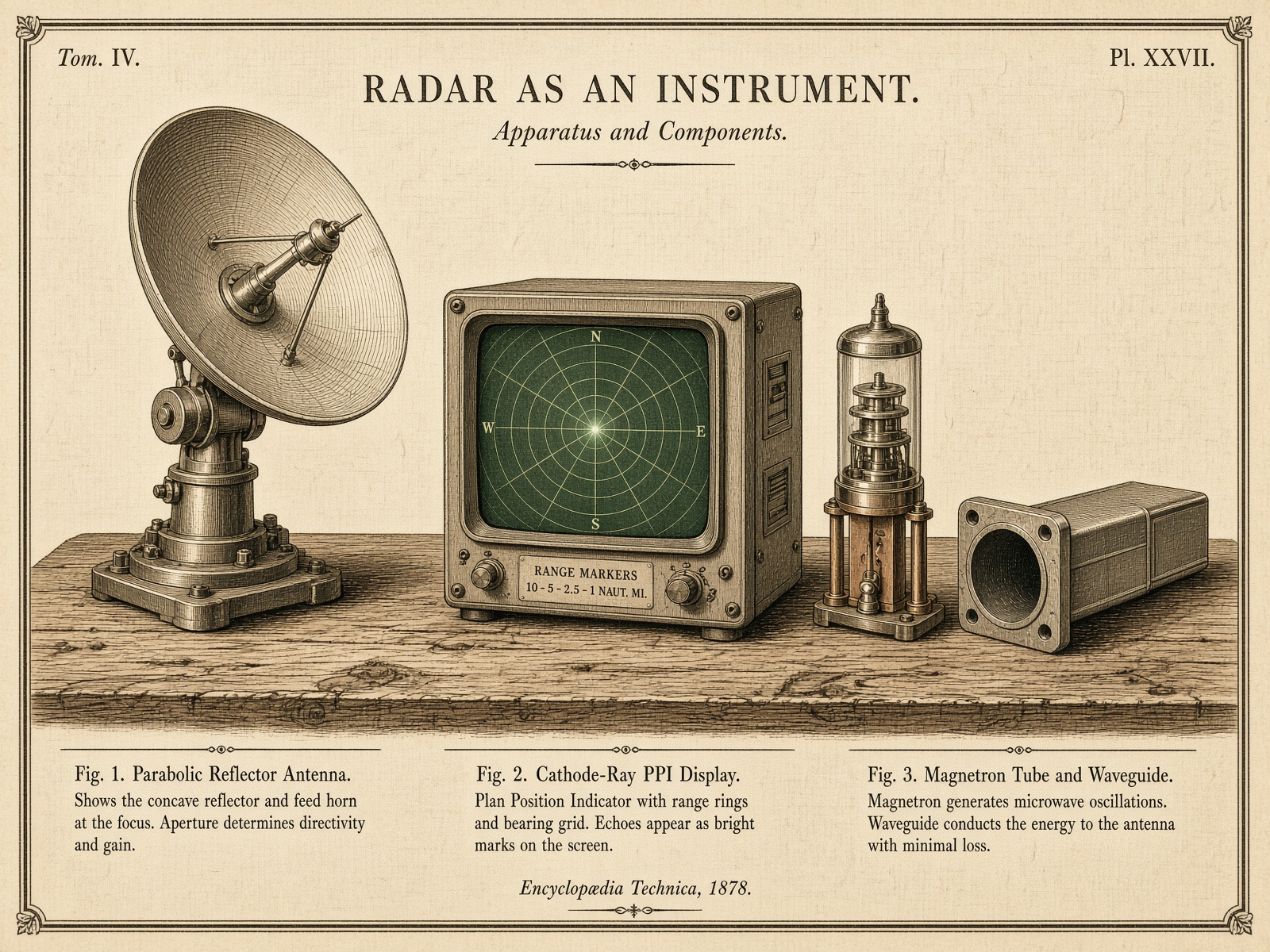
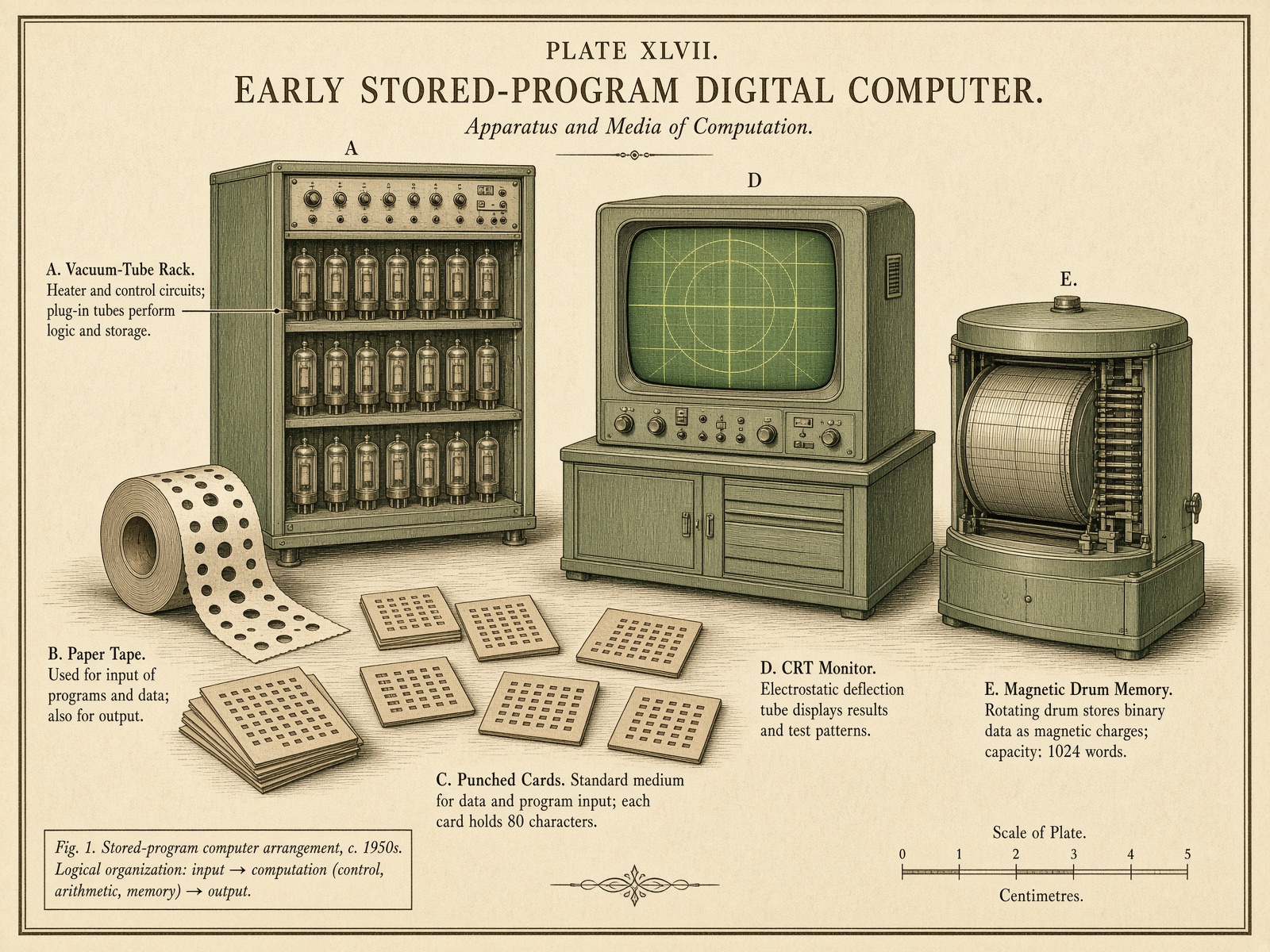
A heated filament in a vacuum emits electrons. Fleming used that as a one-way valve to detect radio. De Forest added a grid and made an amplifier: a small voltage on the grid controlling a larger current. For fifty years the tube was the transistor. Radios, radars, and the first digital computers are rooms full of glowing glass.
John Ambrose Fleming; Lee de Forest · Britain and the United States
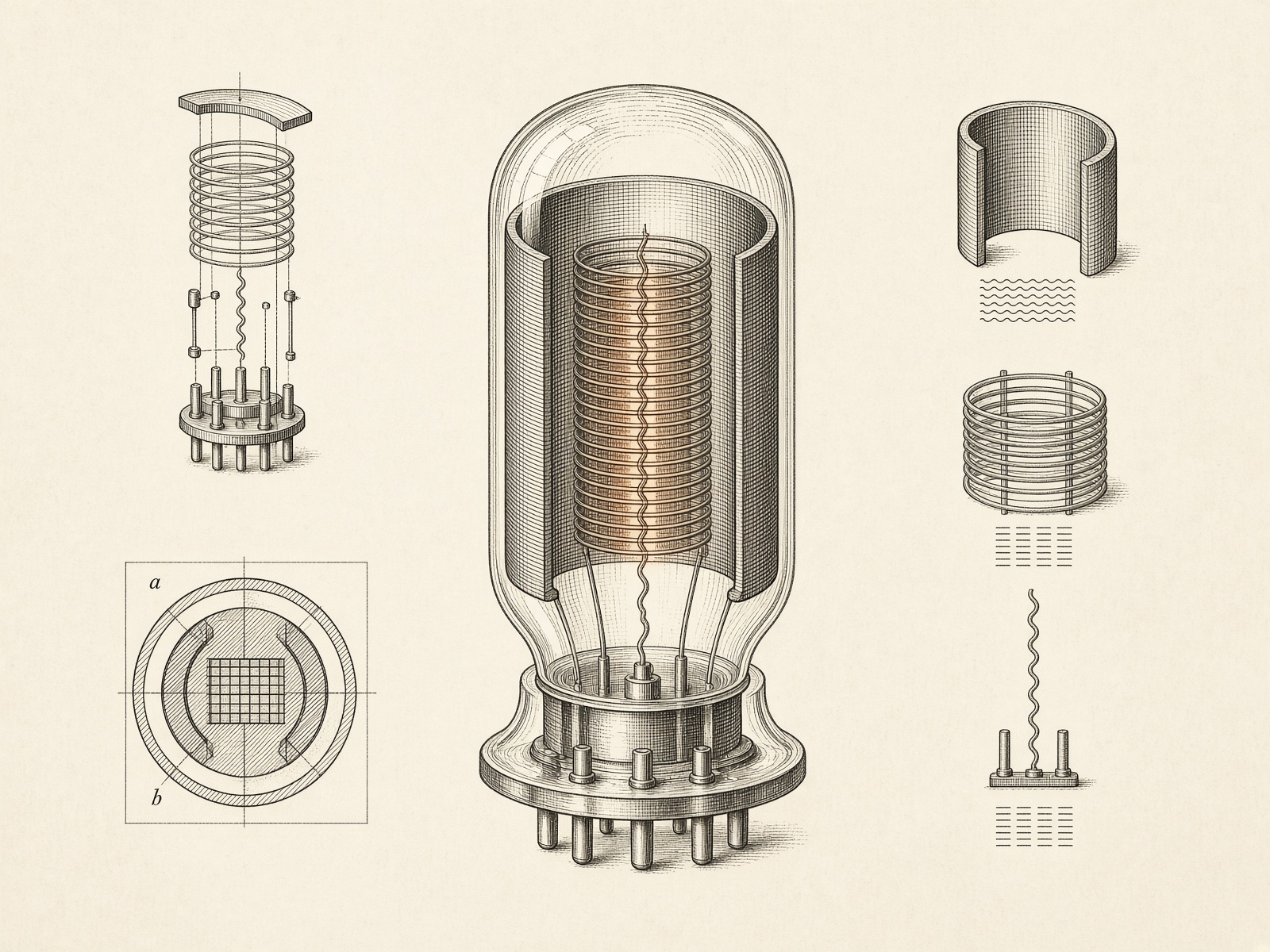
How the mechanism is arranged
How it works
- Heat a cathode so it emits electrons into a vacuum.
- A positive plate collects them — current in one direction (diode).
- A grid between them, charged slightly, throttles the flow (triode amplifier or switch).
Why it mattered
- Made weak radio signals loud enough to hear.
- Gave computing an electronic switch before semiconductors.
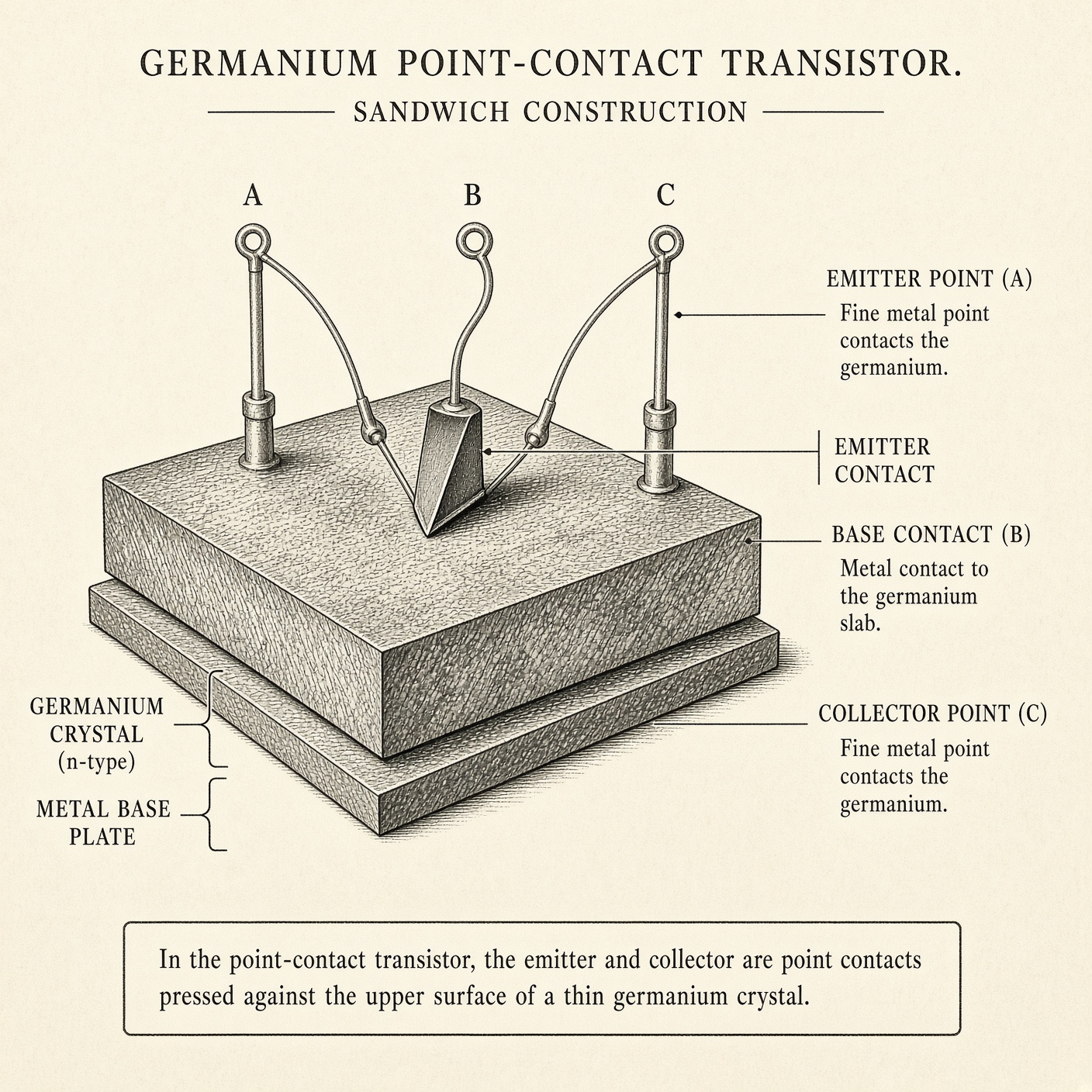
- Set the performance bar the transistor had to beat: smaller, cooler, tougher.
What it unlocked
For further study
- IEEE History Center. Fleming and De Forest.
- Okamura, History of Electron Tubes. Technical survey.
Check
What extra part turns a diode valve into an amplifier?