Chemicals · Vol. IV|Bakelite|1907
Bakelite
1907
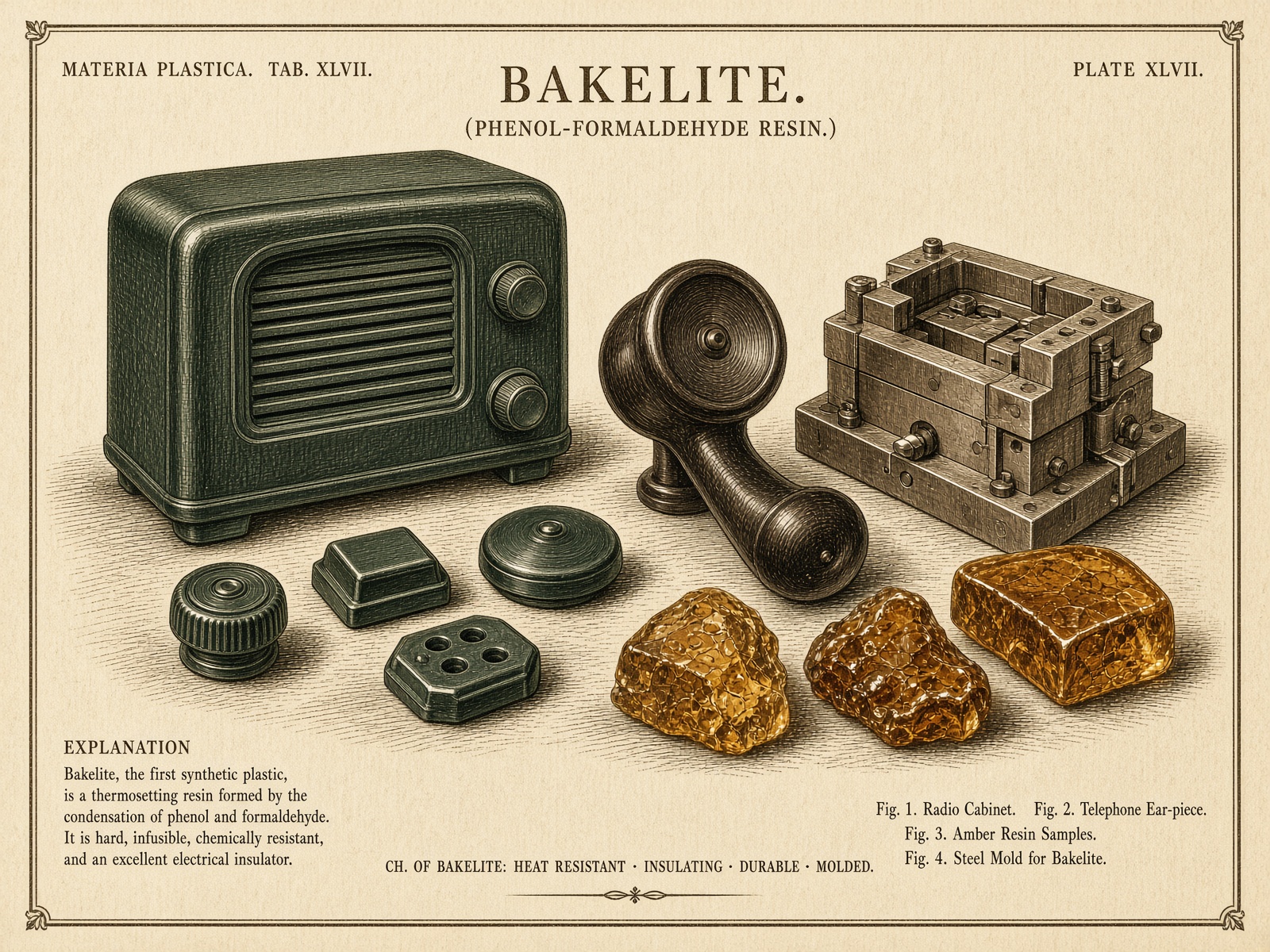
Baekeland reacted phenol and formaldehyde into a resin that would not melt once it had set. Bakelite is the first truly synthetic plastic: not a modified natural gum, but a new solid. Radios, telephones, and distributor caps wore it. Plastics after it — polyethylene, nylon, PVC — inherited the idea that molecules can be designed for a job.
Leo Baekeland · United States
How it works
- React phenol with formaldehyde to a soluble resin.
- Heat and press so the resin cross-links into a thermoset.
- Mold it once; it keeps the shape even if reheated.
Why it mattered
- Replaced shellac, wood, and metal in electrical fittings.
- Opened the plastics century.
- Showed organic chemistry as industrial design.
What it unlocked
For further study
- Smithsonian. Bakelite objects.
- Meikle, American Plastic. Cultural history.
Check
How does a thermoset differ from a plastic that can be melted again?