Semiconductors · Vol. V|Transistor|1947
Transistor
1947
In December 1947 three researchers at Bell Labs built a small sandwich of germanium that could switch and amplify a signal without a glowing glass tube. That part — the transistor — is why radios, computers, and phones could shrink from furniture to a pocket. It needs no heater, fails less often, and can later be printed by the billion on one chip.
John Bardeen, Walter Brattain, William Shockley (Bell Labs) · Murray Hill, New Jersey
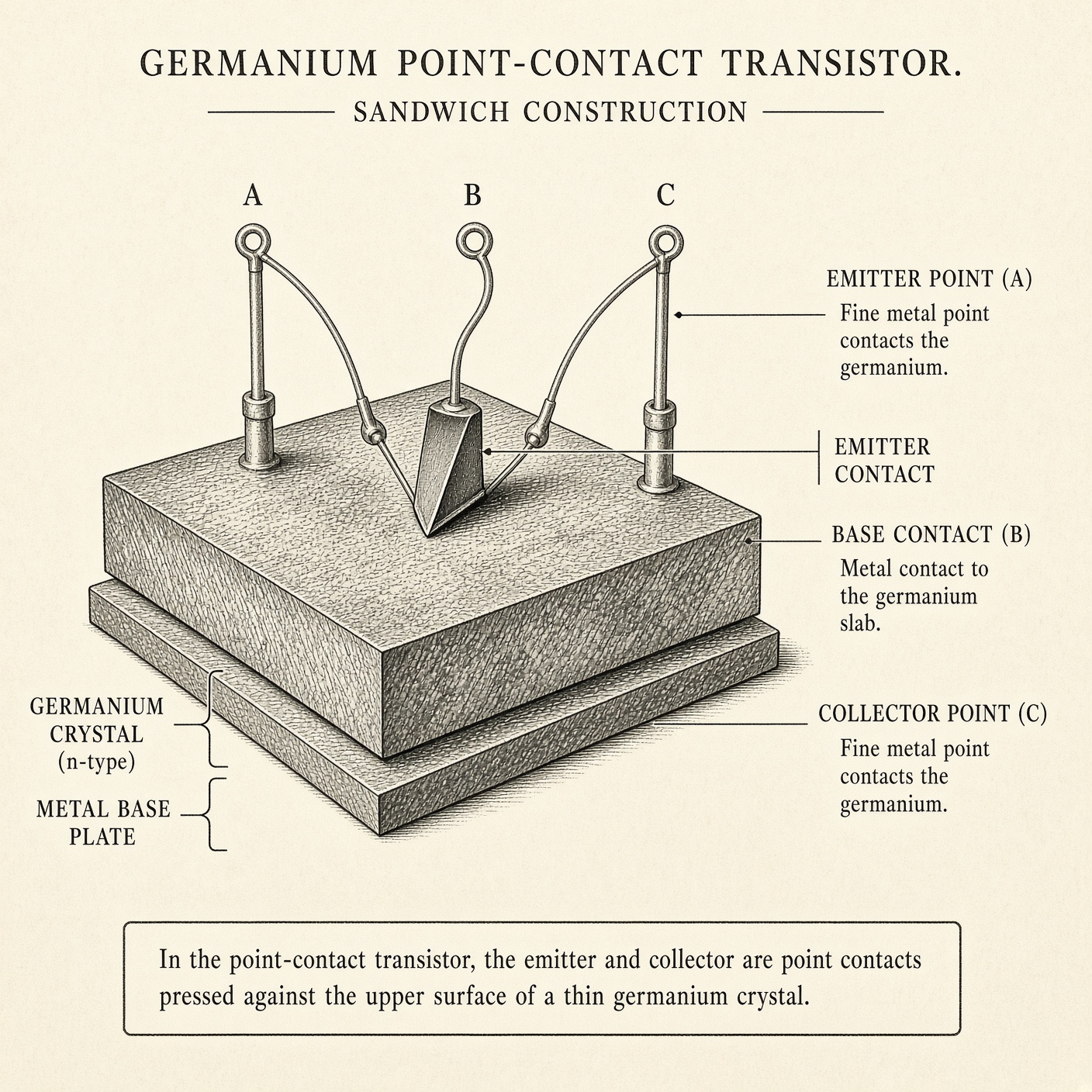
How the mechanism is arranged
How it works
- A semiconductor crystal is doped so regions are rich in electrons or in ‘holes’.
- In a bipolar transistor, a small current into the base controls a larger current from collector to emitter.
- The device amplifies or switches; unlike a tube, it does this cold, at low voltage.
Why it mattered
- Beat the vacuum tube on size, heat, and reliability.
- Made portable electronics and then computing personal.
- Became the atom of the integrated circuit.
Who turned the wheel
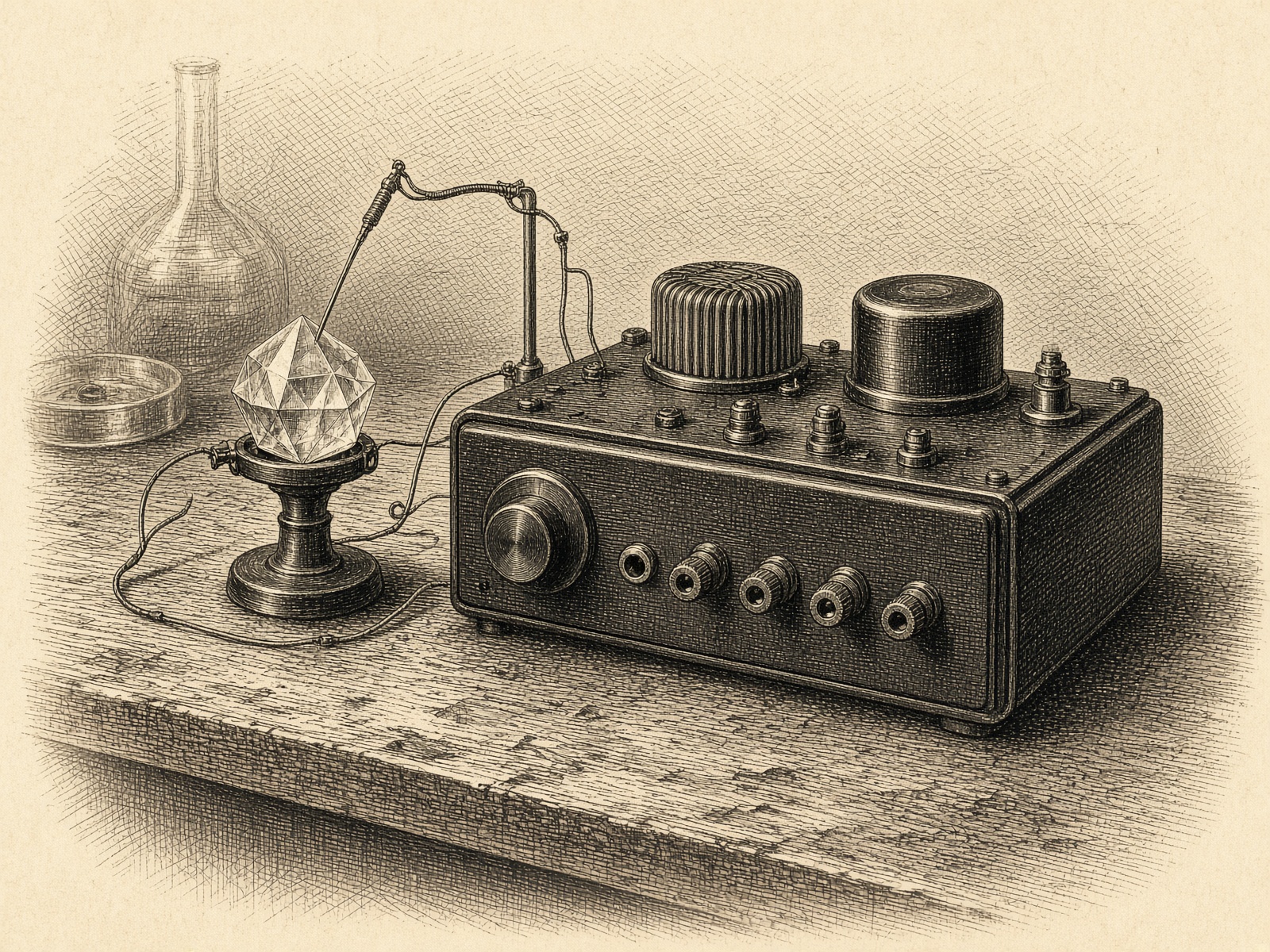
What it unlocked
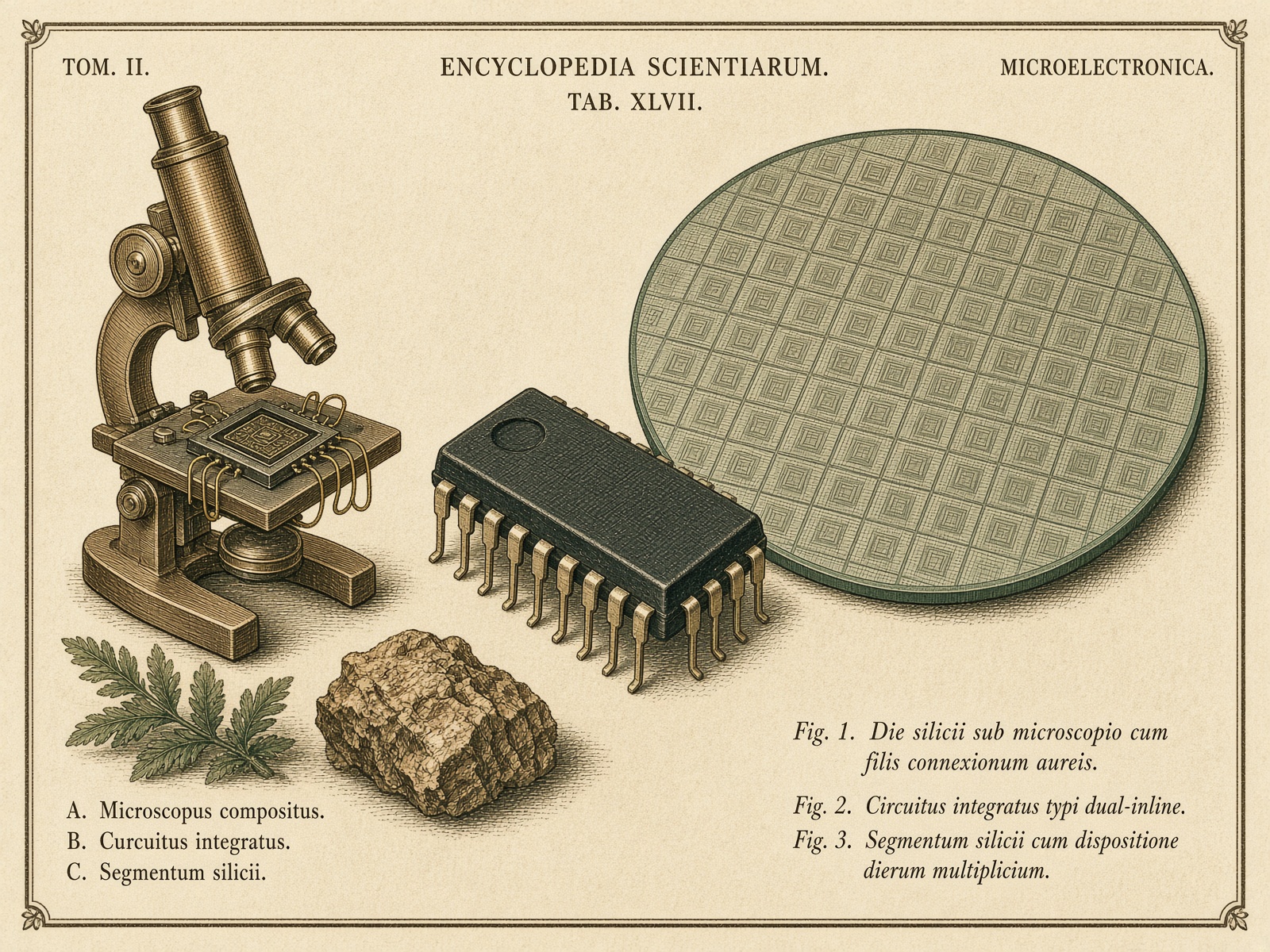
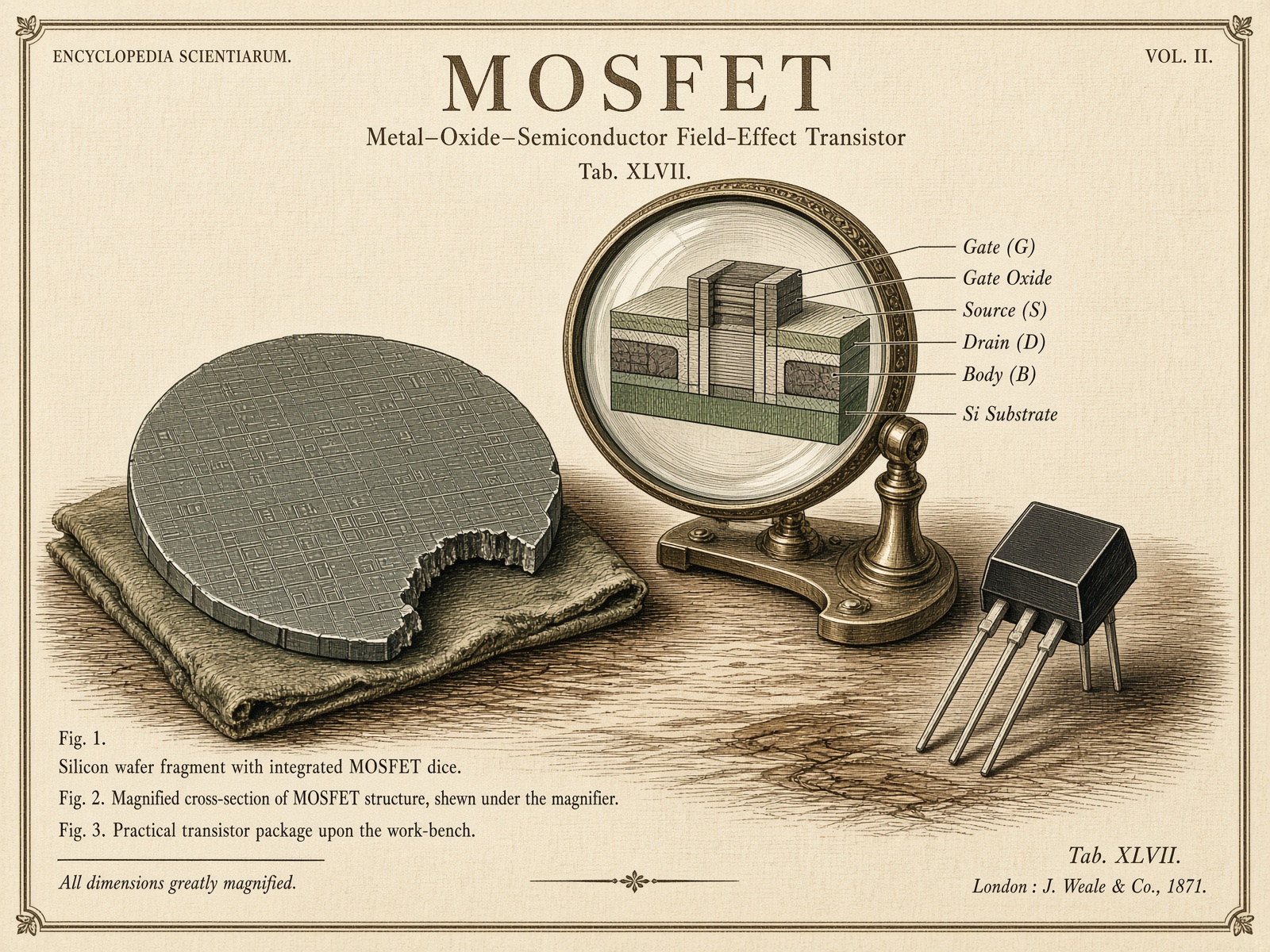
For further study
- Bell Labs / Nokia Bell Labs archives. 1947 notebook and demo.
- Riordan and Hoddeson, Crystal Fire. Narrative history.
Check
Why does a transistor beat a vacuum tube in a pocket radio?