Communications · Vol. VI|Electric telegraph|1837–1844
Electric telegraph
1837–1844
A current in a wire can mean a letter. Morse’s code and Cooke–Wheatstone’s needles made distance into delay measured in seconds, not days. Railways adopted the telegraph to keep trains from colliding. News agencies were born. The first internet is a row of clicking sounders and a clerk with a pencil.
Cooke and Wheatstone; Samuel Morse and Alfred Vail · Britain and the United States
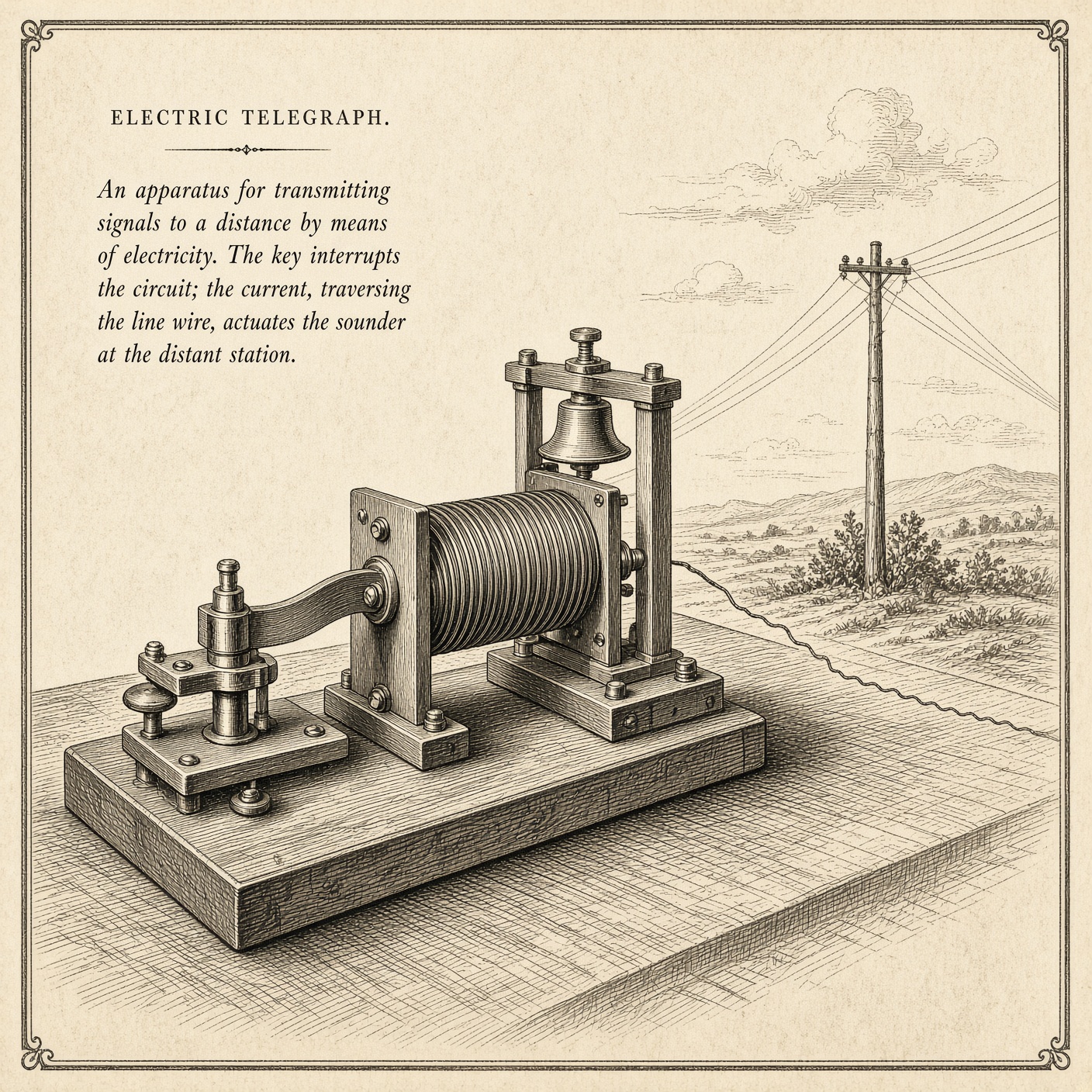
How the mechanism is arranged
How it works
- Close a key so a battery drives current down a line.
- At the far end an electromagnet clicks, deflects a needle, or marks paper.
- A code maps those pulses onto letters.
Why it mattered
- Separated the speed of a message from the speed of a rider.
- Made national markets and weather reports almost simultaneous.
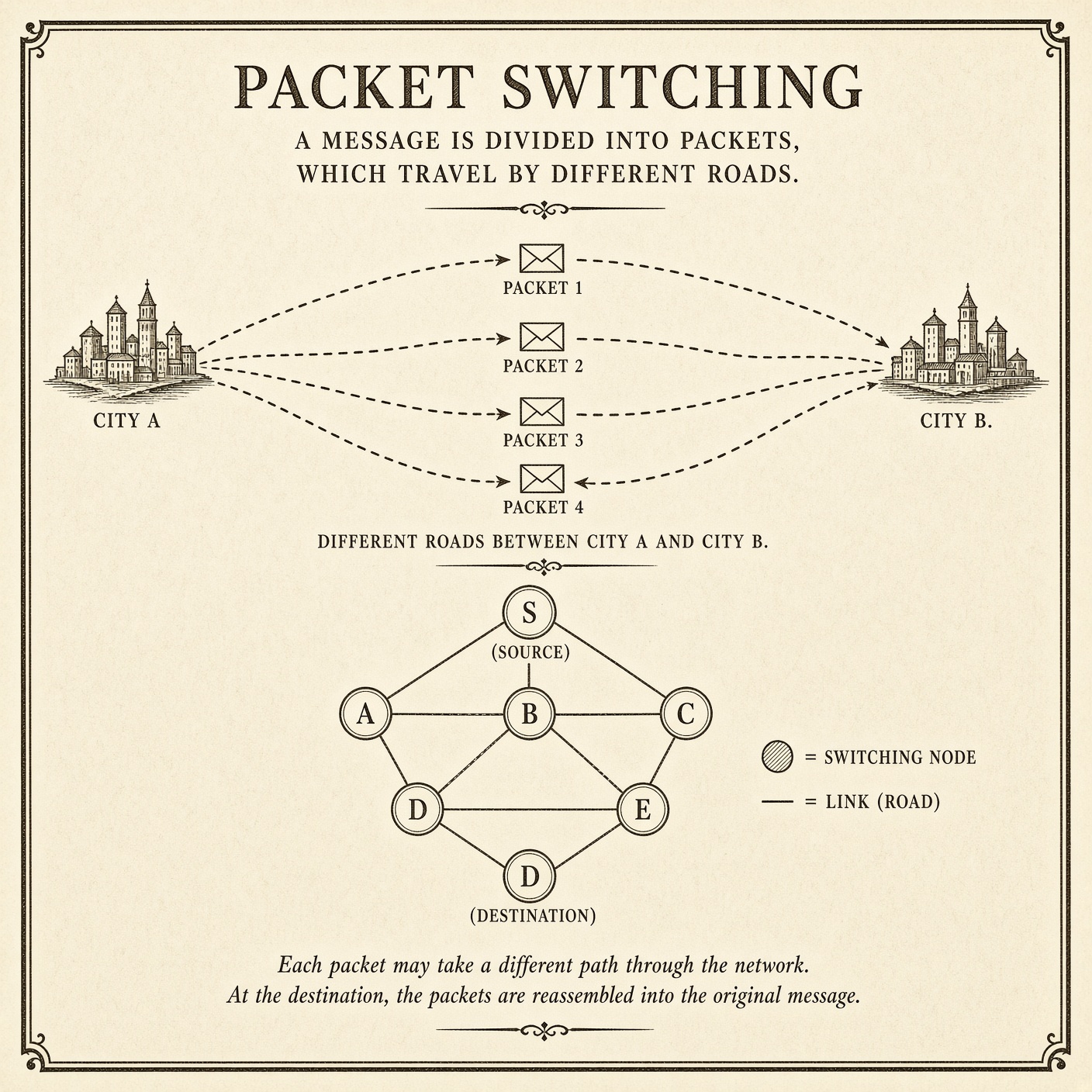
- Taught the world to think in packets of signal.
Who turned the wheel
What it unlocked
For further study
- Smithsonian. Morse instruments.
- Standage, The Victorian Internet. Social history of the telegraph.
Check
What did a telegraph message no longer have to travel with?