Electronics · Vol. II|Dynamo|1831 (Faraday); commercial dynamos 1870s
Dynamo
1831 (Faraday); commercial dynamos 1870s
Move a conductor in a magnetic field and a current appears. Faraday showed the effect in 1831. Decades later, spinning armatures made enough current to light streets. The dynamo (and its cousin the alternator) turns mechanical work — from steam, water, or wind — into a flow you can send down a wire. Power plants are distant dynamos.
Michael Faraday; later Gramme, Siemens · Britain, then Europe
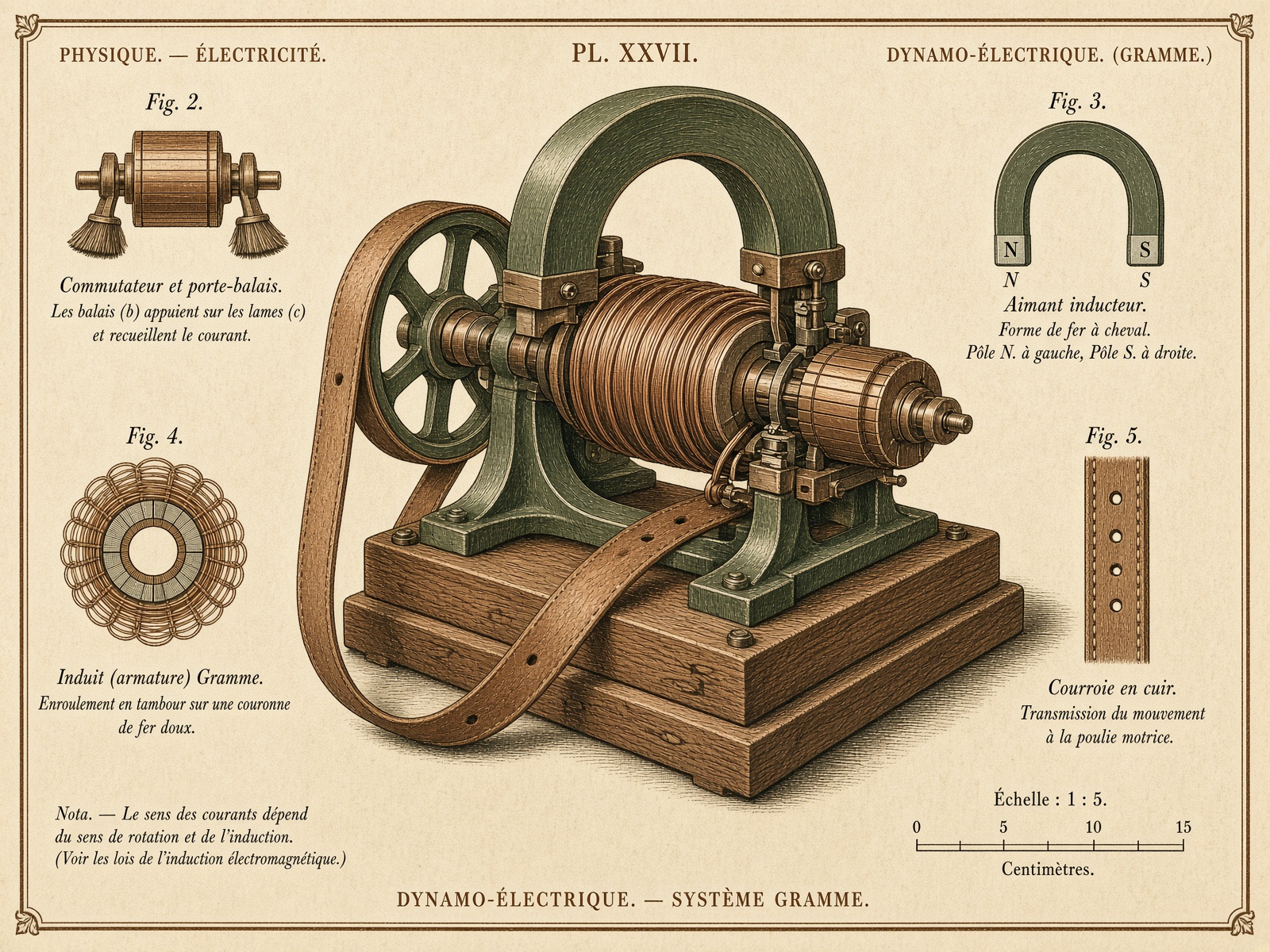
How the mechanism is arranged
How it works
- Spin coils of wire in a magnetic field (or spin the field around the coils).
- The changing flux induces a voltage.
- Collect the current with brushes or slip rings and send it to a load.
Why it mattered
- Separated the place of generation from the place of use.
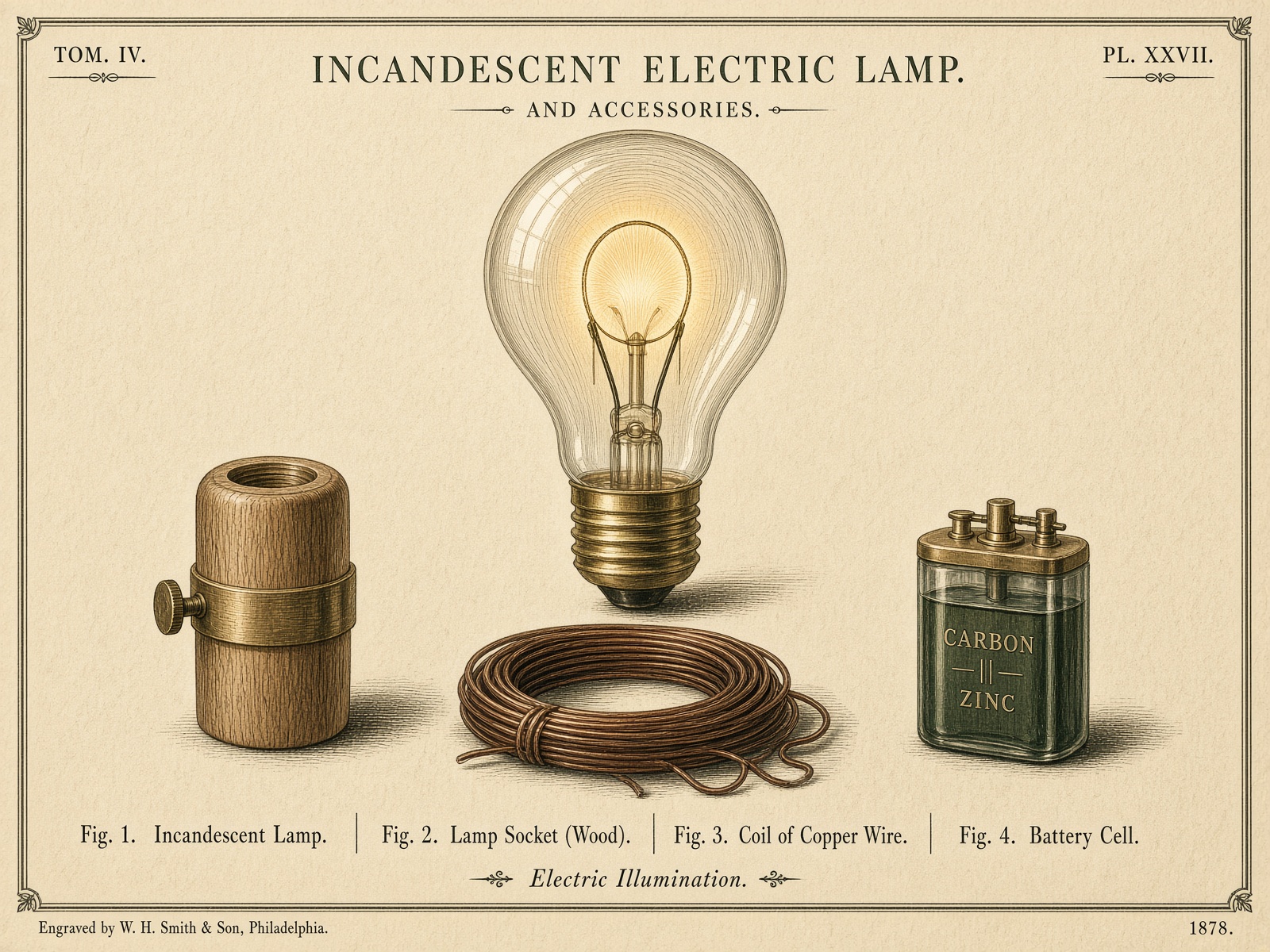
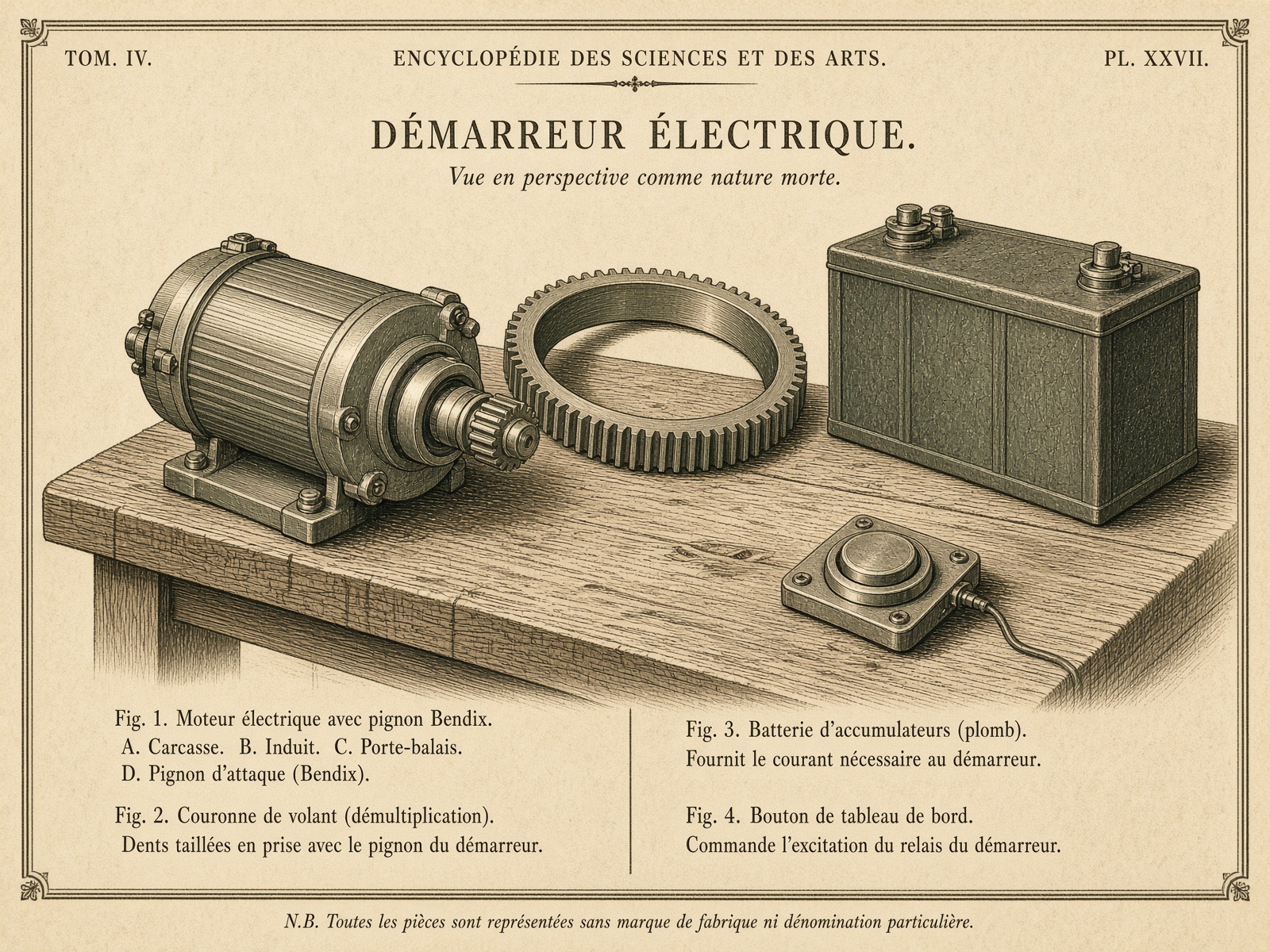
- Made electric light and later motors industrial.
- Turned waterfalls and coal into a common current.
Who turned the wheel
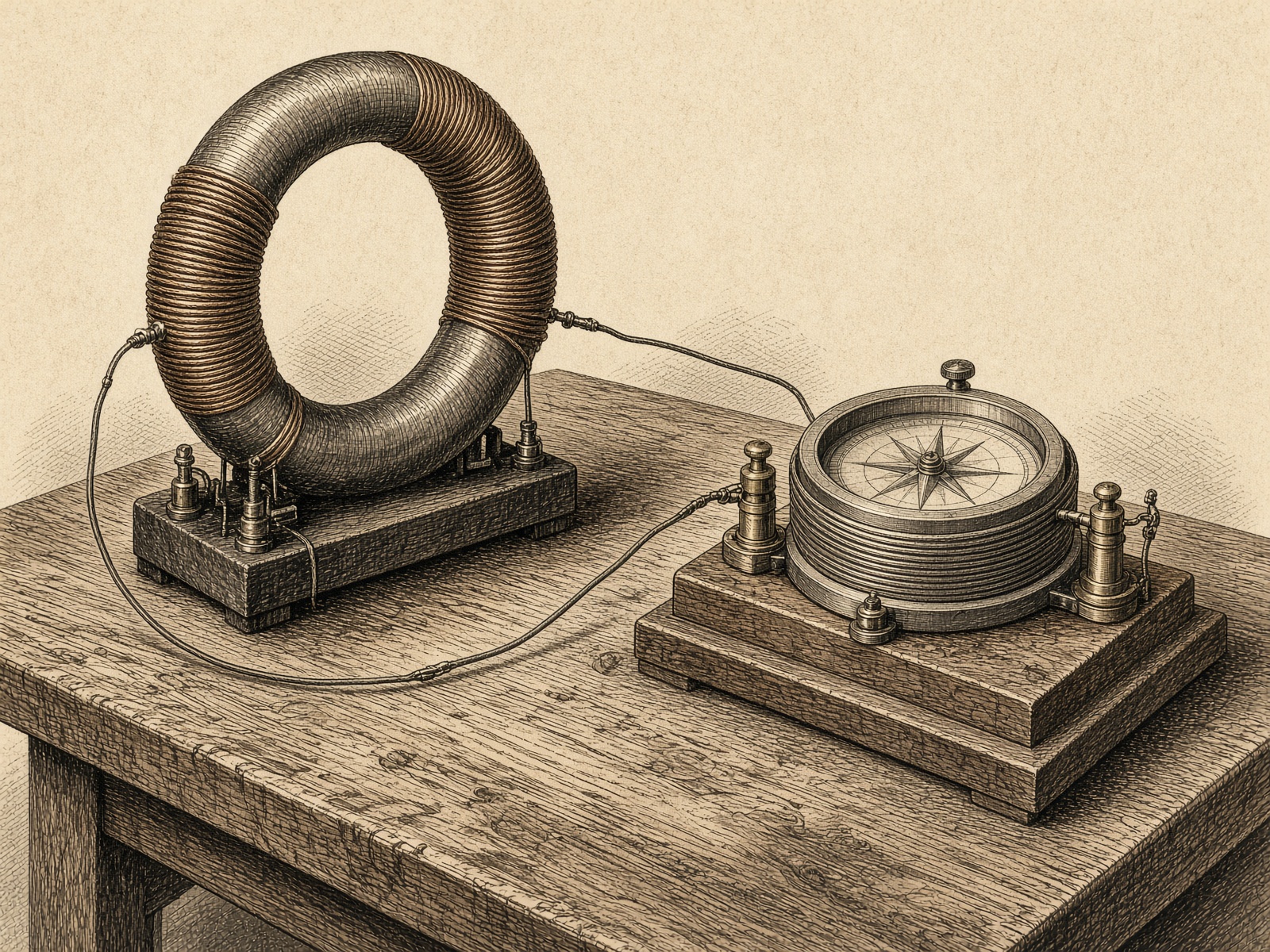
What it unlocked
For further study
- Royal Institution. Faraday’s induction experiments.
- Hughes, Networks of Power. Electrification.
Check
What must be moving for a dynamo to produce current?