Communications · Vol. VI|Packet internet|1969 (ARPANET); 1983 (TCP/IP cutover)
Packet internet
1969 (ARPANET); 1983 (TCP/IP cutover)
ARPANET’s first login, UCLA to Stanford in 1969, crashed after two letters. The idea survived: break a message into packets, send them independently, reassemble at the end. TCP/IP, on 1 January 1983, became the common tongue. The internet is not a wire. It is an agreement about envelopes.
ARPANET teams; Cerf, Kahn, and many others · United States, then global research nets
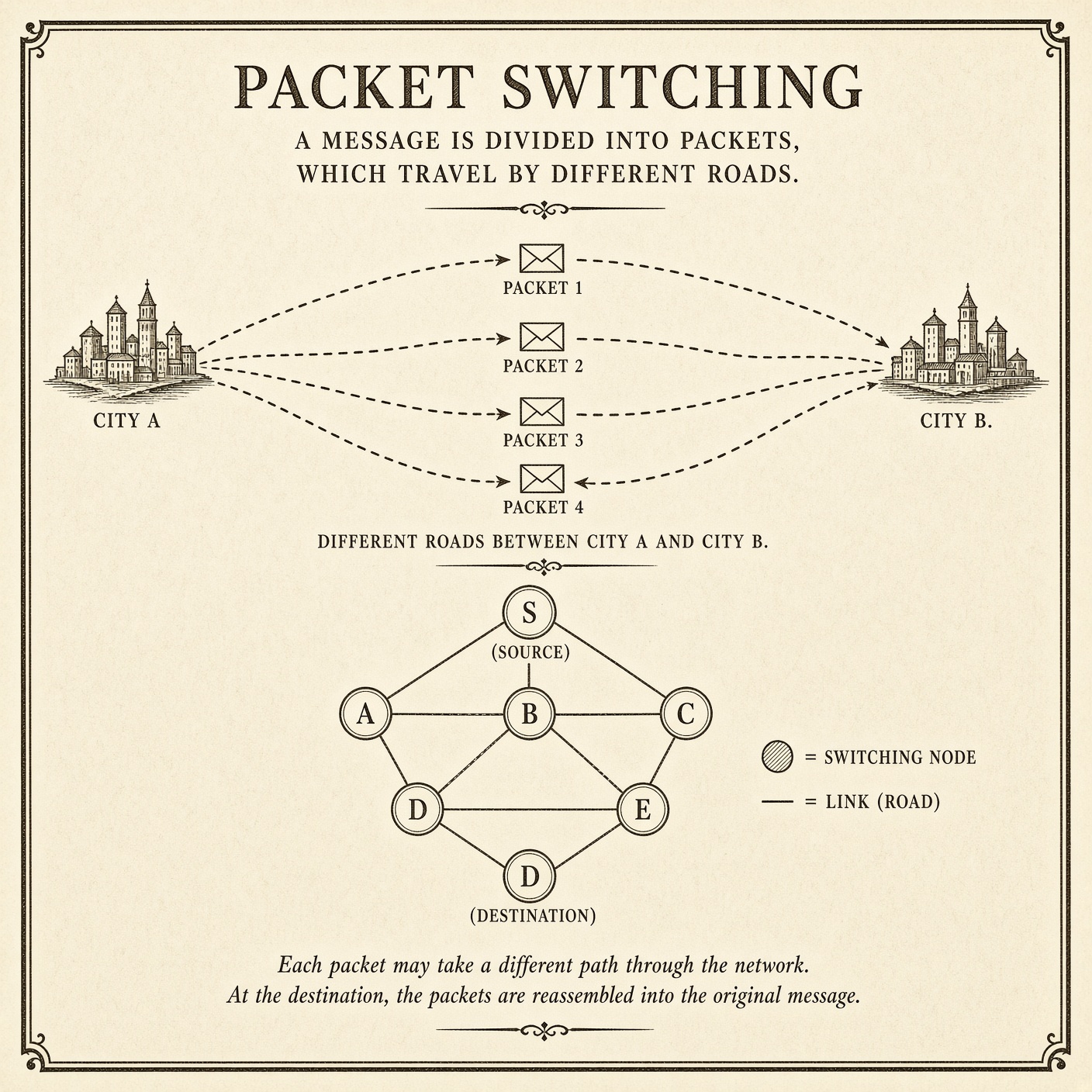
How the mechanism is arranged
How it works
- Split data into packets with addresses.
- Routers forward each packet hop by hop.
- The destination puts the packets back in order and asks for missing ones.
Why it mattered
- Survived the loss of any one path.
- Let unlike networks interconnect.
- Became the substrate of the web, mail, and phones.
Who turned the wheel
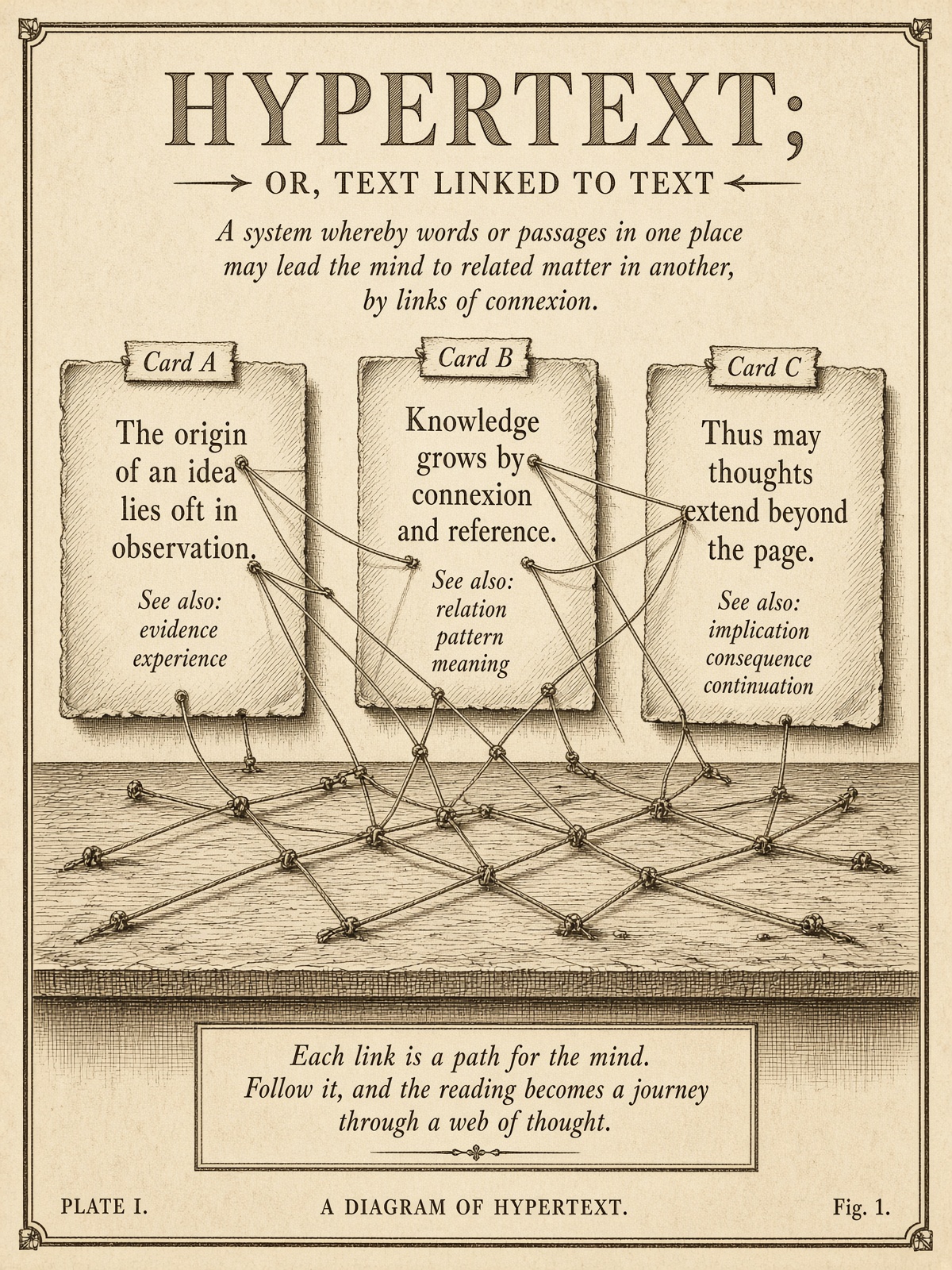
What it unlocked


For further study
- Kleinrock / UCLA accounts. First ARPANET node.
- Hafner and Lyon, Where Wizards Stay Up Late. Narrative.
Check
What advantage do packets have if one link fails?