Communications · Vol. VI|Movable-type printing|c. 1040 (Bi Sheng); 1450s (Gutenberg)
Movable-type printing
c. 1040 (Bi Sheng); 1450s (Gutenberg)
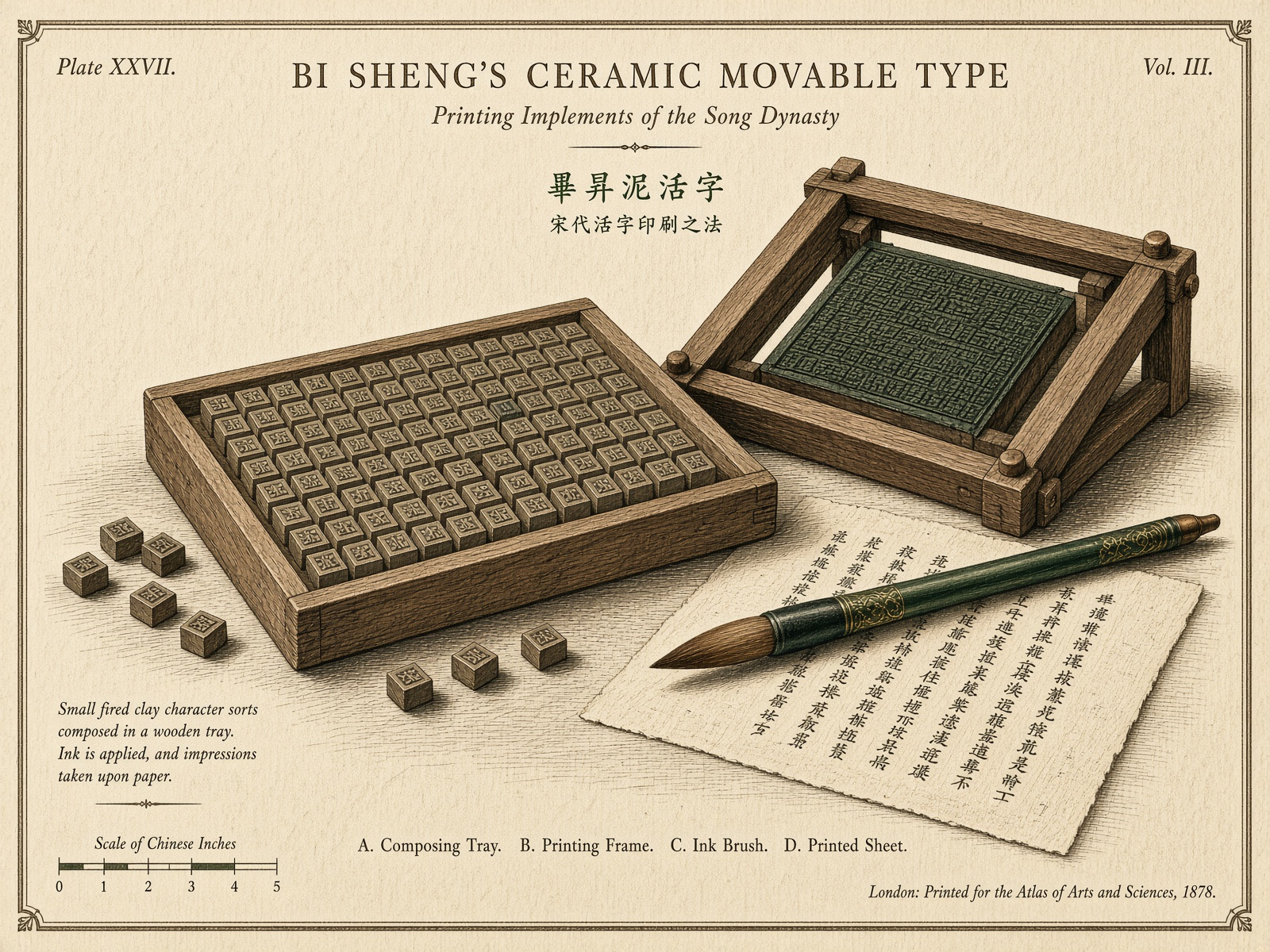
Woodblock printing is a carved page. Movable type is a page assembled from letters you can reuse. Bi Sheng used ceramic type in 11th-century China. In the 1450s Gutenberg combined metal type, oil-based ink, paper, and a press derived from wine-making. The first substantial Western book from that system was a Bible. The deeper product was an information flood: pamphlets, maps, and scientific errata that could be corrected in the next edition.
Bi Sheng; Johannes Gutenberg · China; Mainz
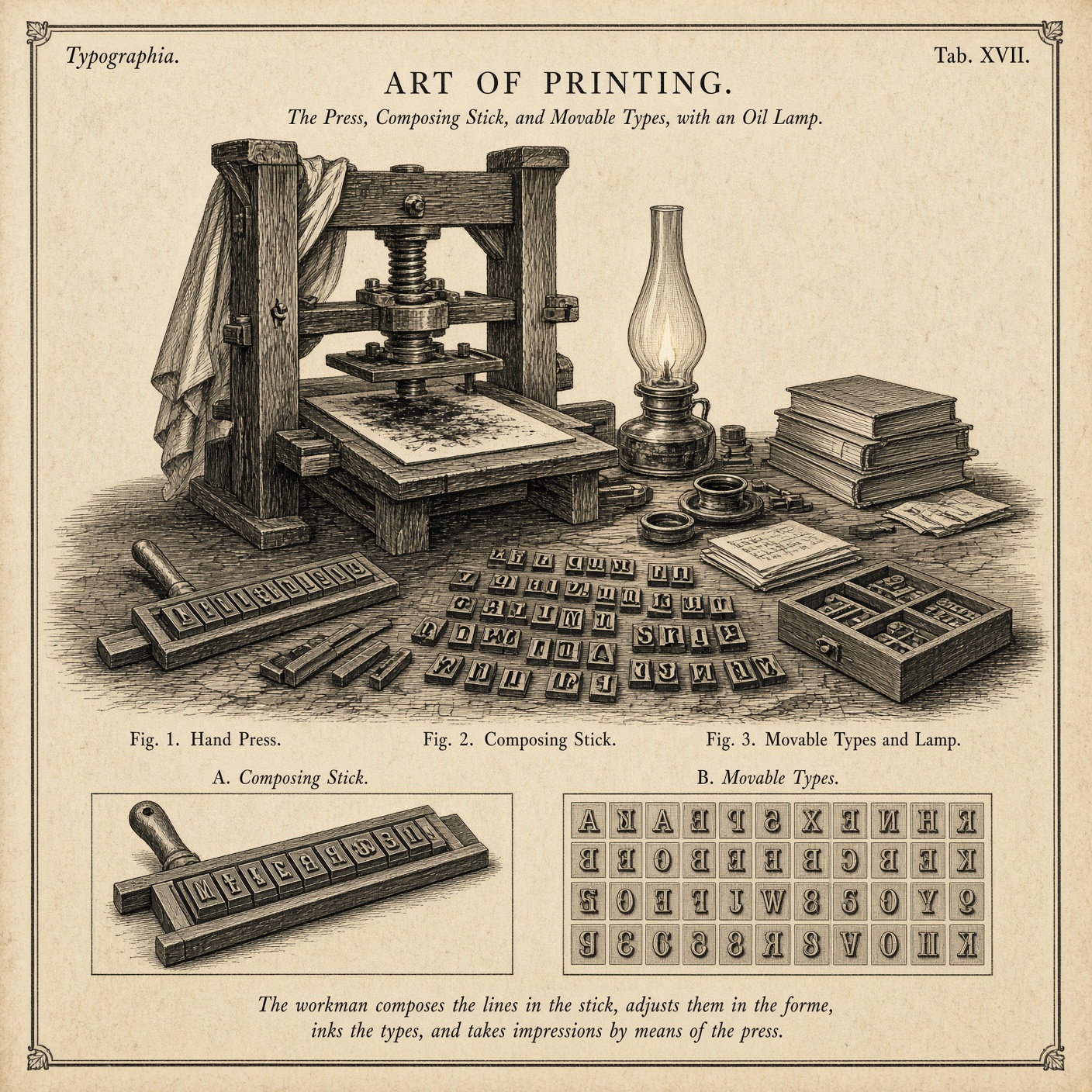
How the mechanism is arranged
How it works
- Cast or carve individual characters as raised, reversed types.
- Compose a page in a frame, ink the face, and press paper against it.
- Distribute the type and set the next page — the letters survive the book.
Why it mattered
- Collapsed the cost of a copy once the type was set.
- Made error-correction a public process (errata, new editions).
- Spread literacy’s raw material faster than scribes could.
Who turned the wheel
What it unlocked
For further study
- Needham on printing. Bi Sheng and later East Asian type.
- Eisenstein, The Printing Press as an Agent of Change. European effects.
Check
What does movable type reuse that a woodblock page cannot?