Chemicals · Vol. IV|Synthetic dye (mauveine)|1856
Synthetic dye (mauveine)
1856
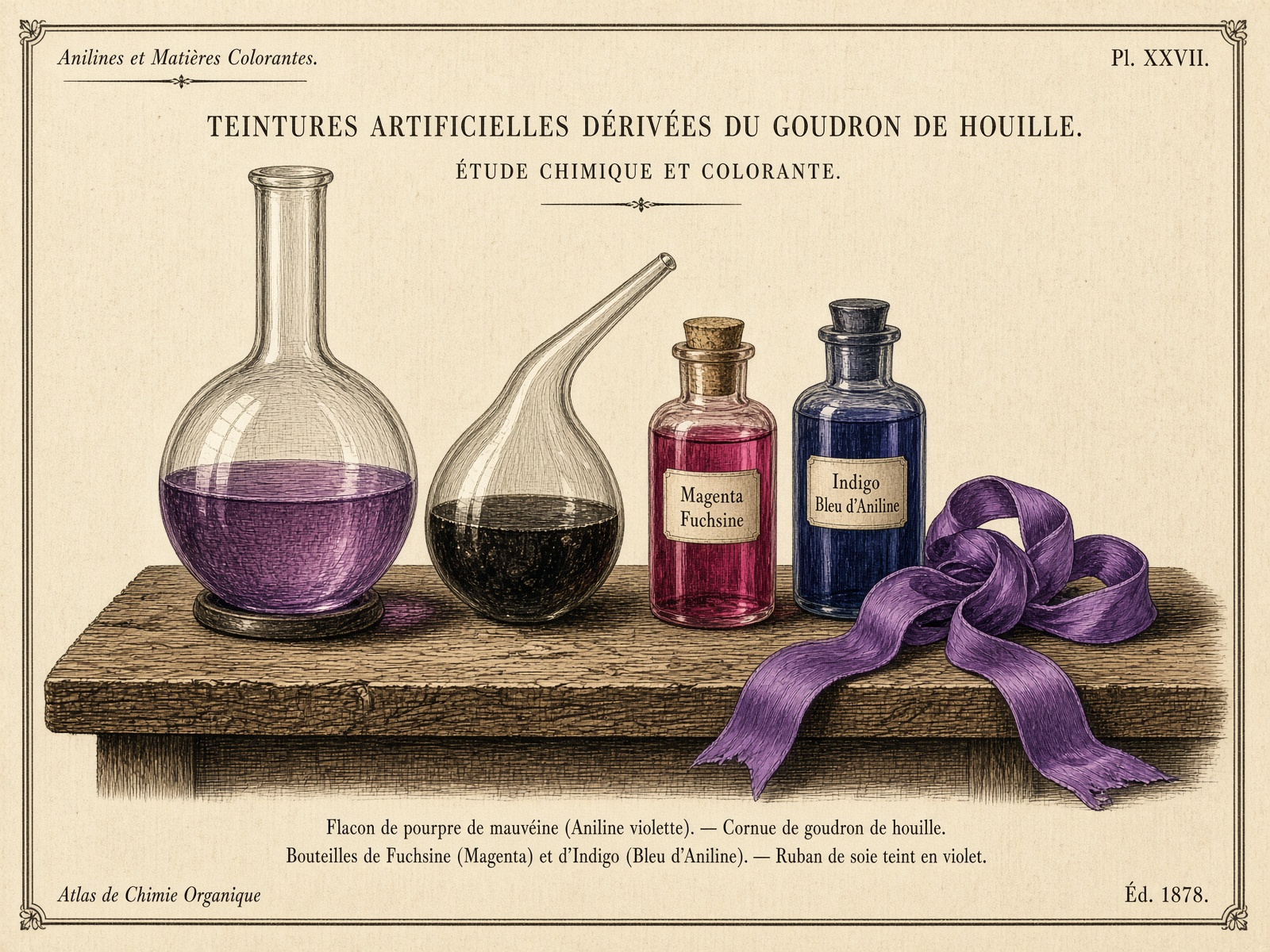
Perkin, 18, was trying to make quinine from coal tar and got a purple stain instead. Mauveine was the first commercial aniline dye. Color, once a matter of snails and madder roots, became a factory output. The accident founded a industry that later made explosives, medicines, and plastics from the same tar barrel.
William Henry Perkin · London
How it works
- Treat aniline (from coal tar) with oxidizers to form a complex purple salt.
- Dissolve and apply it to silk or other fiber.
- Scale the reaction in vats — chemistry as manufacture.
Why it mattered
- Showed organic chemistry could invent materials nature had not sold.
- Built the German and British dye firms that later made pharmaceuticals.
- Tied fashion to the coal-gas works.
What it unlocked
For further study
- Science Museum, Perkin’s mauve. Original dye and silk.
- Garfield, Mauve. Narrative history.
Check
What feedstock did mauveine prove could yield new molecules?