Automobiles · Vol. III|Internal combustion engine|1876 (Otto four-stroke)
Internal combustion engine
1876 (Otto four-stroke)
A steam engine burns fuel outside the cylinder. An internal-combustion engine burns it inside. Otto’s 1876 four-stroke — intake, compression, power, exhaust — made a compact, relatively efficient heat engine. Diesel later compressed air so hot that injected fuel ignited itself. The road vehicle, the airplane, and the small generator all sit on this cycle.
Nikolaus Otto; later Diesel · Germany
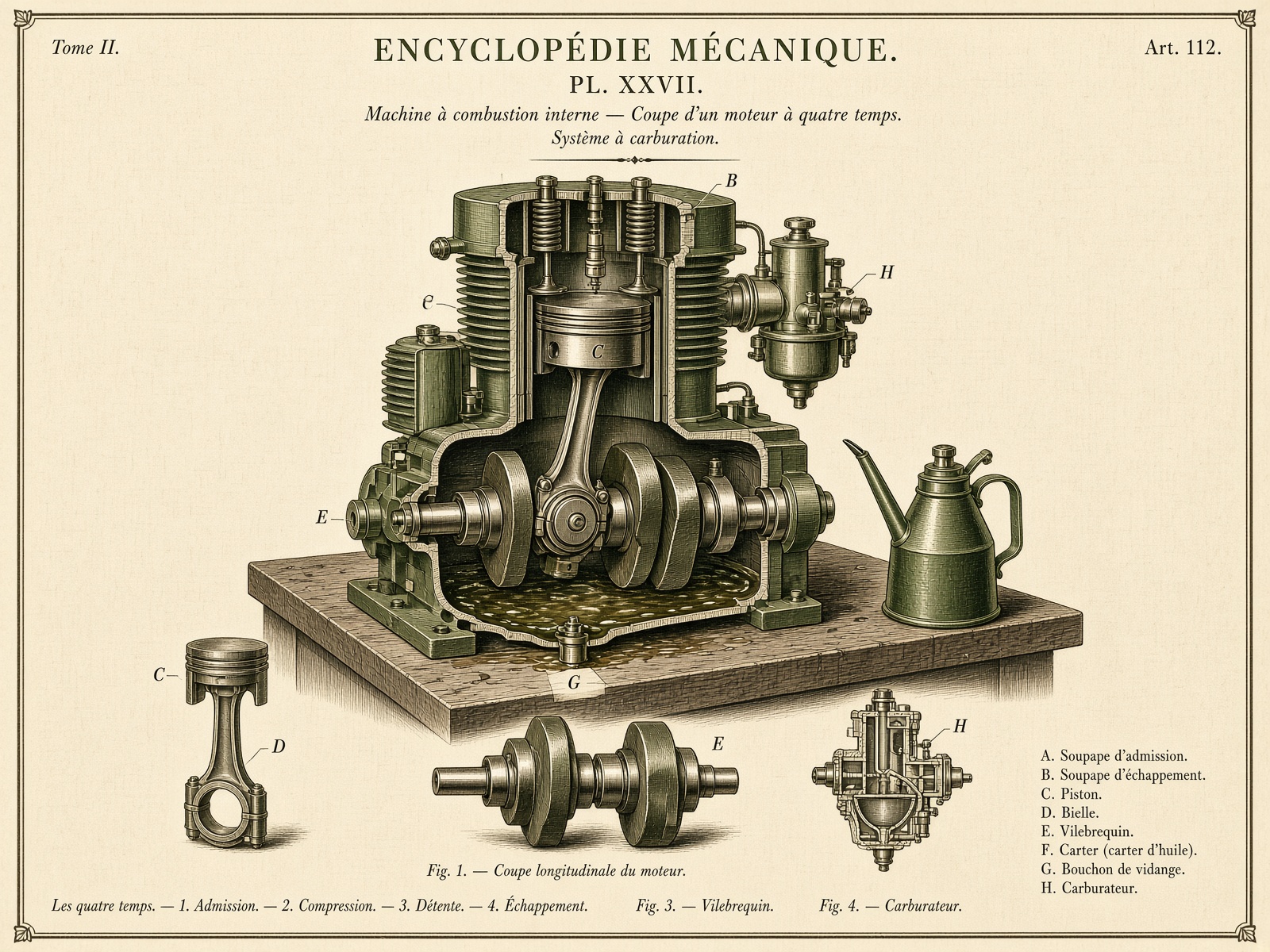
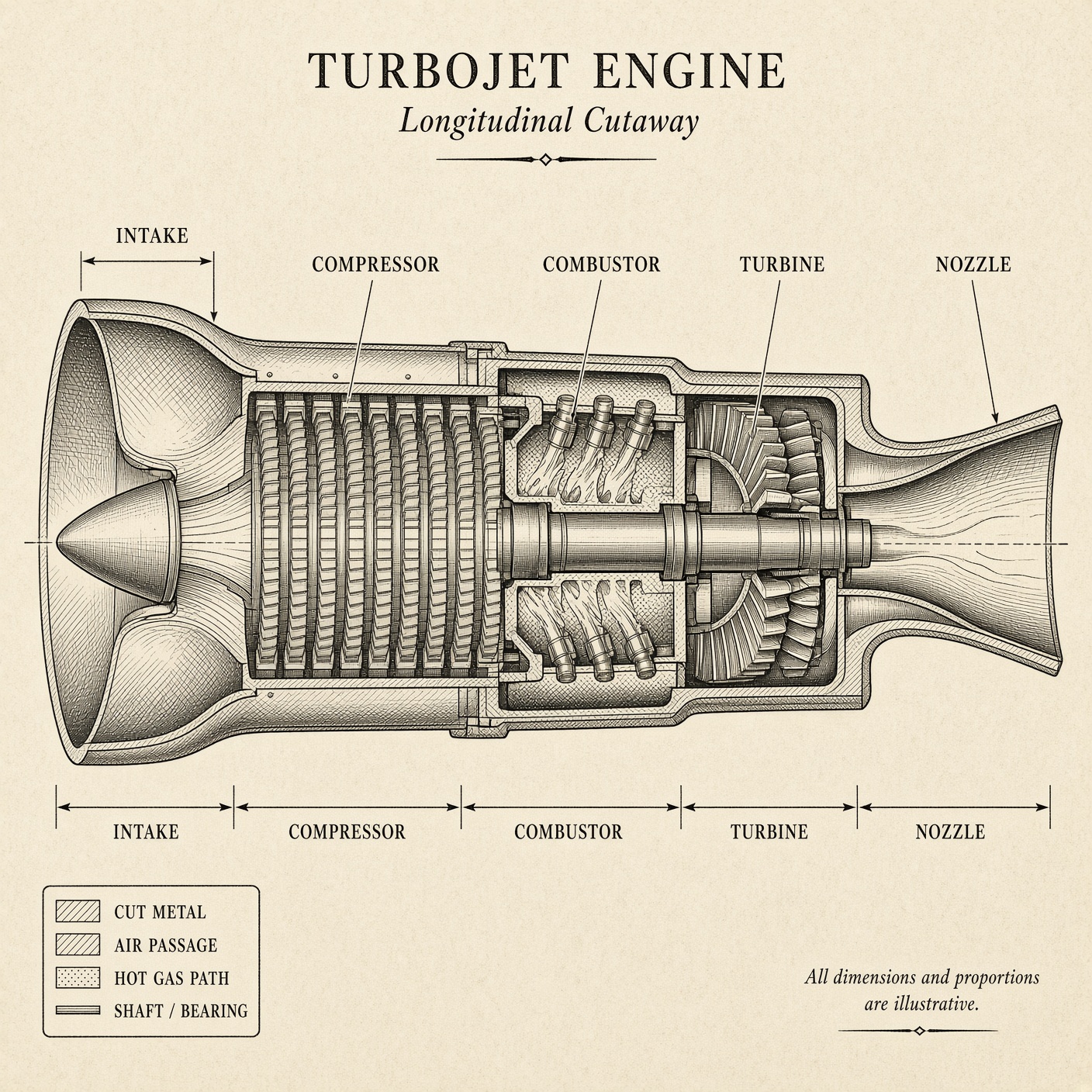
How the mechanism is arranged
How it works
- Draw in a mixture of air and fuel (or air alone, for diesel).
- Compress it; ignite with a spark (Otto) or by compression heat (Diesel).
- The expanding gas pushes a piston; the crankshaft turns the push into rotation.
Why it mattered
- Packed more work into a smaller, lighter engine than steam for most road uses.
- Freed vehicles from boilers and water tanks.
- Created the petroleum demand that reshaped geopolitics.
Who turned the wheel
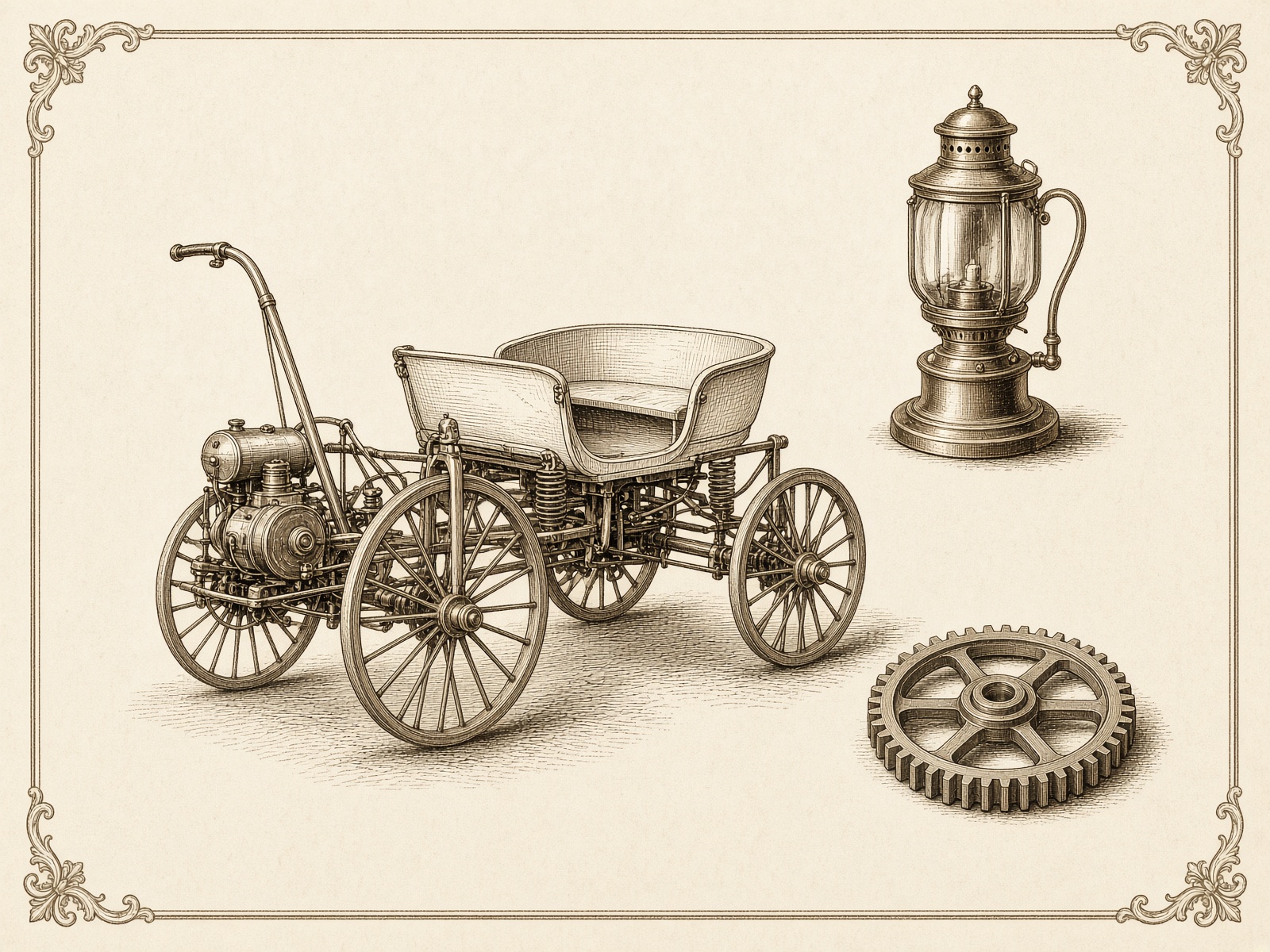
What it unlocked
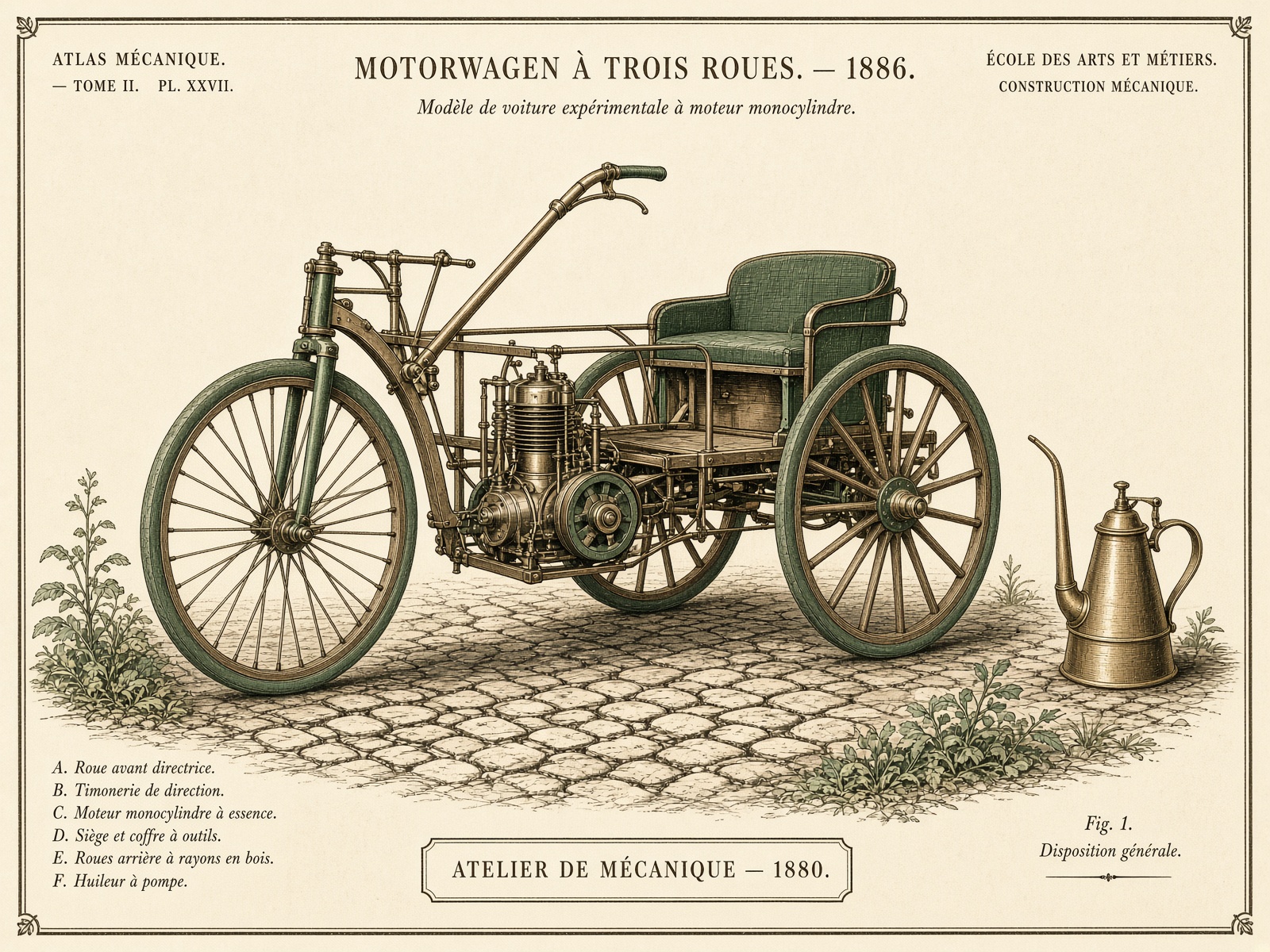
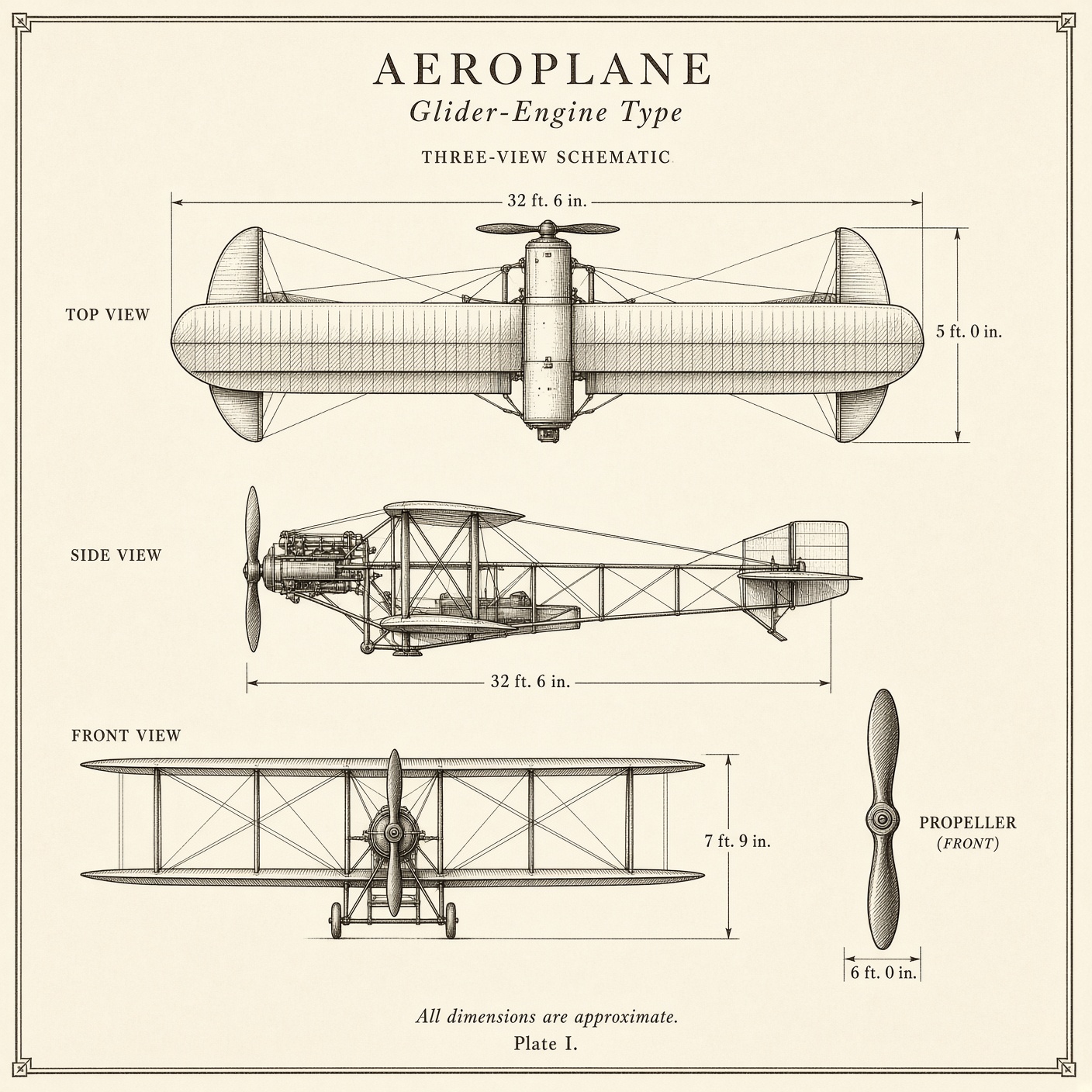
For further study
- Deutsches Museum. Otto engine.
- Cummins, Internal Fire. Engine history.
Check
Where does the fuel burn in an Otto engine, compared with Watt’s?