Chemicals · Vol. IV|Lithium-ion battery|1991 (Sony commercial cell)
Lithium-ion battery
1991 (Sony commercial cell)
Lithium is light and eager to shed an electron. A lithium-ion cell shuttles Li⁺ between a carbon anode and a metal-oxide cathode, through an organic electrolyte. Yoshino’s architecture, Goodenough’s cathode chemistry, and Sony’s 1991 product made a rechargeable pack dense enough for camcorders, then laptops, then cars. Portable power is a chemistry problem that escaped the lab.
Whittingham, Goodenough, Yoshino; Sony commercialization · United States and Japan
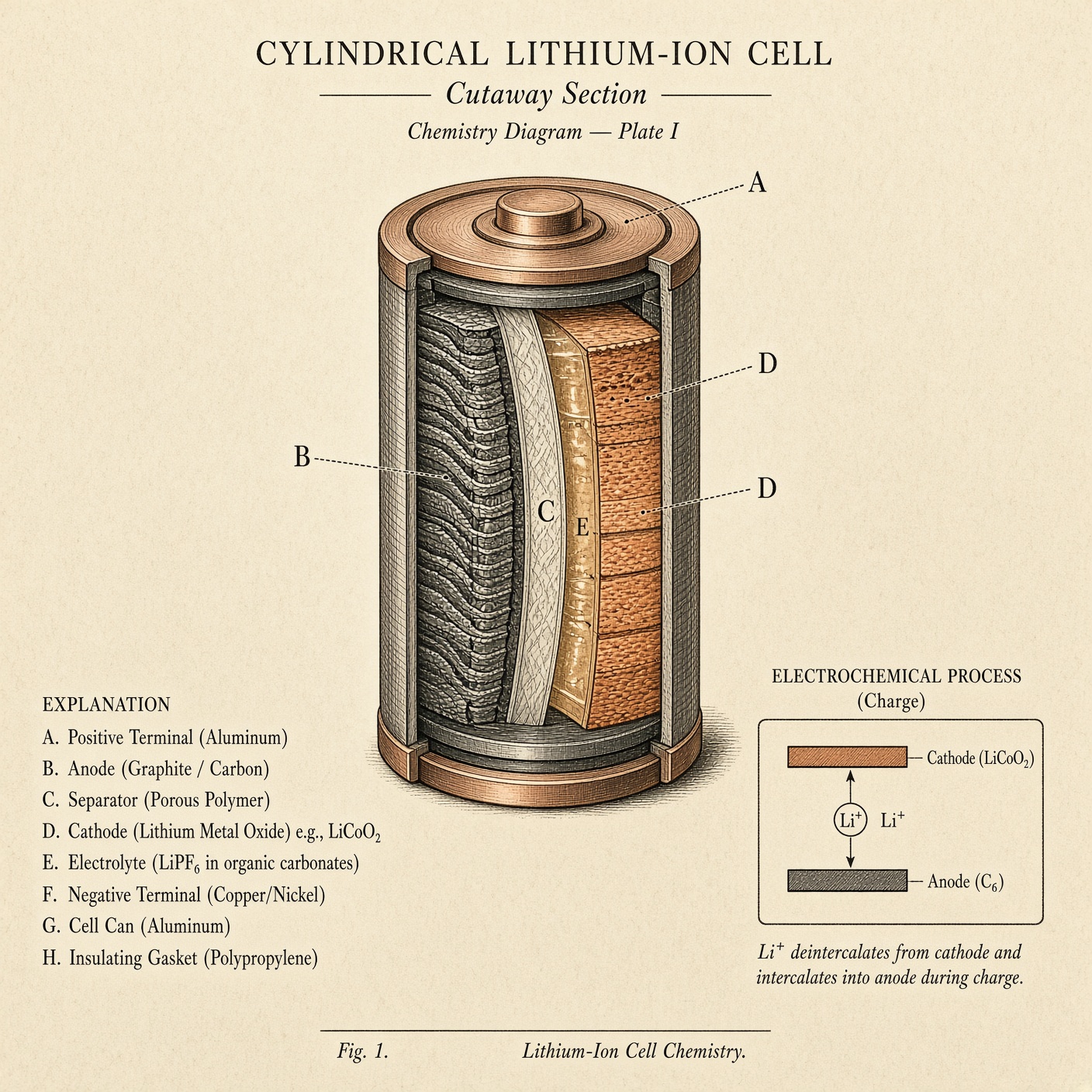
How the mechanism is arranged
How it works
- On charge, lithium ions leave the cathode and nest in the anode.
- On discharge they run home, and electrons go the long way through the device.
- A separator stops the electrodes touching — a short would be a fire.
Why it mattered
- Freed electronics from nickel-cadmium bulk and memory-effect folklore.
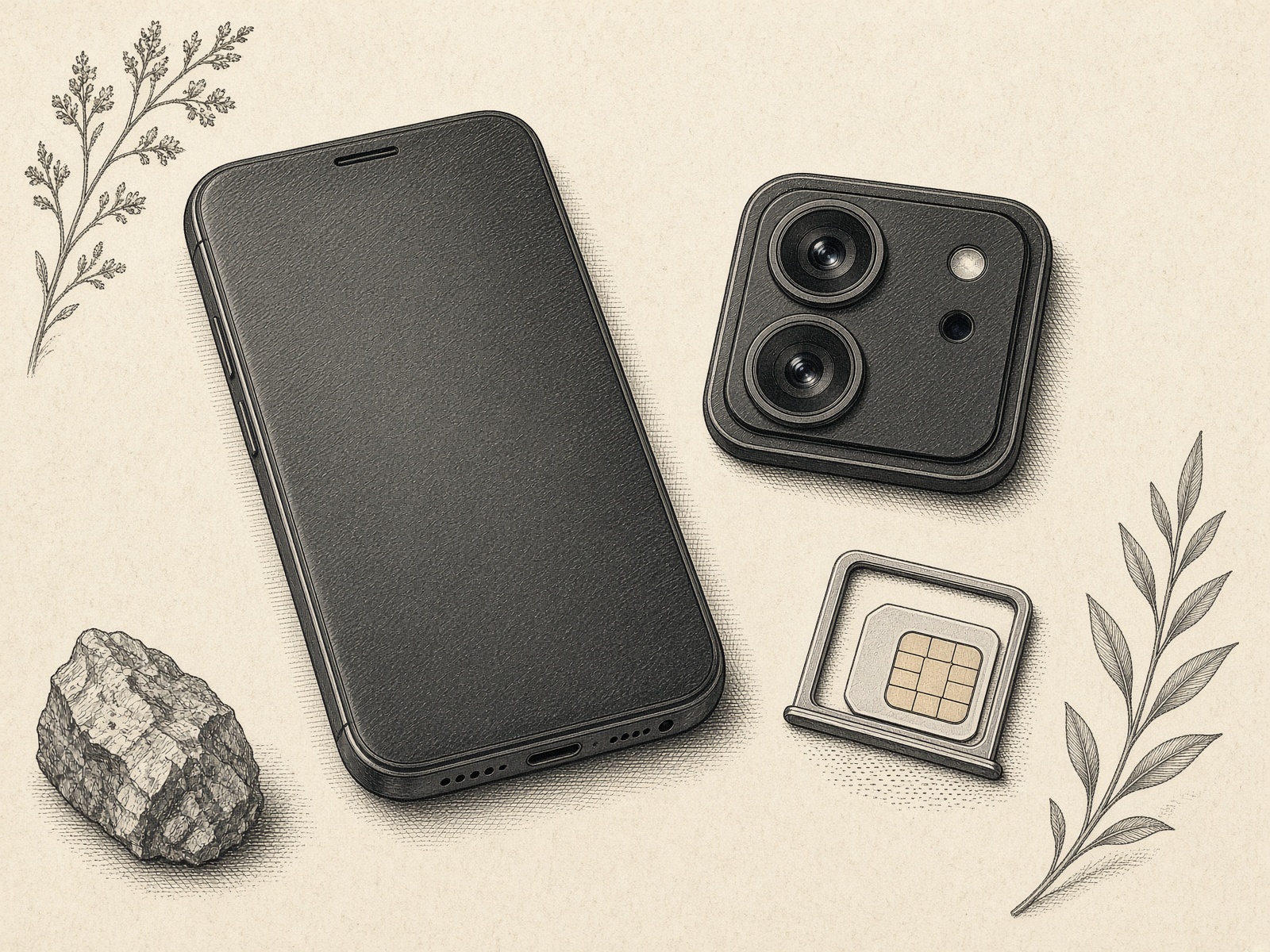
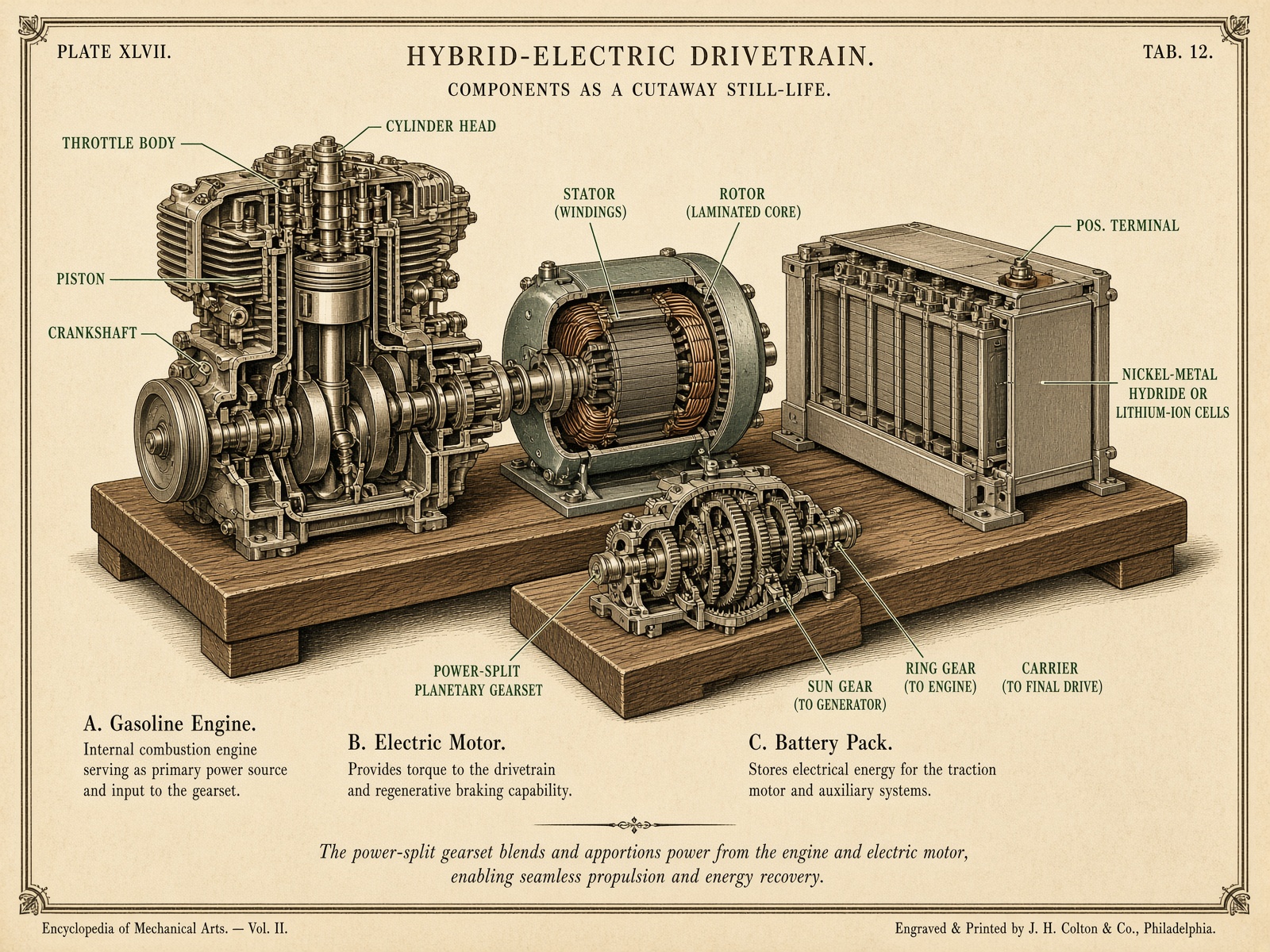
- Made the smartphone and the practical EV possible.
- Created a new mining and recycling politics (lithium, cobalt, nickel).
Who turned the wheel

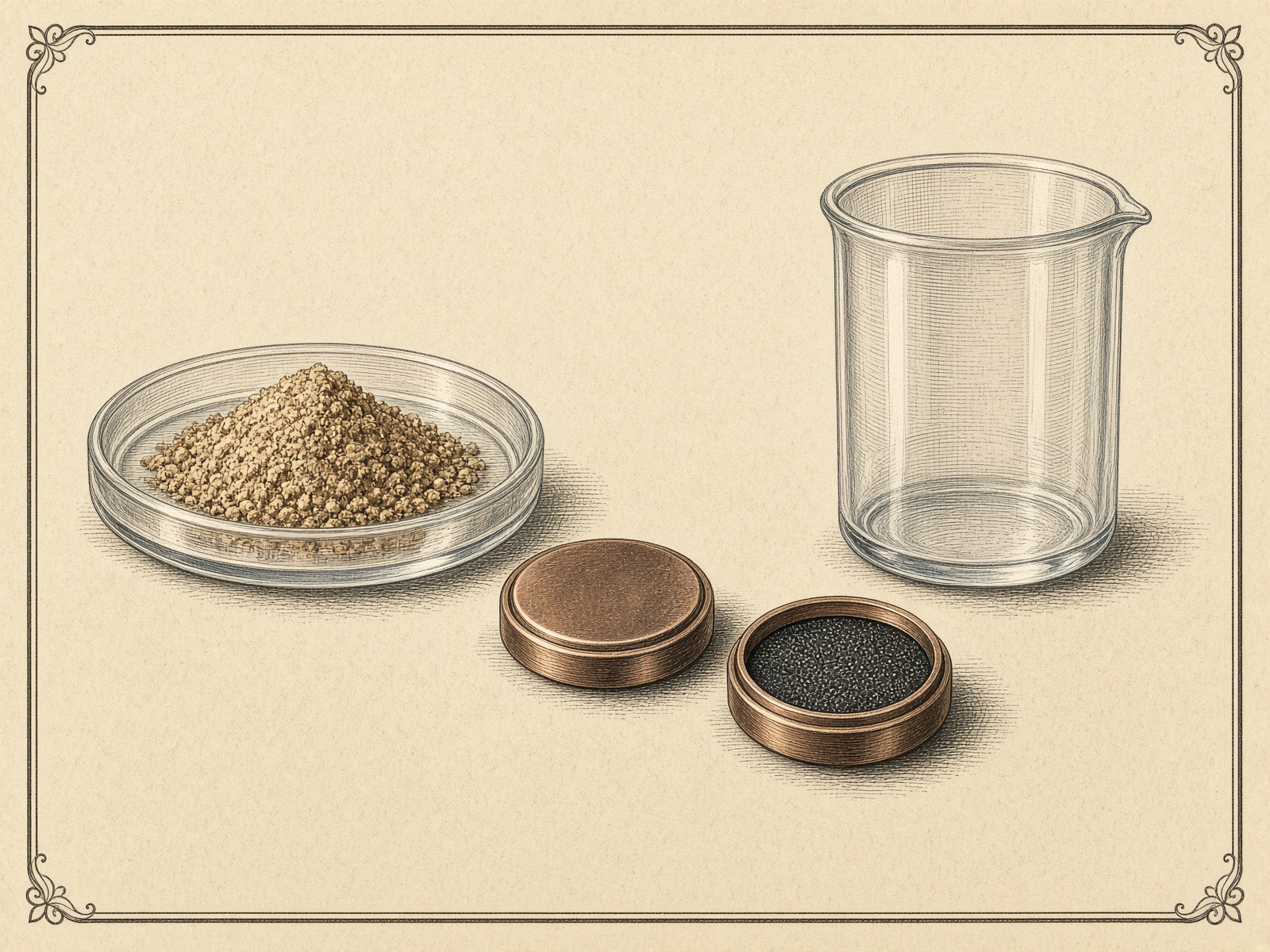
What it unlocked
For further study
- Nobel Prize in Chemistry 2019. Whittingham, Goodenough, Yoshino.
- Sony historical notes. First commercial Li-ion.
Check
What travels through the electrolyte, and what travels through the wire?