Automobiles · Vol. III|Catalytic converter|1975 (U.S. auto mandate era)
Catalytic converter
1975 (U.S. auto mandate era)
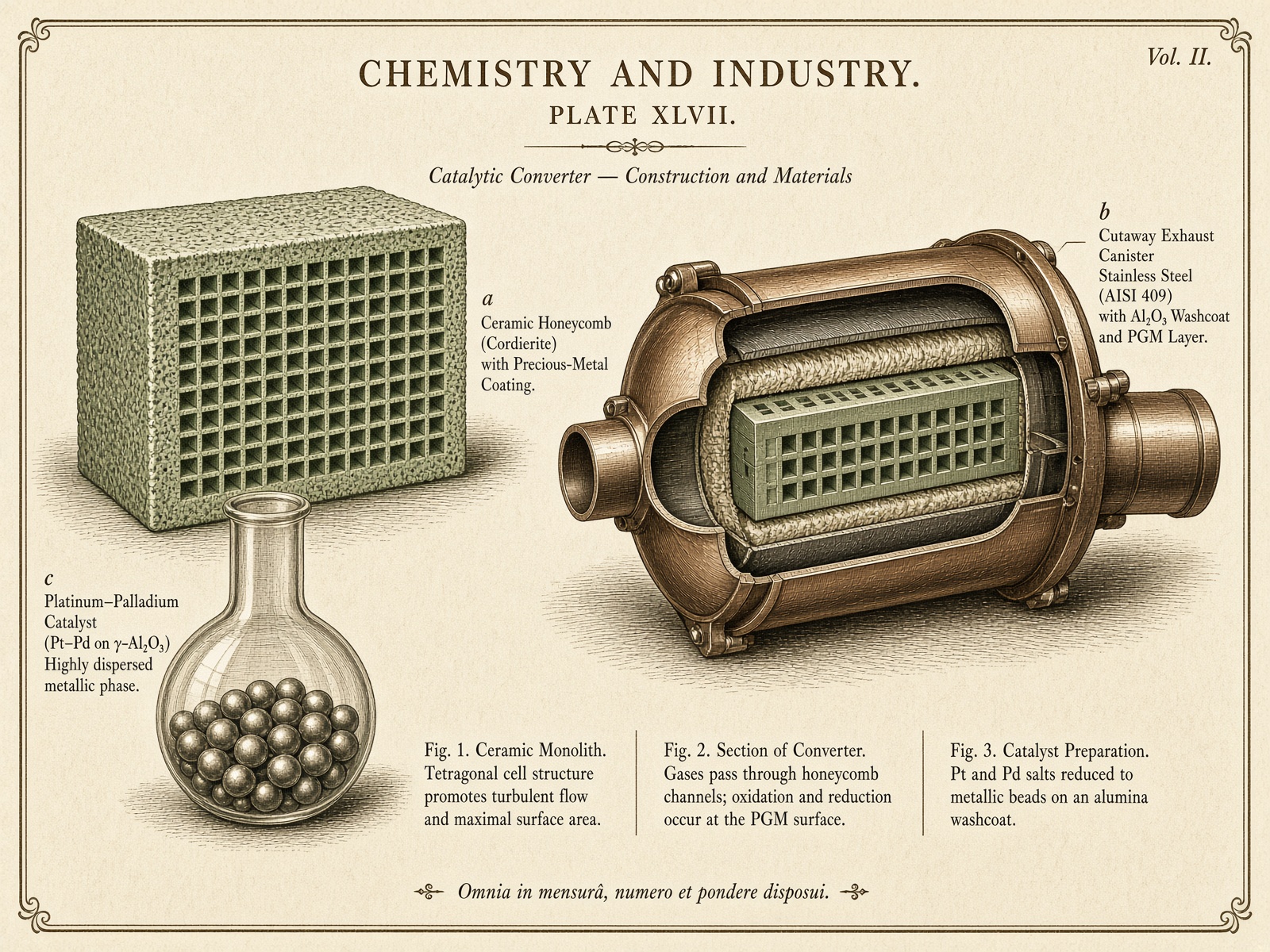
A honeycomb of ceramic, coated with precious metals, sits in the exhaust and turns carbon monoxide, unburned hydrocarbons, and nitrogen oxides into less harmful gases. U.S. clean-air rules of the 1970s forced the industry to fit them — and to drop tetraethyl lead, which poisoned the catalyst. The converter is a chemical plant the size of a loaf, under a car.
Many (Corning substrates; Engelhard catalysts) · United States, then global
How it works
- Hot exhaust flows through a high-surface ceramic substrate.
- Platinum, palladium, and rhodium catalyze oxidation and reduction reactions.
- A sensor and engine computer keep the mix near the ratio the catalyst likes.
Why it mattered
- Cut urban smog from tailpipes by a large factor.
- Ended leaded gasoline in markets that adopted it.
- Showed regulation could force a hardware change worldwide.
What it unlocked
For further study
- EPA historical notes. 1970s auto standards.
- Heck and Farrauto, Catalytic Air Pollution Control. Technology.
Check
Why did catalytic converters help end leaded petrol?