Transportation · Vol. VII|Steamship|1807 (Clermont service)
Steamship
1807 (Clermont service)
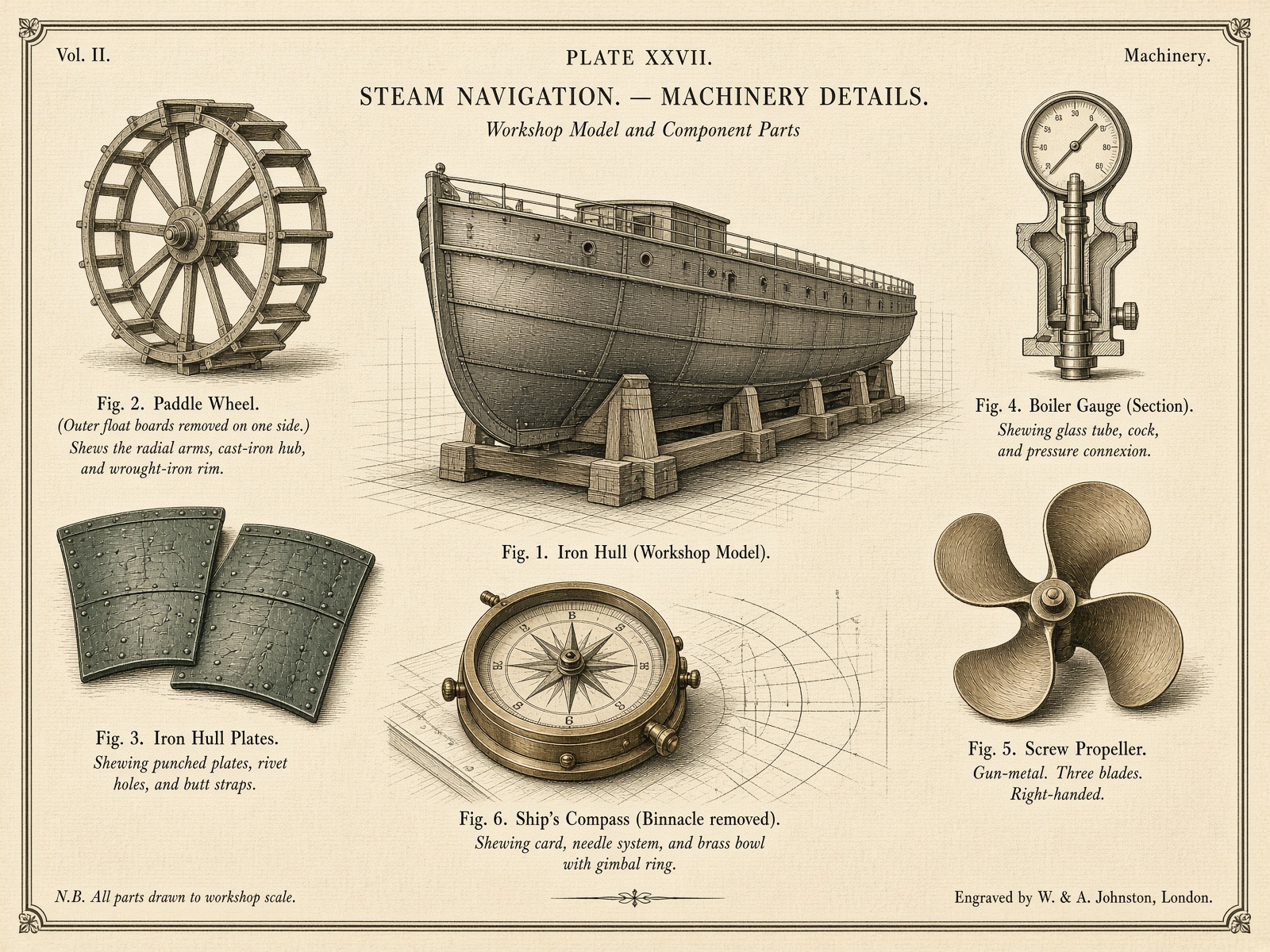
A paddle or a screw, a boiler, a hull. Fulton’s Clermont made scheduled steam on the Hudson in 1807. Ocean crossings followed as engines grew reliable and coal bunkers lengthened range. Steam did not care if the wind died. Timetables replaced waiting on weather, and empires tightened around coaling stations.
Robert Fulton (commercial service); many prior experimenters · Hudson River, then oceans
How it works
- Burn coal to make steam; the engine turns a paddle wheel or screw propeller.
- The hull converts that rotation into thrust against water.
- Carry enough fuel for the next coaling port.
Why it mattered
- Made river and later ocean schedules independent of calm.
- Shrank the Atlantic in days.
- Created a global fuel geography of coal.
Who turned the wheel
What it unlocked
For further study
- Smithsonian National Museum of American History. Fulton and river steam.
- Gardiner, The Advent of Steam. Ocean steam.
Check
What new kind of port did ocean steam require?