Mechanics · Vol. I|Interchangeable parts|c. 1798–1820s
Interchangeable parts
c. 1798–1820s
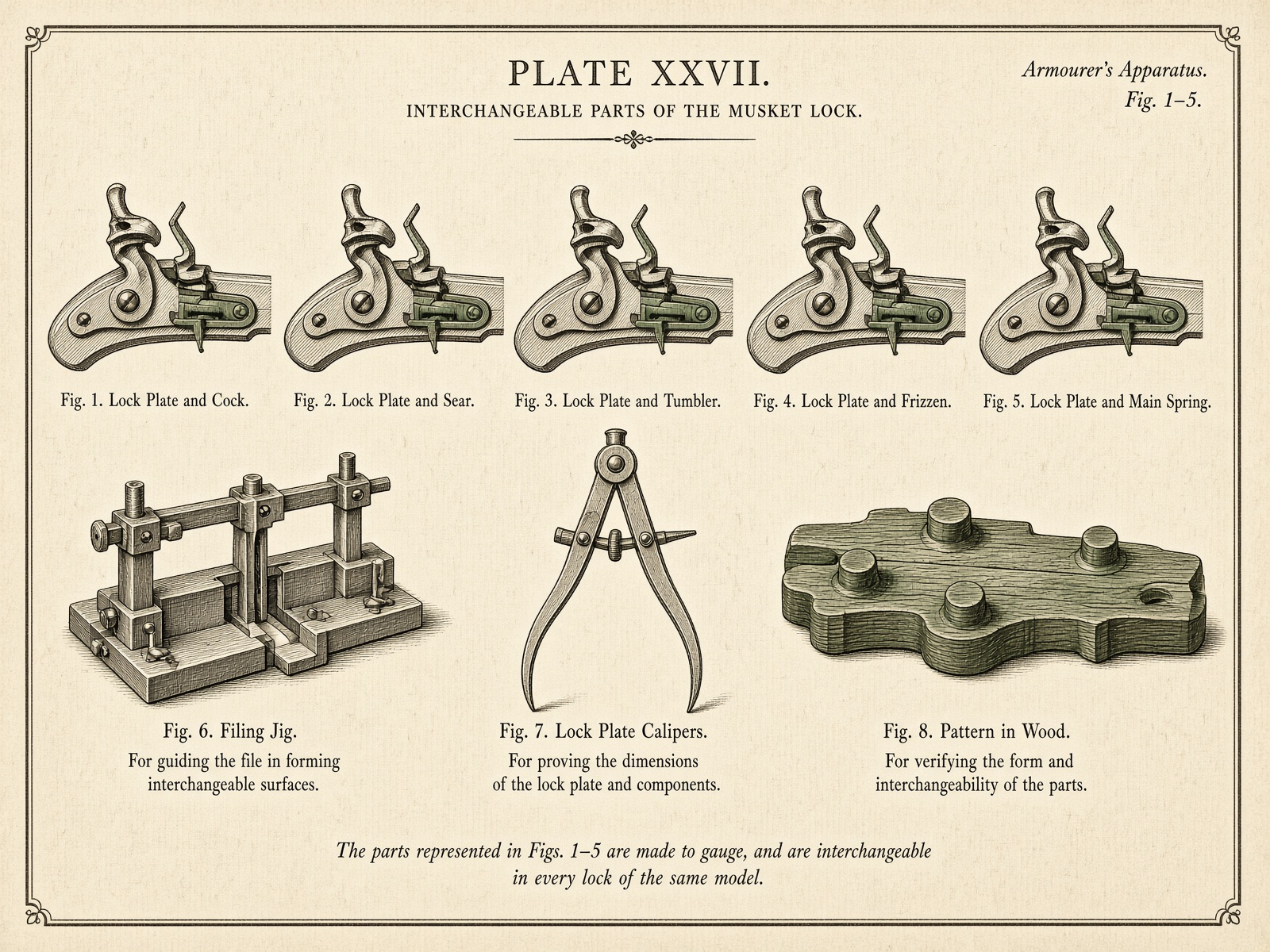
A handmade lock fits one musket. An interchangeable lock fits any musket of that pattern. The idea is older than the factories that made it real: jigs, gauges, and machine tools that cut to a tolerance. Whitney promised the U.S. government muskets from uniform parts. The Springfield Armory and others spent decades turning the promise into a method. Repair became swap, and mass production became thinkable.
Honoré Blanc; Eli Whitney (advocate); Springfield Armory practice · France and the United States
How it works
- Define dimensions and tolerances for each part.
- Cut with machines and check with gauges, not only by a fitter’s file.
- Assemble any part of a given type into any assembly of that type.
Why it mattered
- Moved skill from the individual file to the system of tools.
- Made battlefield and factory repair a matter of spares.
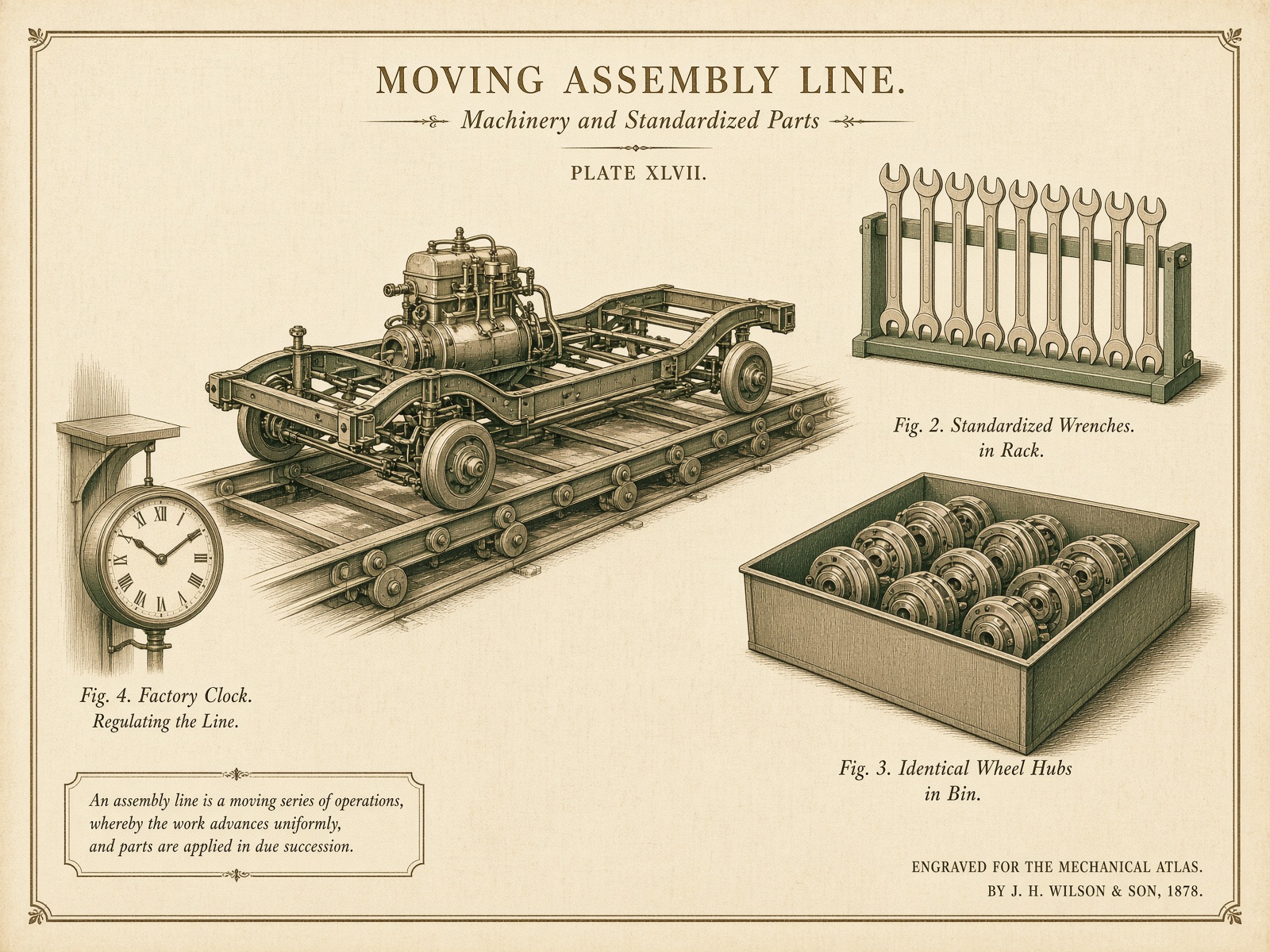
- Prepared the moving assembly line.
Who turned the wheel
What it unlocked
For further study
- Hounshell, From the American System to Mass Production. Armory practice.
- Smithsonian, Springfield Armory. Gauges and stocks.
Check
What must be true of two parts for a third person to swap them?