Transportation · Vol. VII|Canal lock|984 (Pound lock, China); later Europe
Canal lock
984 (Pound lock, China); later Europe
A river runs downhill. A canal wants to be level. A lock is a water elevator: a chamber with gates that can be filled or emptied so a boat rises or falls without a portage. The pound lock recorded in 10th-century China, and later European systems, turned inland water into a controlled road. Bulk cargo could climb a landscape.
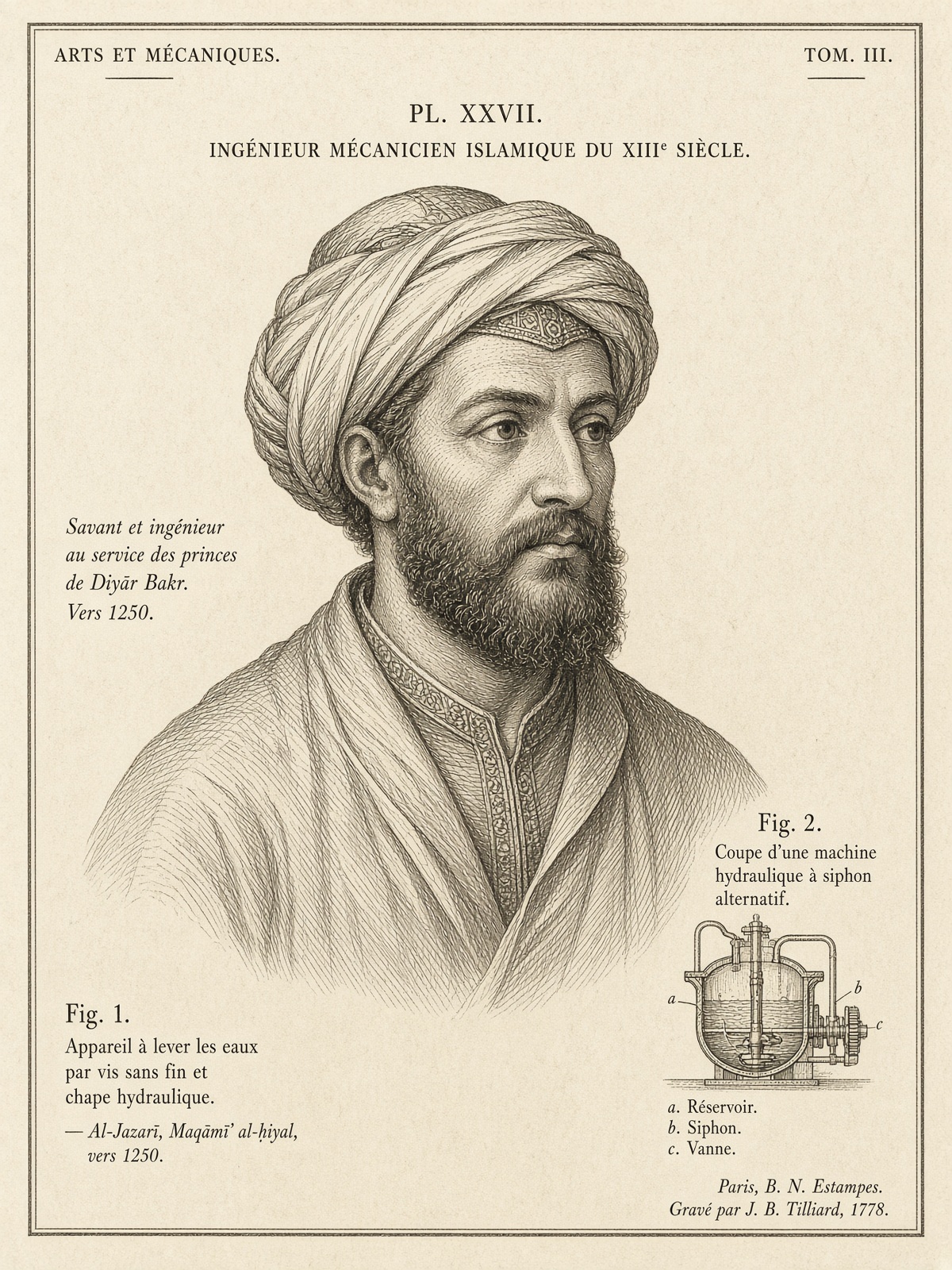
Qiao Weiyue (recorded pound lock on the Grand Canal) · China; later Low Countries and Britain
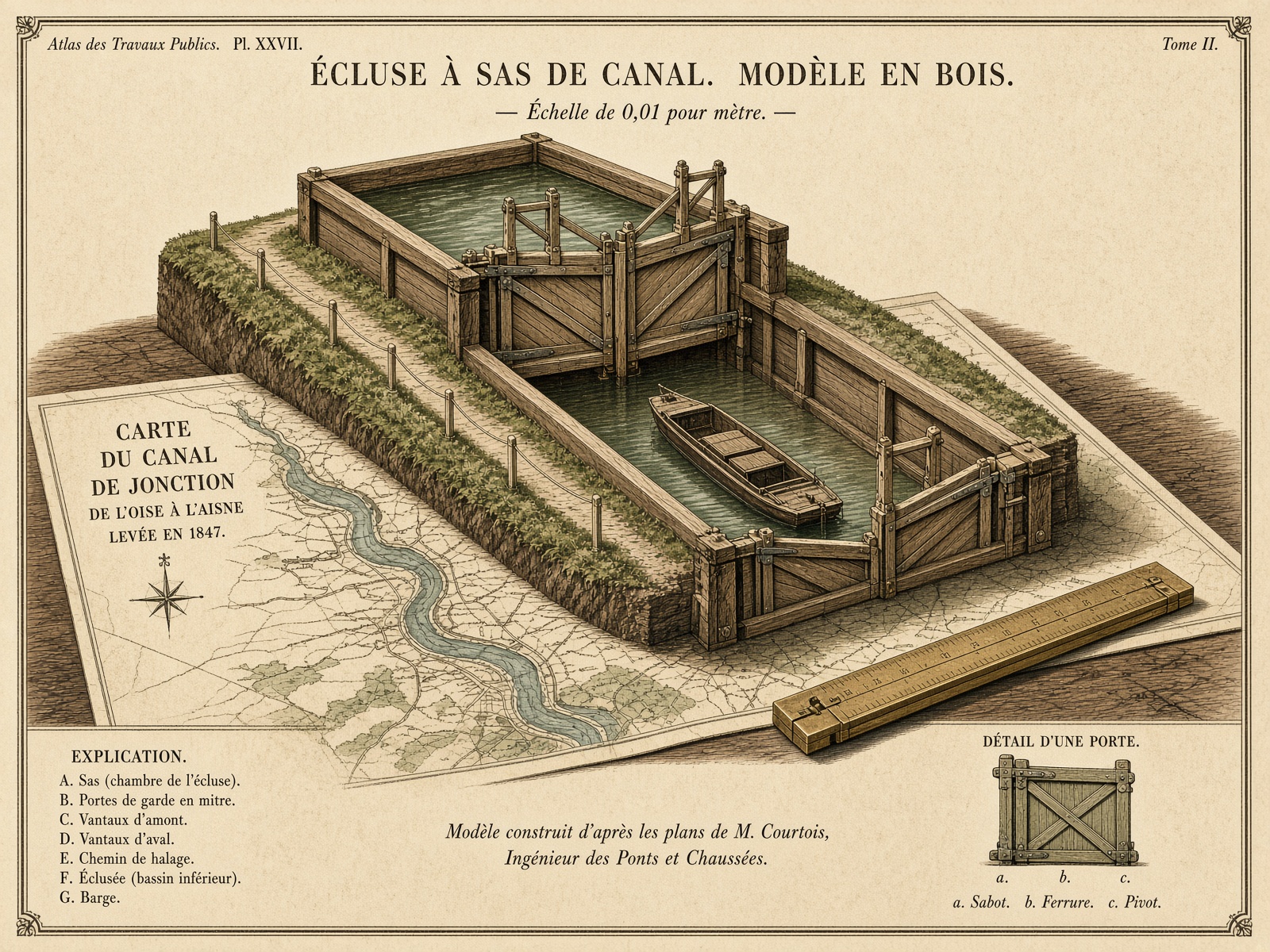
How the mechanism is arranged
How it works
- Float the boat into a chamber and close the downhill gate.
- Let water in (or out) until the boat sits at the next level.
- Open the uphill gate and proceed.
Why it mattered
- Linked watersheds that nature had separated.
- Cut the cost of grain, coal, and stone before railways.
- Showed that infrastructure could rewrite geography.
Who turned the wheel
What it unlocked
For further study
- Needham, Science and Civilisation in China. Grand Canal locks.
- Hadfield, World Canals. Comparative lock history.
Check
What does a lock spend in order to lift a boat?