Communications · Vol. VI|Writing|c. 3200 BCE
Writing
c. 3200 BCE
Speech vanishes as it is spoken. Writing holds it still. In late-fourth-millennium Sumer, accountants pressed marks into clay to track grain, labor, and beer. Those marks became cuneiform. Egypt developed hieroglyphs on a similar timetable. Later, China and Mesoamerica invented scripts of their own. A city that can write can tax, law, and remember past the lifetime of a speaker.
Sumer (Uruk); independently in Egypt, China, Mesoamerica
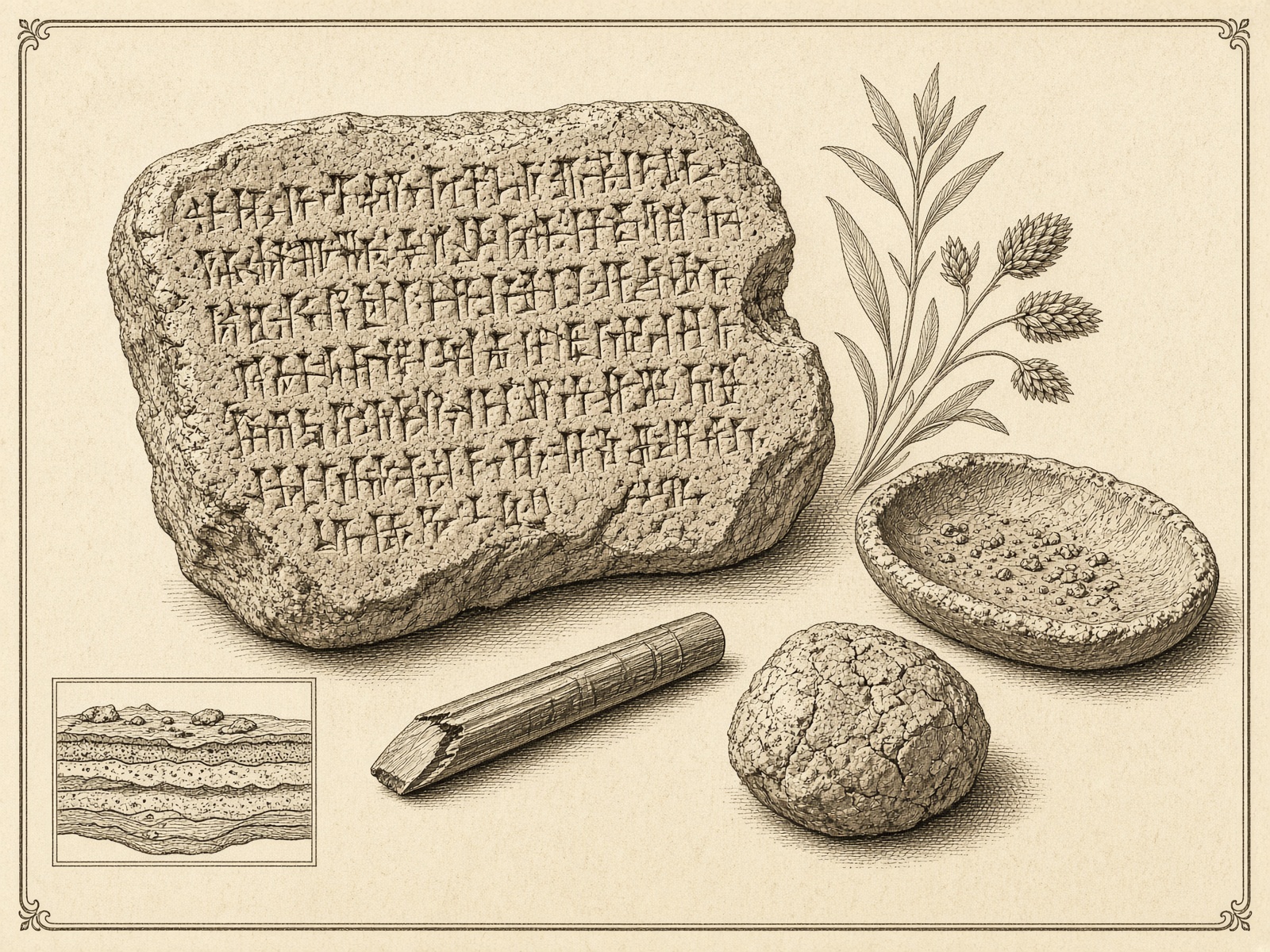
How the mechanism is arranged
How it works
- Agree that a visible mark stands for a thing, a sound, or a word.
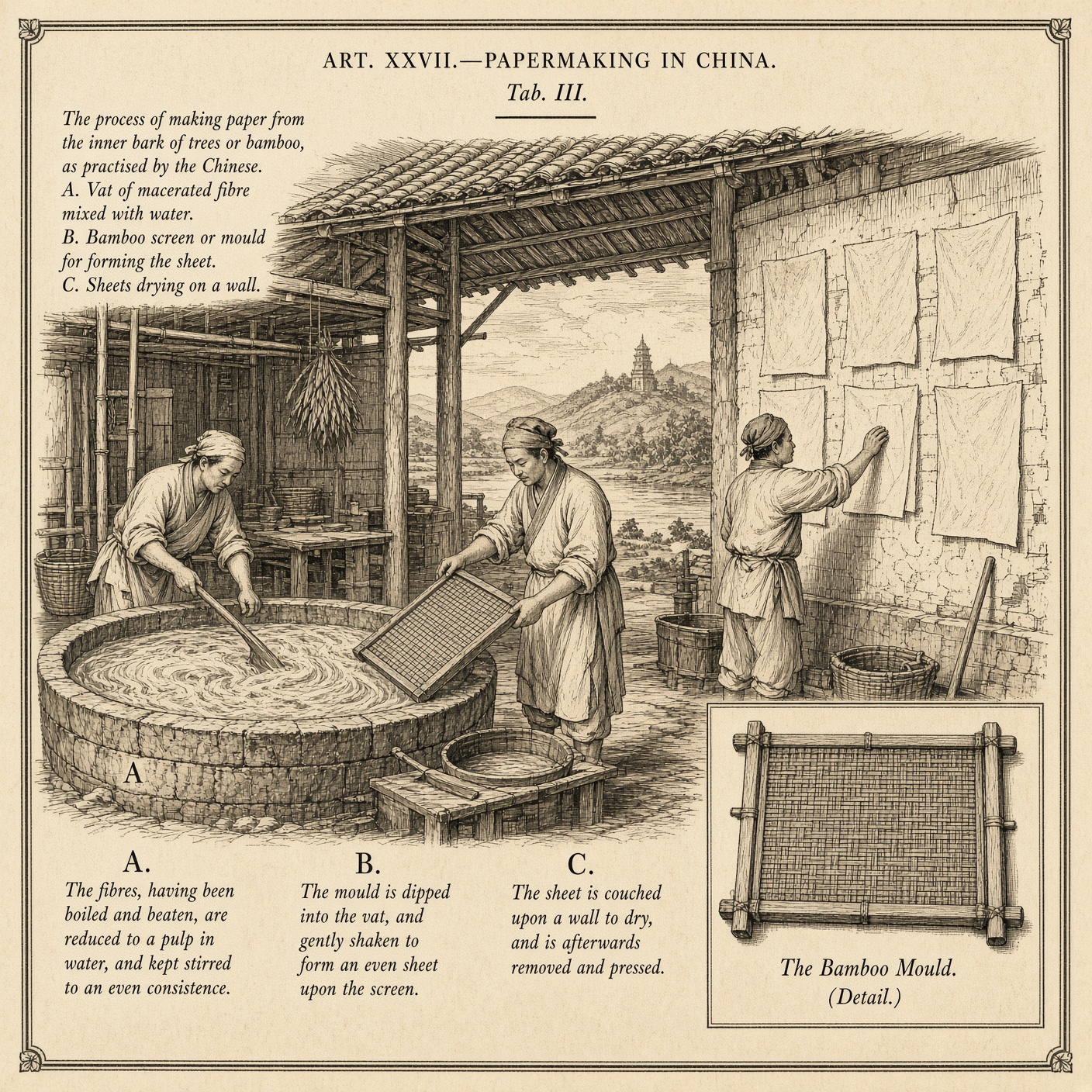
- Inscribe the marks in a durable medium (clay, papyrus, bone, stone, bark).
- Teach the code so a stranger, or a future self, can read it back.
Why it mattered
- Made administration of large populations possible.
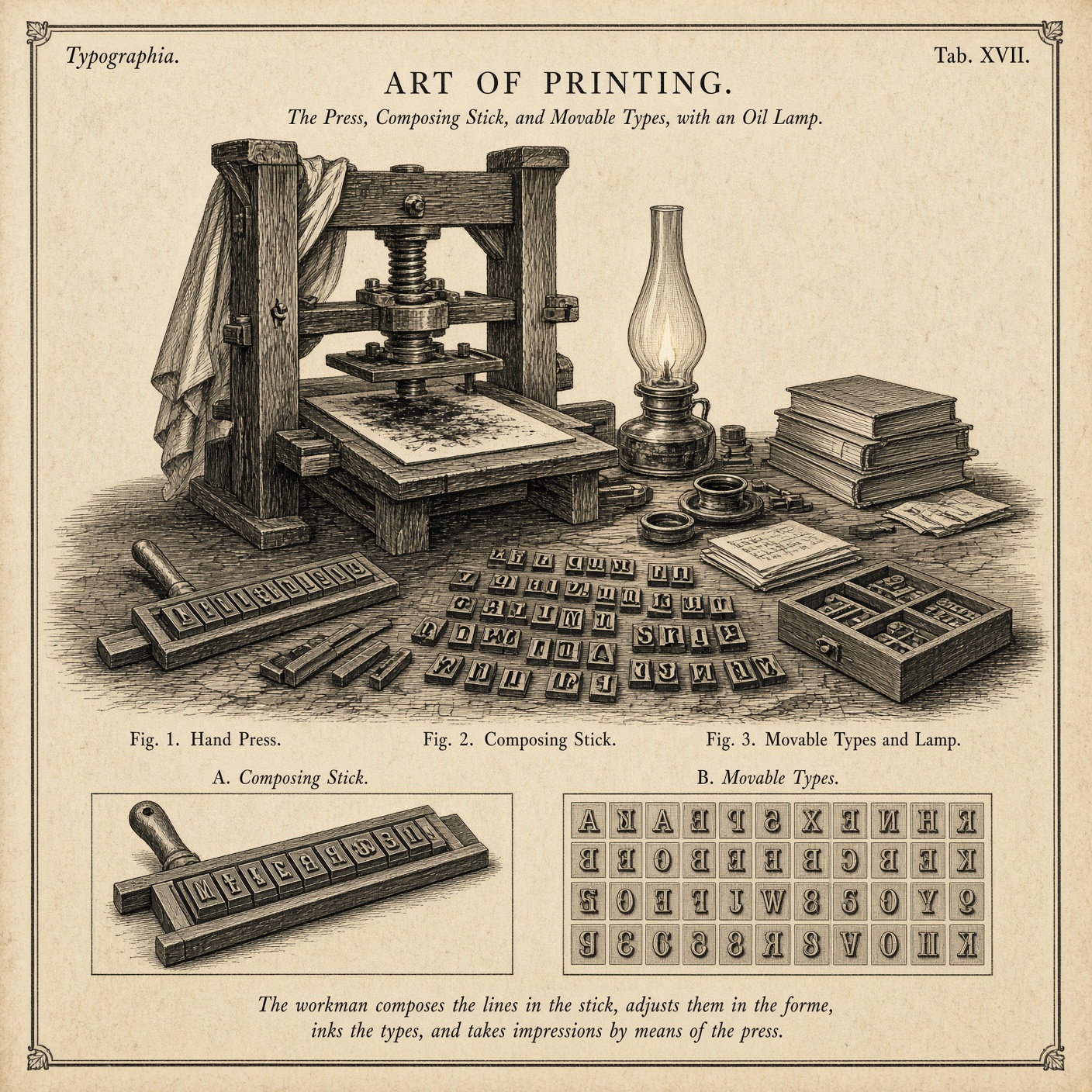
- Turned knowledge into an object that could travel.
- Created history as a discipline: a past you can check.
What it unlocked
For further study
- British Museum, cuneiform collection. Administrative tablets from Uruk.
- Robinson, The Story of Writing. Comparative origin of scripts.
Check
Why might a state need writing more urgently than a village does?