Mechanics · Vol. I|Wheel and axle|c. 3500 BCE
Wheel and axle
c. 3500 BCE
The wheel is famous; the axle is the invention. A disk that turns on a fixed shaft converts sliding friction into rolling friction and lets a load move with far less force. By the mid-fourth millennium BCE, wheeled vehicles and potter’s wheels appear in the Near East. The same geometry later became gears, mills, and turbines.
Mesopotamia and the Eurasian steppe
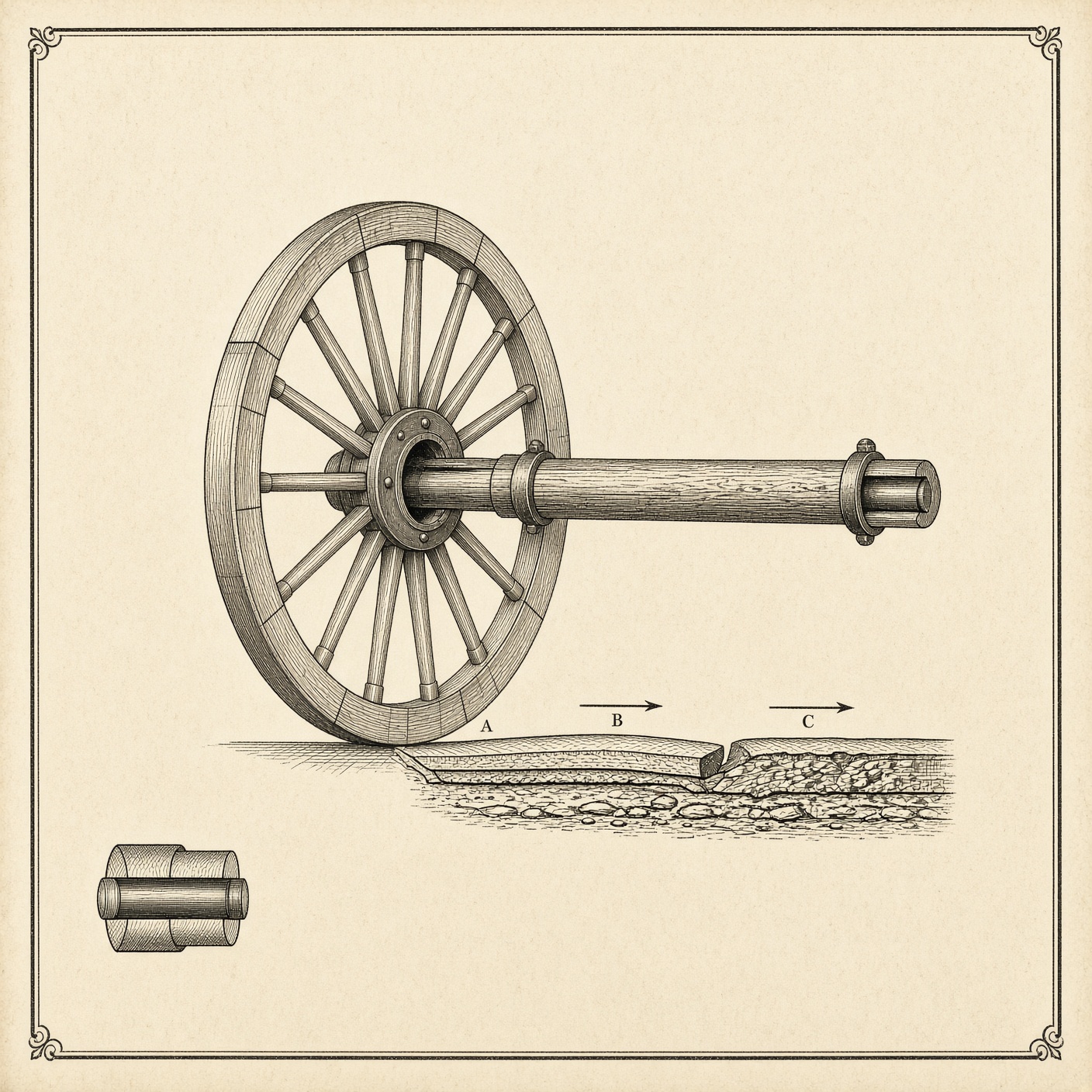
How the mechanism is arranged
How it works
- Fit a circular disk so it rotates around a central shaft.
- Place the load on a frame attached to that shaft.
- Pull or push; the contact patch rolls instead of dragging.
Why it mattered
- Cut the energy cost of hauling bulk goods on land.
- Gave pottery a production engine.
- Became the ancestor of almost every rotating machine.
What it unlocked
For further study
- British Museum. Early wheeled vehicles of the Near East.
- Oxford Classical Dictionary. Wheel as craft and transport.
Check
Why is the axle as important as the disk?