Automobiles · Vol. III|Hybrid and EV platforms|1997 (Prius); 2012 (mass-luxury EV landmark)
Hybrid and EV platforms
1997 (Prius); 2012 (mass-luxury EV landmark)
The 1997 Prius put an electric machine and a petrol engine in one drivetrain so city driving could sip fuel. A later wave of battery-electric cars treated the pack, inverter, and motors as the platform. Neither is a single gadget. Both are a re-architecture of the automobile around stored electrons. Roads, grids, and mines are still catching up.
Toyota (Prius); later Tesla and legacy makers · Japan, then global
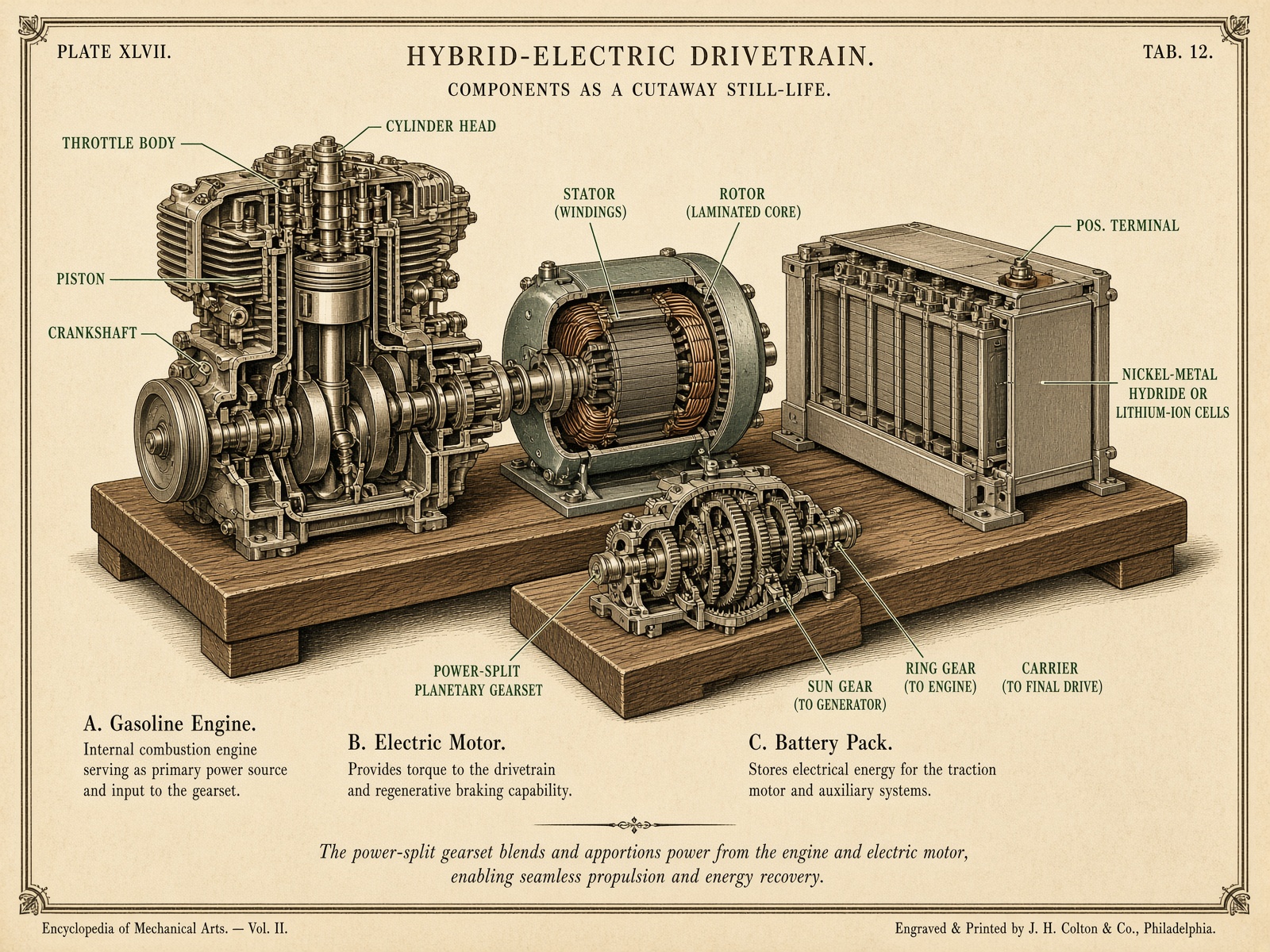
How the mechanism is arranged
How it works
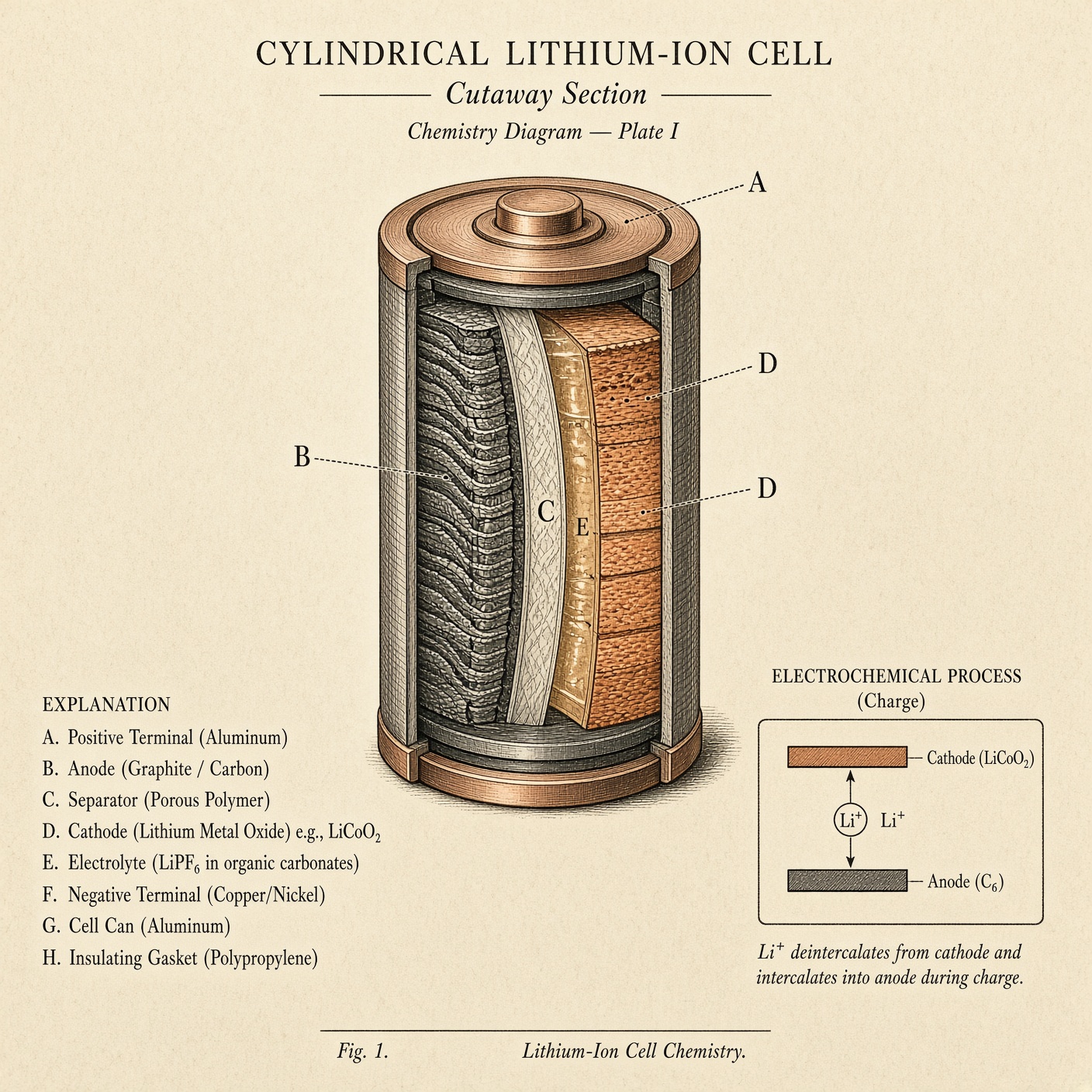
- A battery pack stores energy chemically.
- Inverters feed motors; in hybrids a control system splits work with an engine.
- Regenerative braking puts some kinetic energy back in the pack.
Why it mattered
- Cut tailpipe emissions where electricity is cleaner than petrol.
- Moved the car’s center of innovation to software and cells.
- Tied personal mobility to the power grid.
Who turned the wheel
What it unlocked
For further study
- Toyota Prius technical papers. Power-split hybrid.
- IEA Global EV Outlook. Later scale.
Check
What does regenerative braking recover that a conventional car throws away?