Communications · Vol. VI|World Wide Web|1989 (proposal); 1991 (public)
World Wide Web
1989 (proposal); 1991 (public)
The internet already moved files. The web added a simple idea: documents that point to other documents with a click, on any computer. Berners-Lee’s 1989 memo asked for a linked information system for physicists. HTML, HTTP, and the URL were the three small standards. Browsers did the rest. An encyclopedia on a screen is a web native.
Tim Berners-Lee, with CERN colleagues · CERN, Geneva
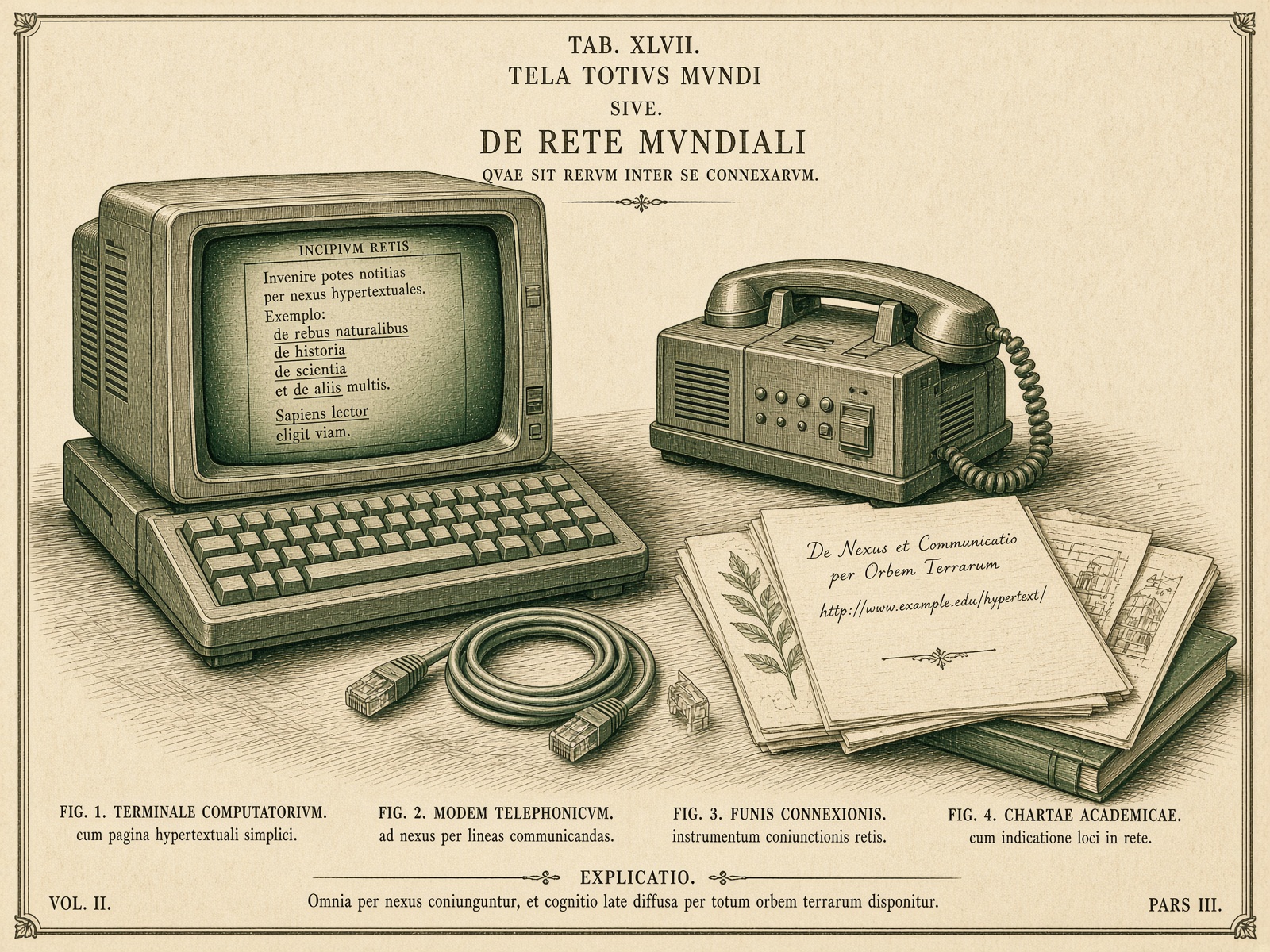
How the mechanism is arranged
How it works
- Give every page an address (URL).
- Request it with HTTP; the server returns HTML.
- The browser renders the page and treats highlighted links as new addresses.
Why it mattered
- Made the internet usable without a manual.
- Turned publishing into a link, not a press run.
- Created the layer on which search, shops, and this atlas sit.
Who turned the wheel
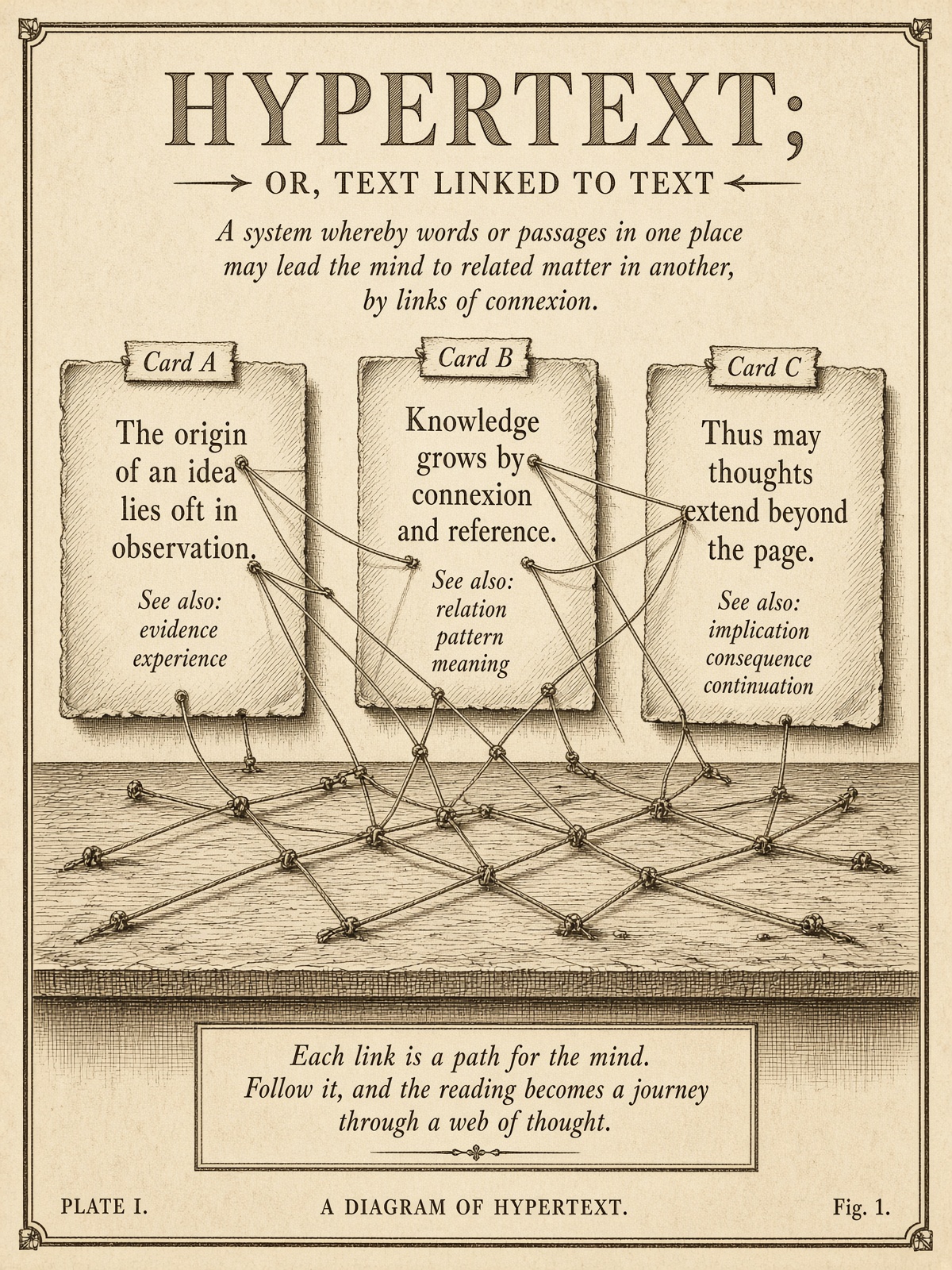
What it unlocked
For further study
- CERN web history. Original proposal.
- Berners-Lee, Weaving the Web. First-person account.
Check
Which three identifiers/protocols make a link work across machines?