Semiconductors · Vol. V|CMOS image sensor|1990s
CMOS image sensor
1990s
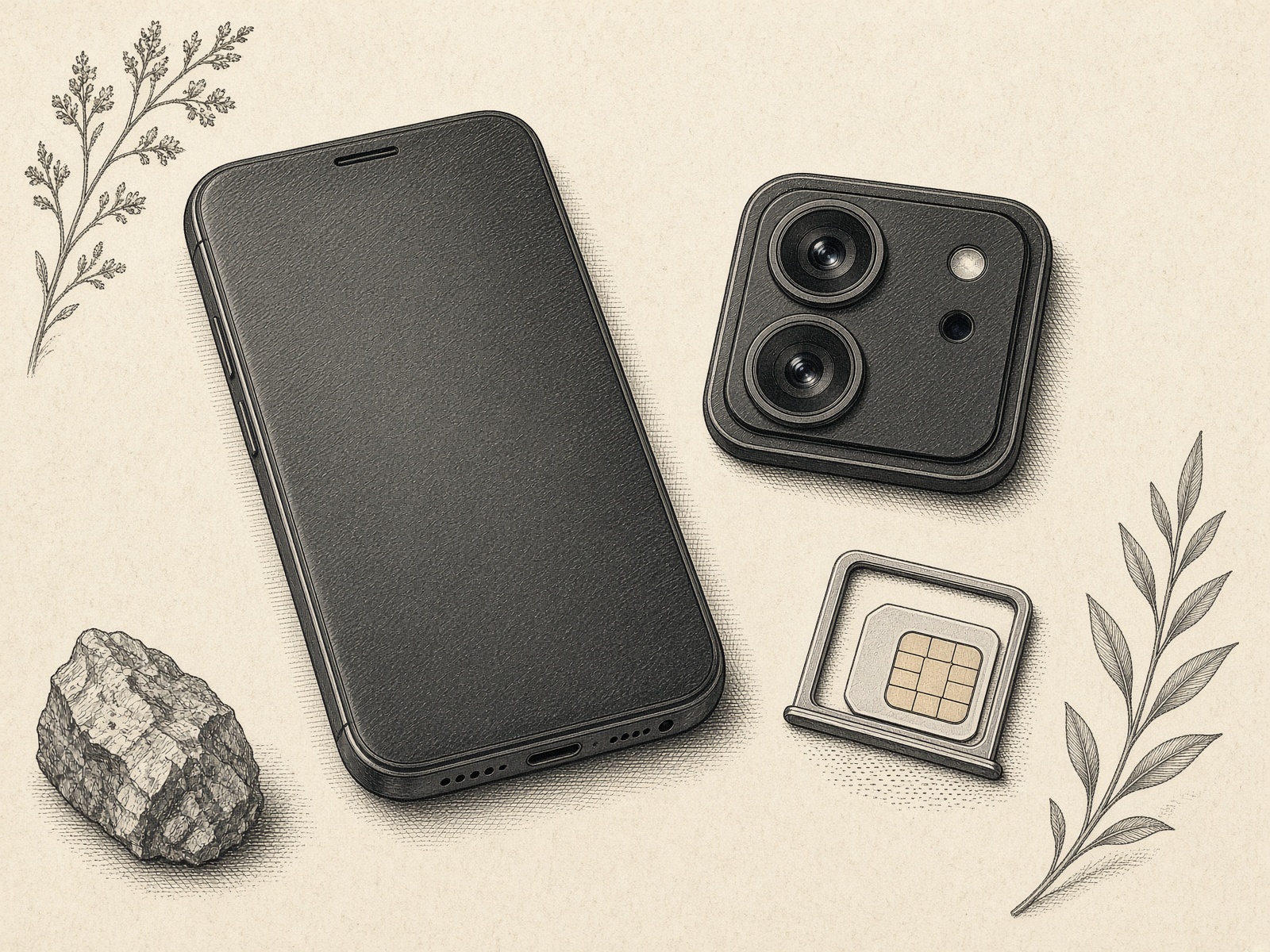
A camera on a chip: each pixel a photodiode plus transistors, made in the same CMOS lines as logic. Charge-coupled devices were better at first; CMOS won on cost, power, and integration. When a phone carries two or three of them, photography stops being a separate object. The sensor is why the present is drowning in pictures.
Fossum and colleagues (active pixel); many firms · United States, then global
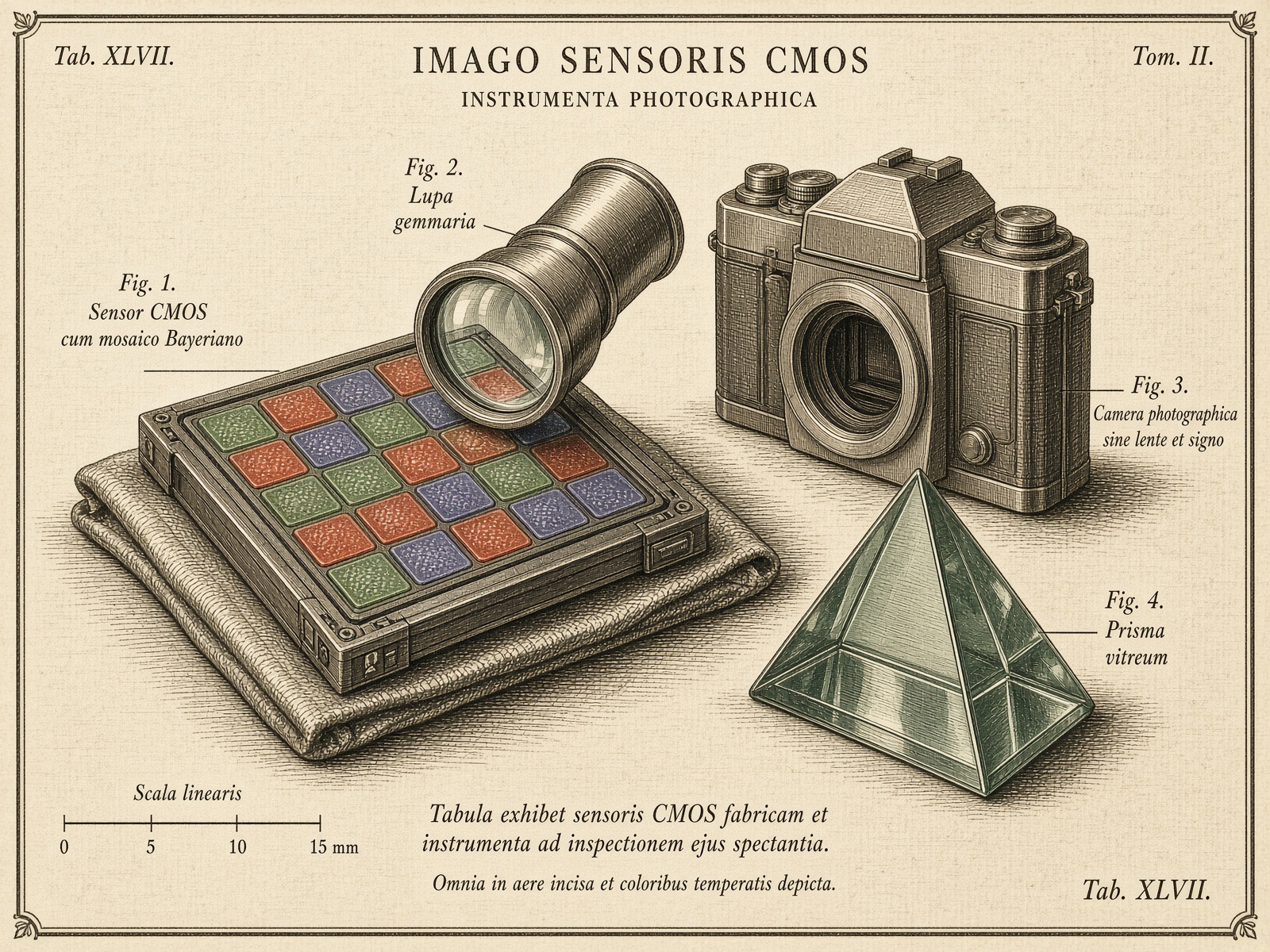
How the mechanism is arranged
How it works
- Light knocks charge free in a photodiode.
- On-pixel transistors amplify and address that charge.
- A processor turns the array into a color image.
Why it mattered
- Collapsed camera, computer, and network into one slab.
- Made computer vision a default, not a lab.
- Raised new questions about surveillance and memory.
Who turned the wheel
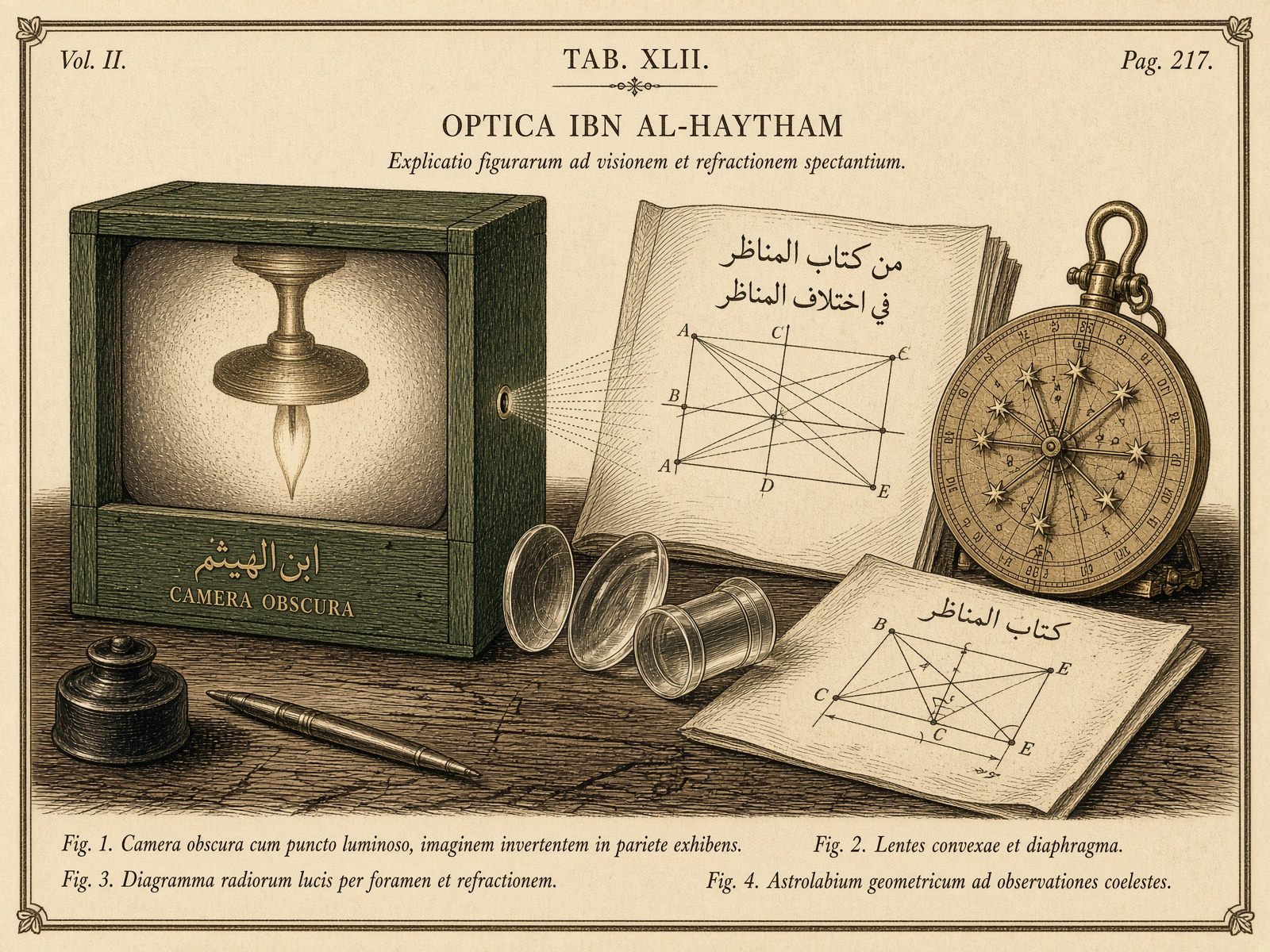
What it unlocked
For further study
- Fossum, IEEE papers on APS. Active-pixel sensor.
- Camera industry histories. CCD to CMOS shift.
Check
What manufacturing fact helped CMOS sensors beat CCDs on price?