Mechanics · Vol. I|Mechanical clock|late 13th century
Mechanical clock
late 13th century
A clock is a machine that counts. Weight-driven clocks with an escapement appear in European towns in the late 1200s, after centuries of water clocks in China and the Islamic world. The escapement is the clever bit: it lets a gear train fall one tick at a time. Once time is a mechanism, workdays, longitude, and physics experiments all change.
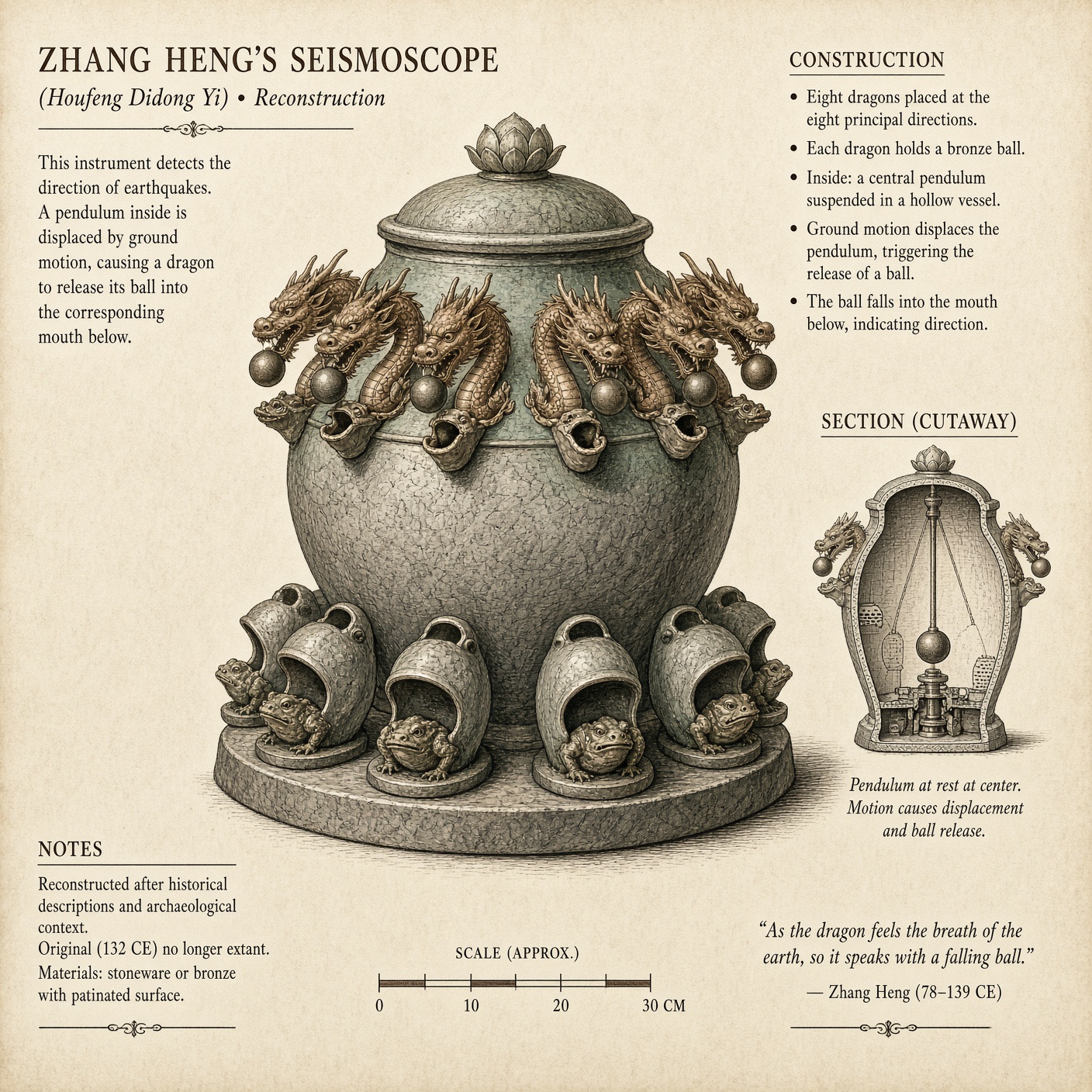
Europe (cathedral clocks); earlier water clocks in China and Islam
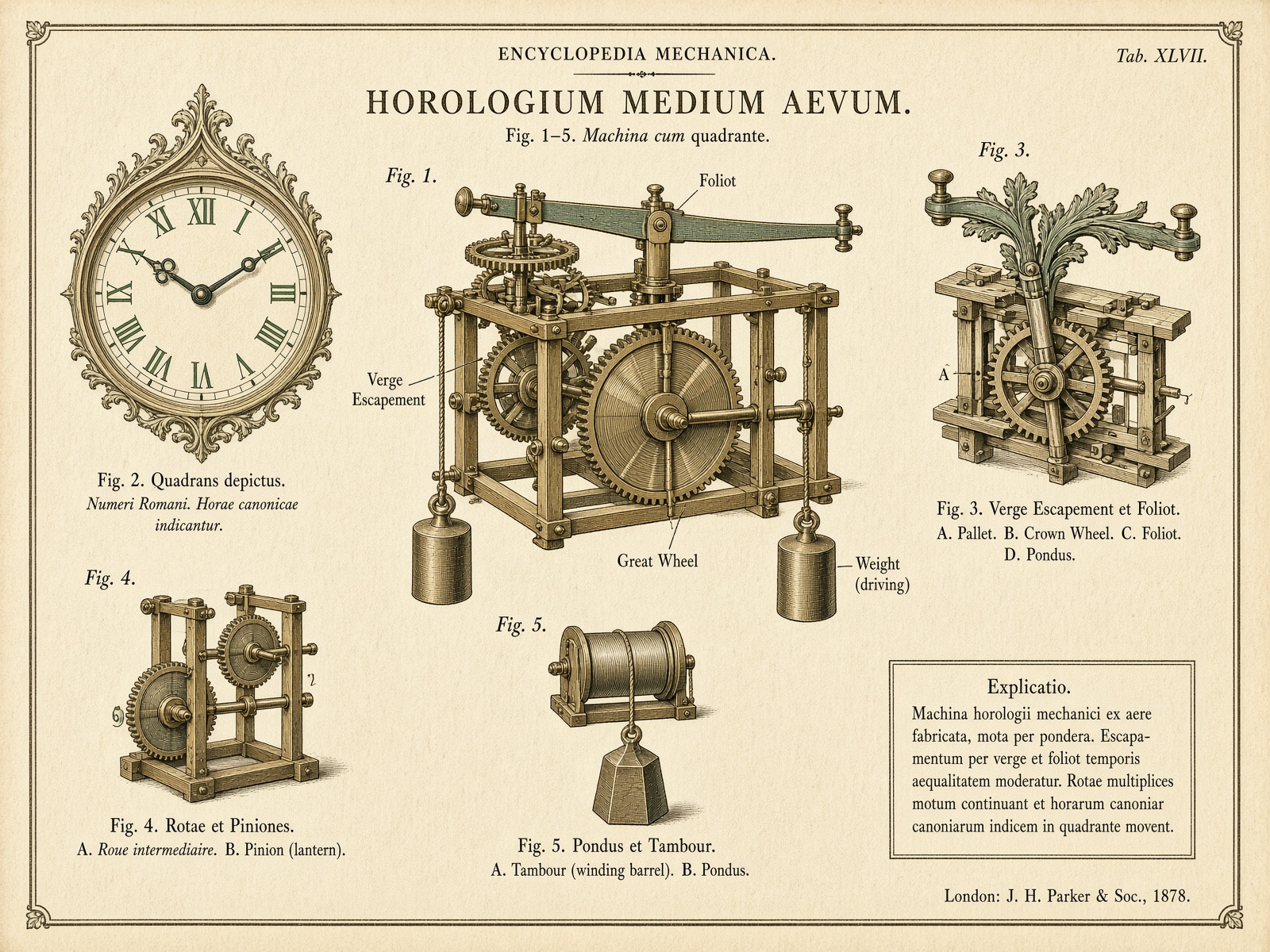
How the mechanism is arranged
How it works
- A falling weight (or later a spring) tries to unwind a gear train.
- An escapement interrupts that unwind in equal steps.
- Hands, or later a digital display, count the steps as hours.
Why it mattered
- Moved timekeeping from sky-watching to a box on a wall.
- Disciplined urban work and prayer by a shared beat.
- Gave later science a way to measure duration.
Who turned the wheel
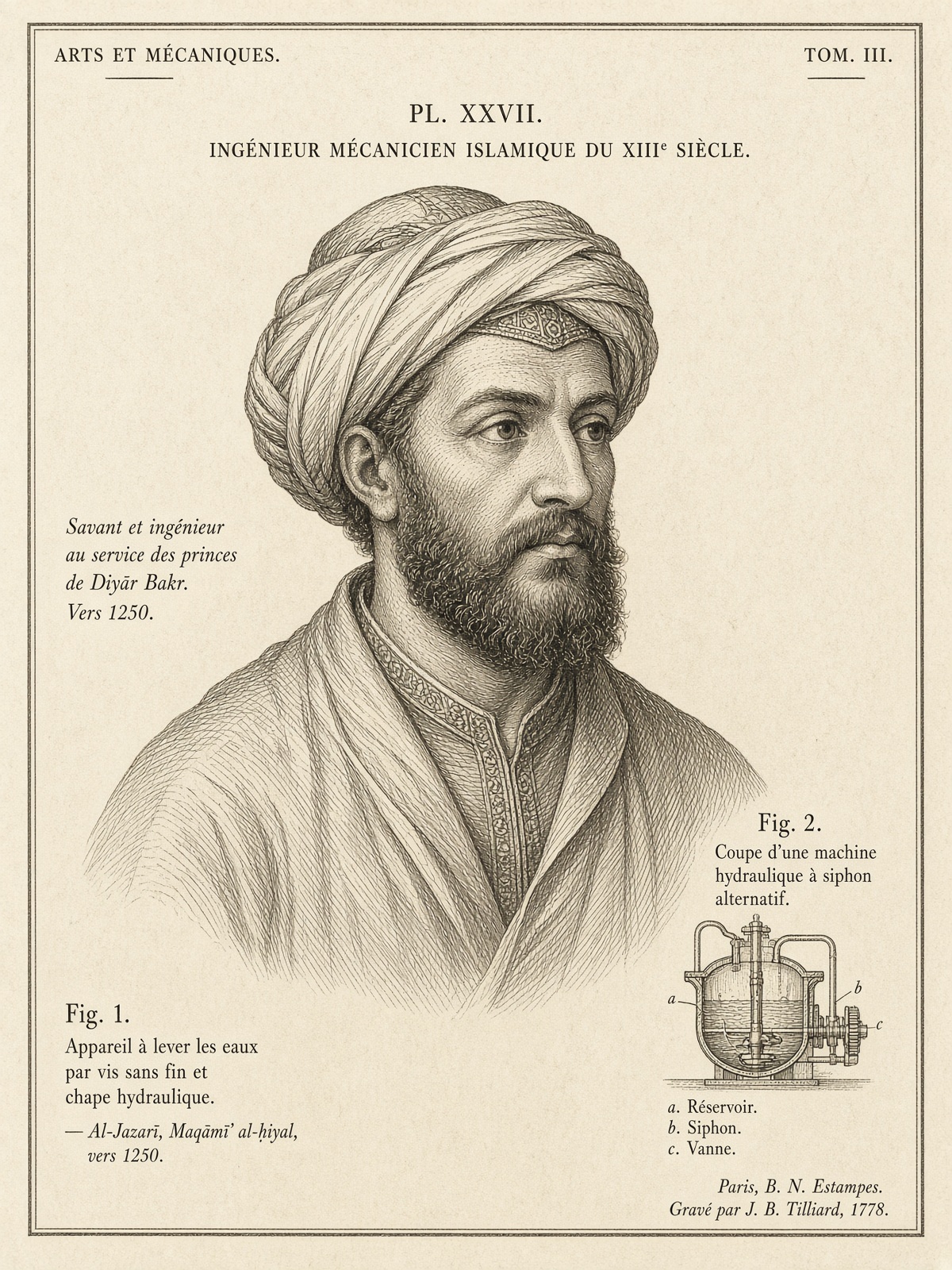
What it unlocked
For further study
- Landes, Revolution in Time. Clocks and modernity.
- Needham on Chinese clockwork. Su Song and water-wheel clocks.
Check
What job does an escapement do that a free-falling weight cannot?