Mechanics · Vol. I|Jet engine|1937 (Whittle run); 1939 (von Ohain flight)
Jet engine
1937 (Whittle run); 1939 (von Ohain flight)
A jet is a gas turbine that throws exhaust backward so the plane goes forward. Whittle patented and ran one; von Ohain’s engine flew first. Jets like high, cold, thin air — the opposite of pistons. They made the ocean a day trip and the stratosphere a highway.
Frank Whittle; Hans von Ohain · Britain and Germany
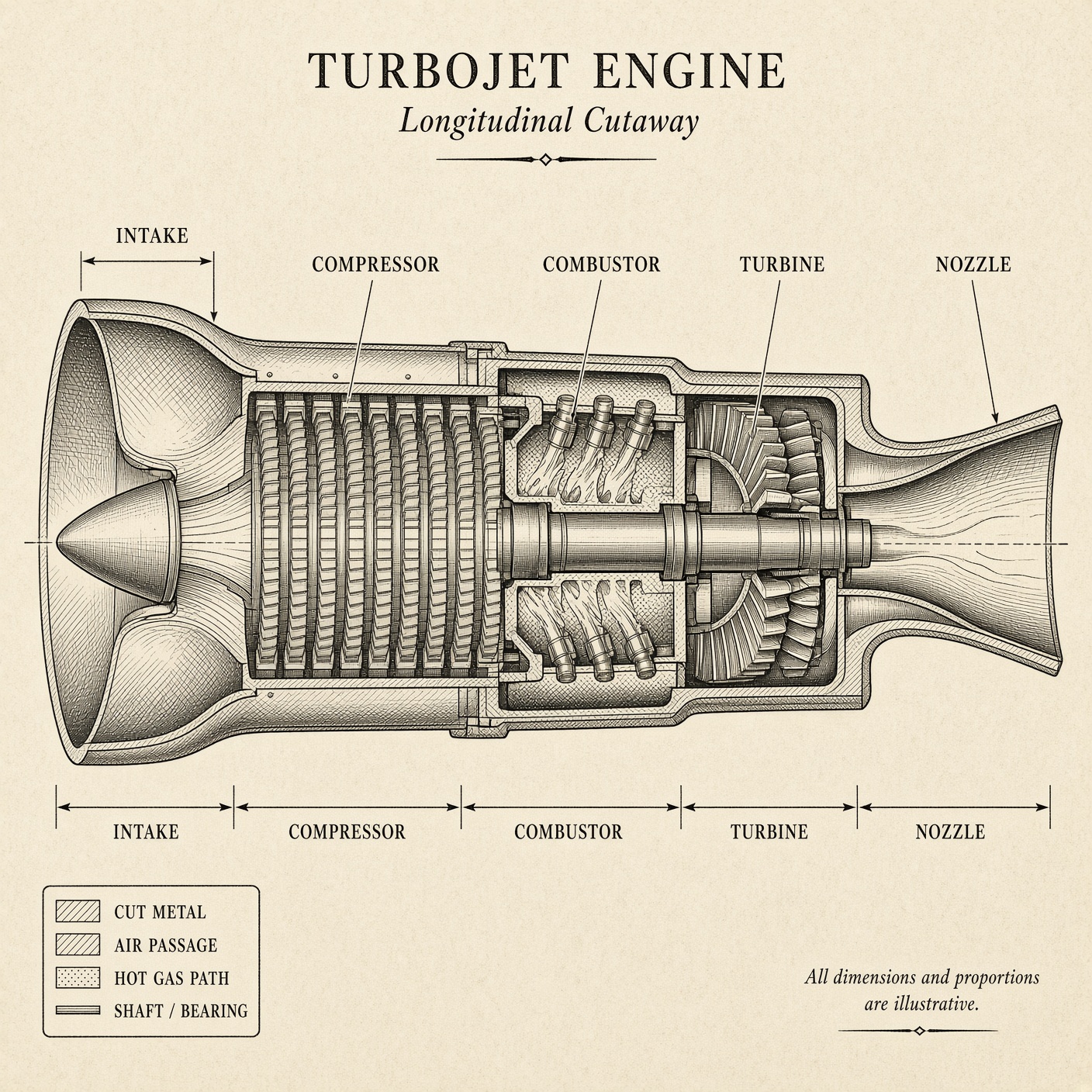
How the mechanism is arranged
How it works
- A compressor packs incoming air.
- Fuel burns in that air; temperature and volume jump.
- Hot gas spins a turbine (which drives the compressor) and blasts out the nozzle as thrust.
Why it mattered
- Enabled practical high-speed, high-altitude flight.
- Shrank intercontinental travel.
- Demanded new alloys that later served power plants.
What it unlocked
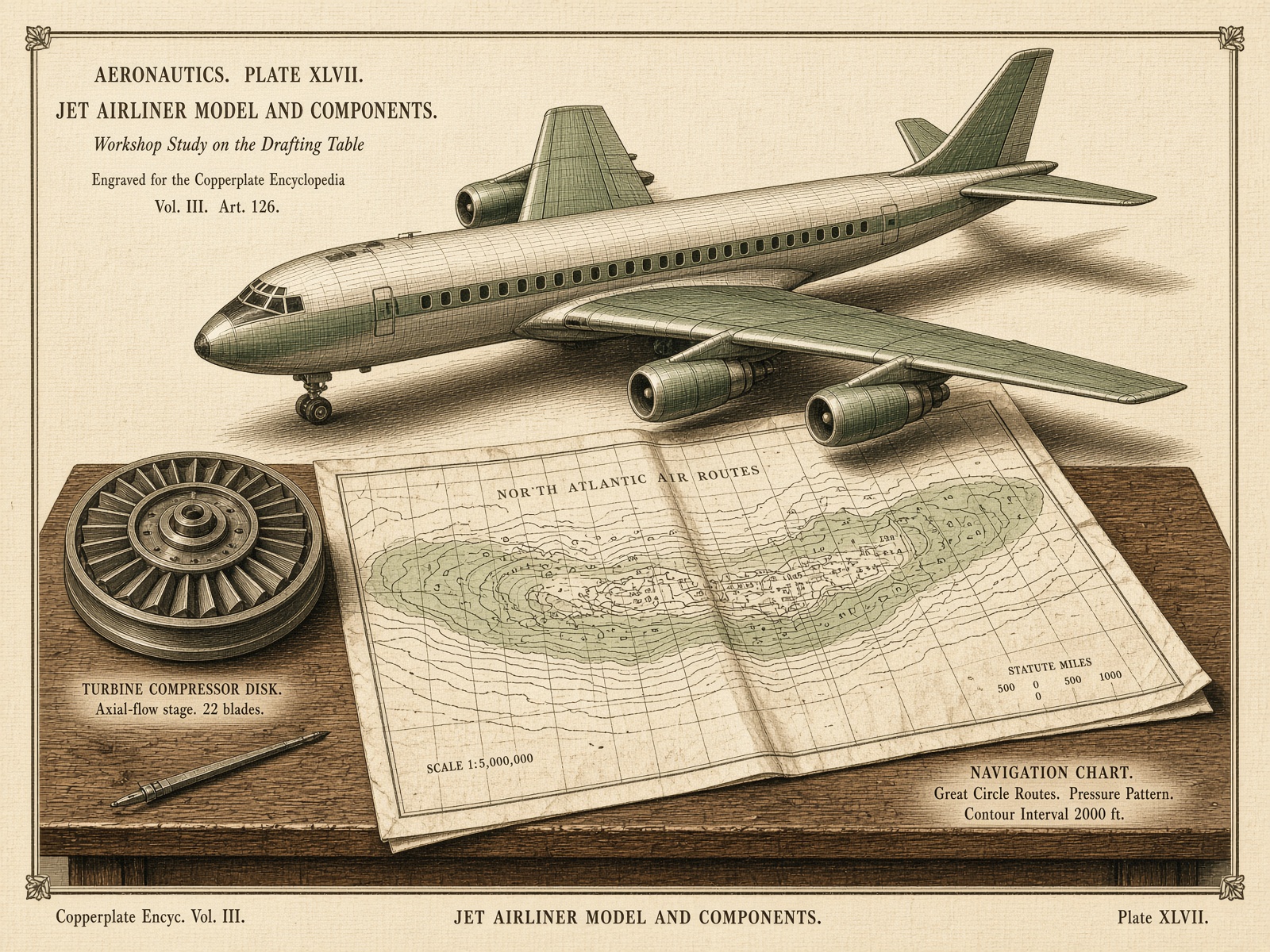
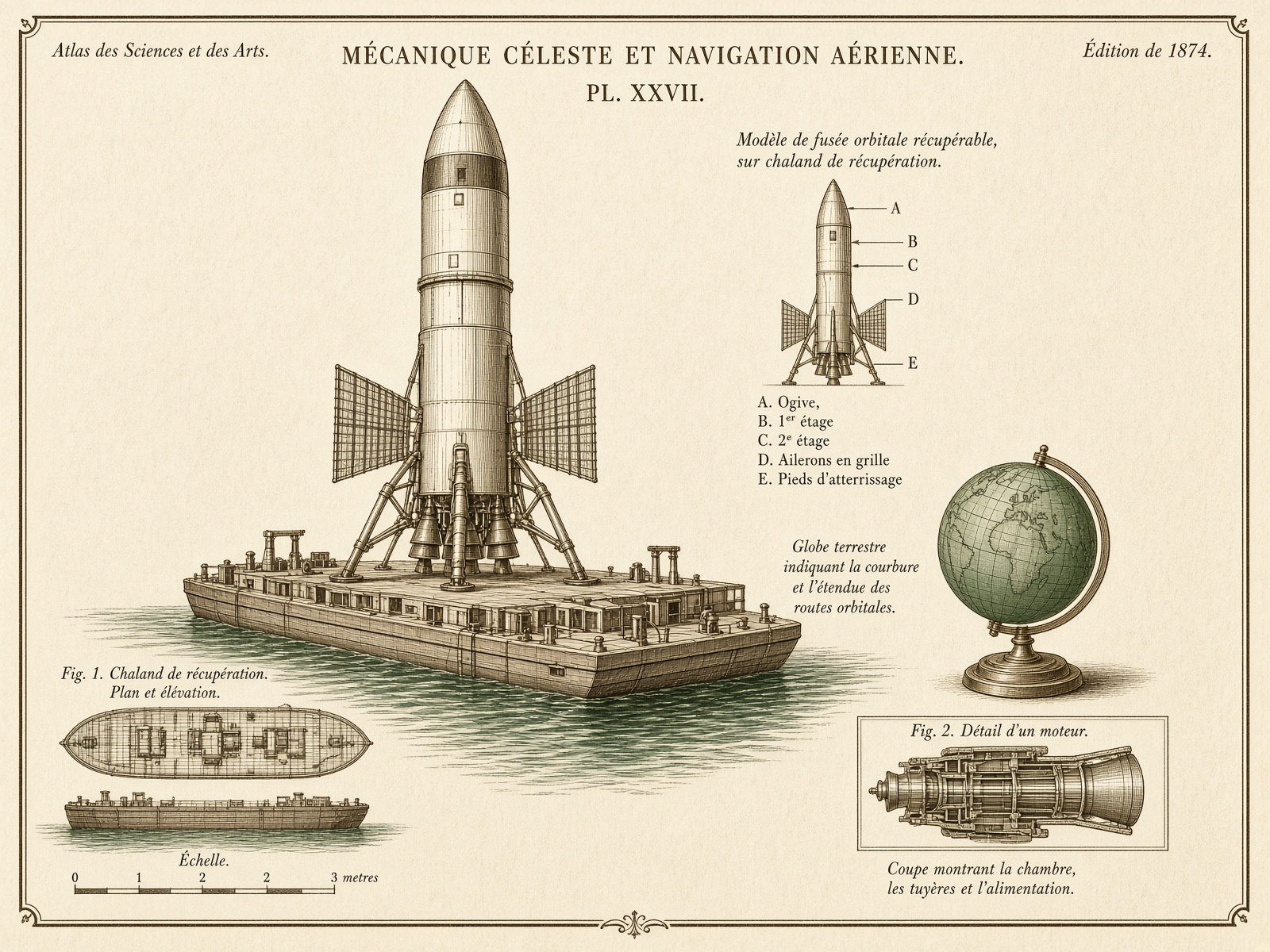
For further study
- Royal Air Force Museum. Whittle engines.
- Constant, The Origins of the Turbojet Revolution. History of the idea.
Check
What two jobs does the hot gas do in a turbojet?