Automobiles · Vol. III|ABS and airbag|1970s–1980s
ABS and airbag
1970s–1980s
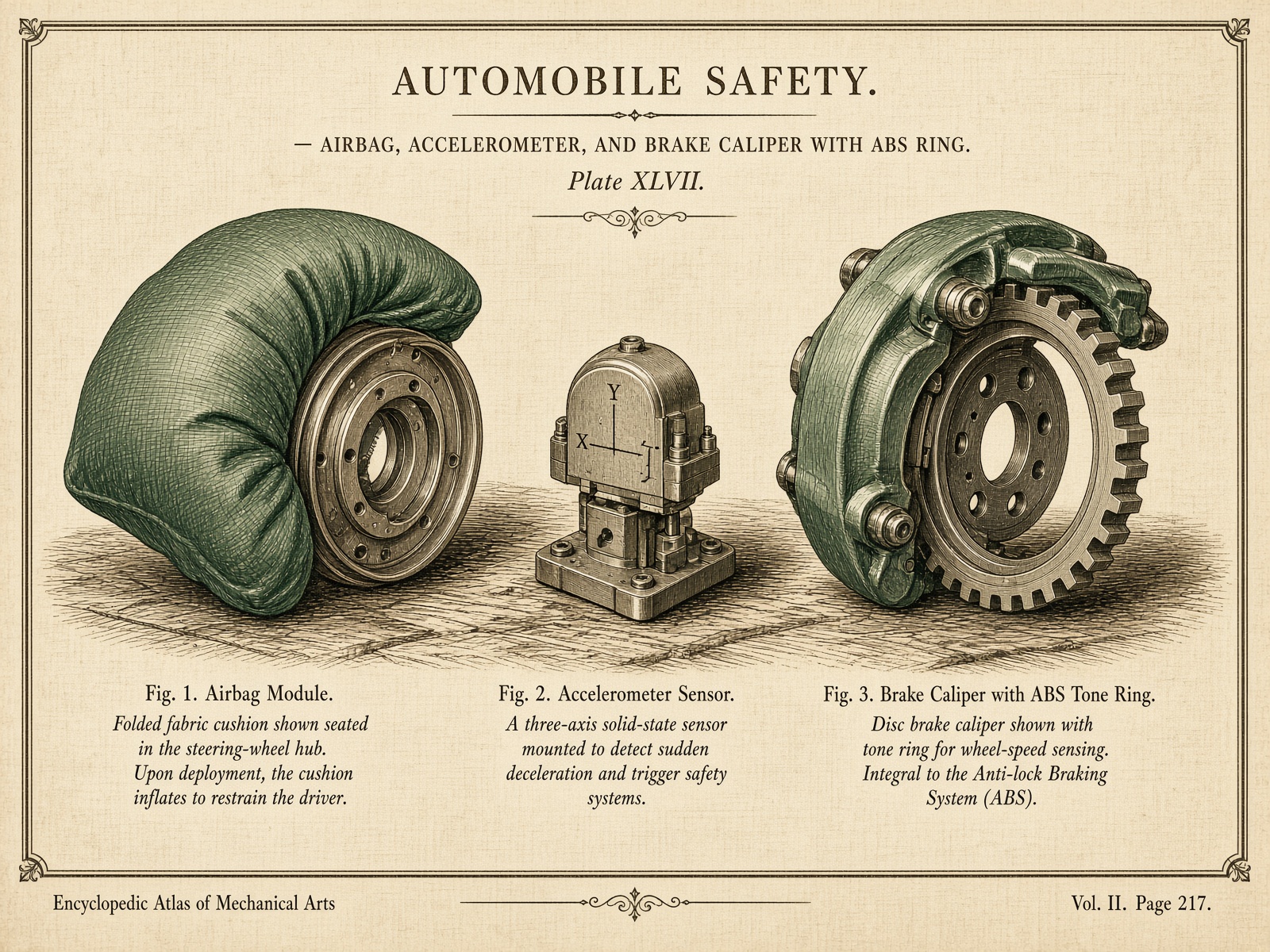
Anti-lock brakes pulse a skidding wheel so steering remains. Airbags fire a fabric cushion in tens of milliseconds when a crash is sensed. Together with belts, they are why a modern collision is often survivable. Safety here is sensors, explosives, and software — not only crumple zones of steel.
Bosch (ABS production); many airbag teams (Allen Breed, GM, Mercedes) · Germany, United States, Japan
How it works
- Wheel-speed sensors detect lockup; valves dump and restore brake pressure many times a second.
- Accelerometers detect a crash pulse.
- A charge inflates a bag faster than the occupant can hit the wheel.
Why it mattered
- Cut deaths per kilometre as cars got faster and heavier.
- Made electronics a safety system, not a radio.
- Changed the ethics of what a car owes a body.
What it unlocked
For further study
- Bosch automotive history. ABS.
- NHTSA historical rulemaking. Airbags and belts.
Check
What does ABS preserve that locked brakes throw away?