Semiconductors · Vol. V|MOSFET|1959
MOSFET
1959
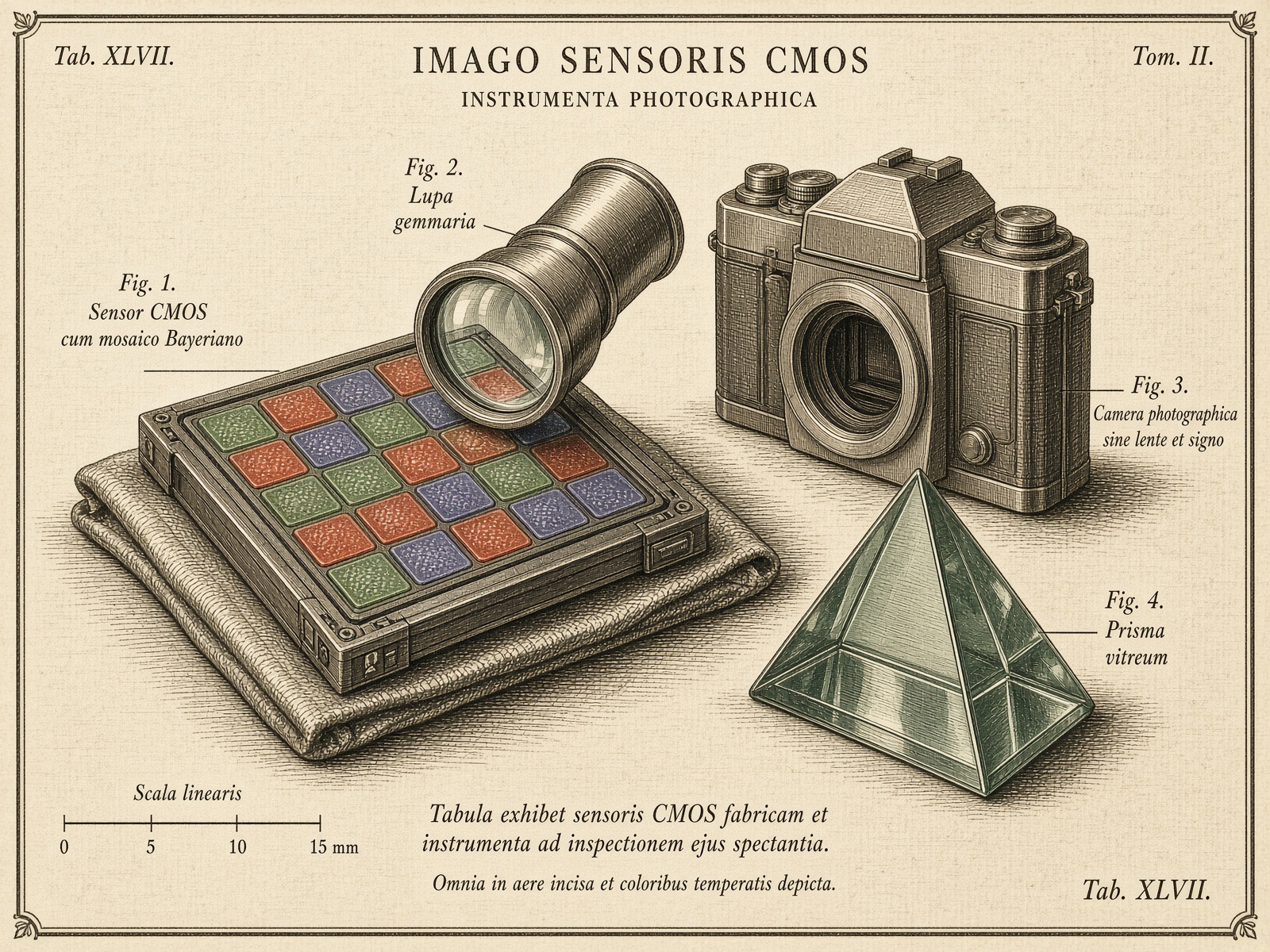
A metal-oxide-semiconductor field-effect transistor uses an electric field, across a tiny insulator, to open or close a channel. It draws almost no static current compared with bipolar parts. CMOS pairs a pair of them so idle logic sips power. The MOSFET is the workhorse of every processor, memory, and phone camera chip.
Mohamed Atalla and Dawon Kahng (Bell Labs) · United States
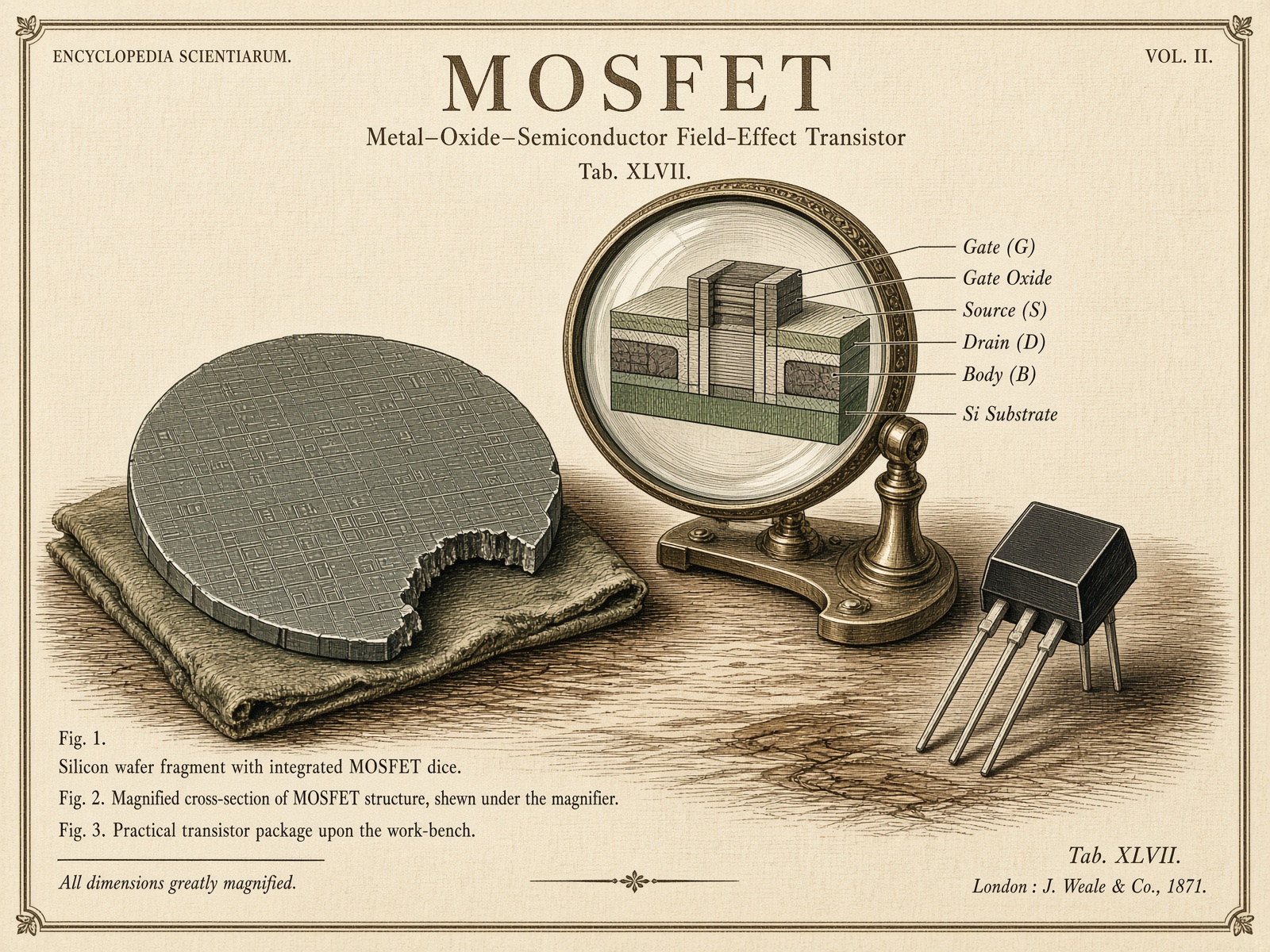
How the mechanism is arranged
How it works
- A gate electrode sits on a thin oxide above a silicon channel.
- Voltage on the gate attracts or repels carriers, forming or pinching off the channel.
- Source and drain then conduct — or don’t — with almost no gate current.
Why it mattered
- Enabled dense, cool digital logic.
- Made scaling (smaller gates) a decades-long program.
- Is the device Moore’s Law actually counted.
Who turned the wheel
What it unlocked
For further study
- Bell Labs papers, Atalla and Kahng. 1959–1960.
- IEEE MOSFET milestone. Device history.
Check
Why does a MOSFET gate use almost no steady current?