Transportation · Vol. VII|Reusable orbital rocket|2015 (first orbital-class booster landing)
Reusable orbital rocket
2015 (first orbital-class booster landing)
The Space Shuttle reused an orbiter at great cost. In 2015 a Falcon 9 first stage flew to orbit’s door and landed vertically, then flew again. Reuse turns a rocket from a spent cartridge into an airliner-like asset — in ambition if not yet in airline rhythm. Access to orbit is still hard. It is less disposable.
SpaceX (Falcon 9 landing); prior shuttle as partial reuse · United States
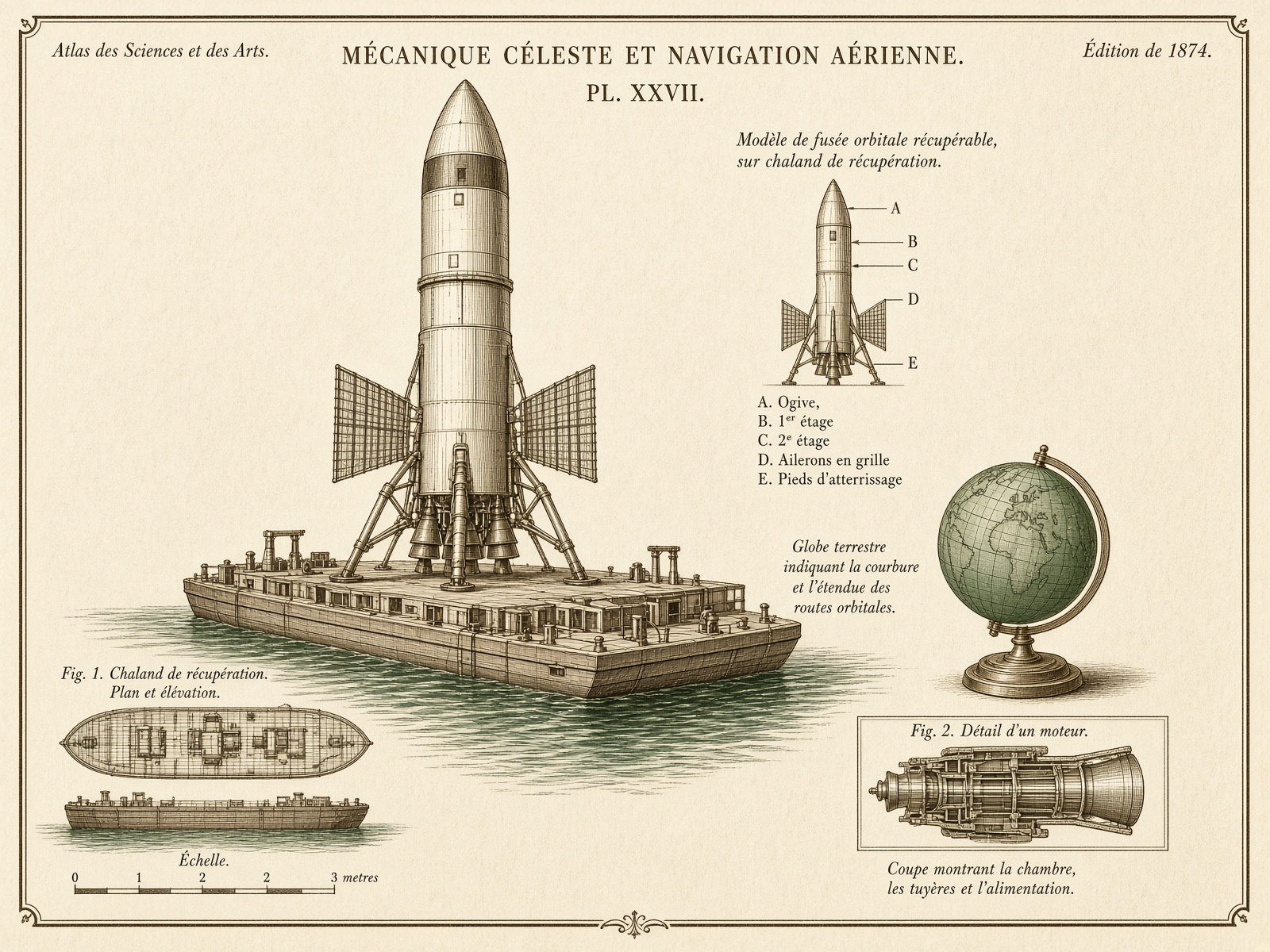
How the mechanism is arranged
How it works
- A booster lifts the upper stage, then flips and burns back.
- Grid fins and engines steer it to a landing site or barge.
- Inspect, refuel, fly again — the factory is supposed to be the pad, not the scrapyard.
Why it mattered
- Cut the marginal cost of reaching space when reuse works.
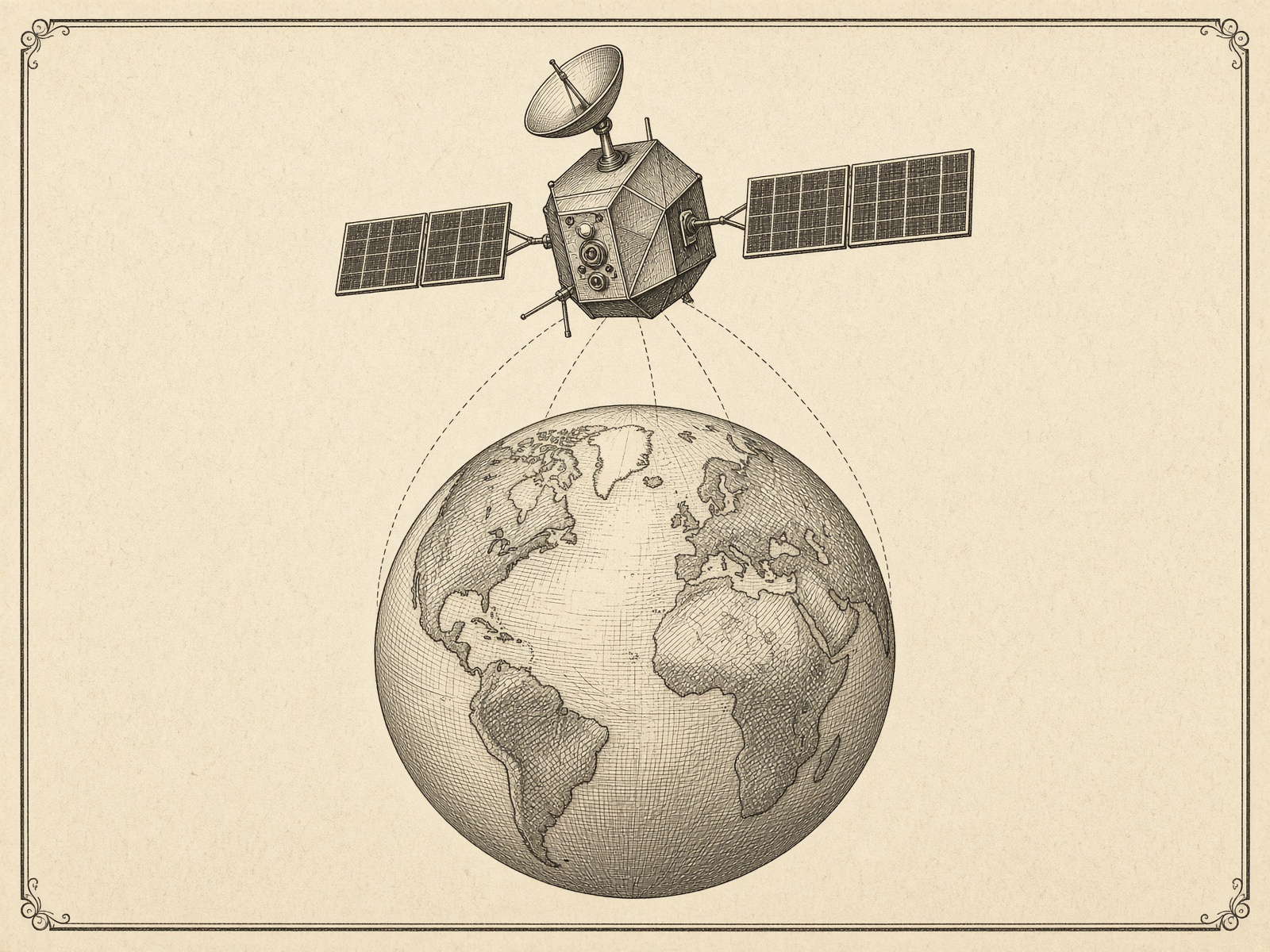
- Made large constellations economically thinkable.
- Reopened a 1960s destination with 2010s accounting.
What it unlocked
For further study
- SpaceX flight records. December 2015 landing.
- NASA shuttle histories. Earlier partial reuse.
Check
What cost does reuse attack that a perfectly cheap expendable rocket still pays?